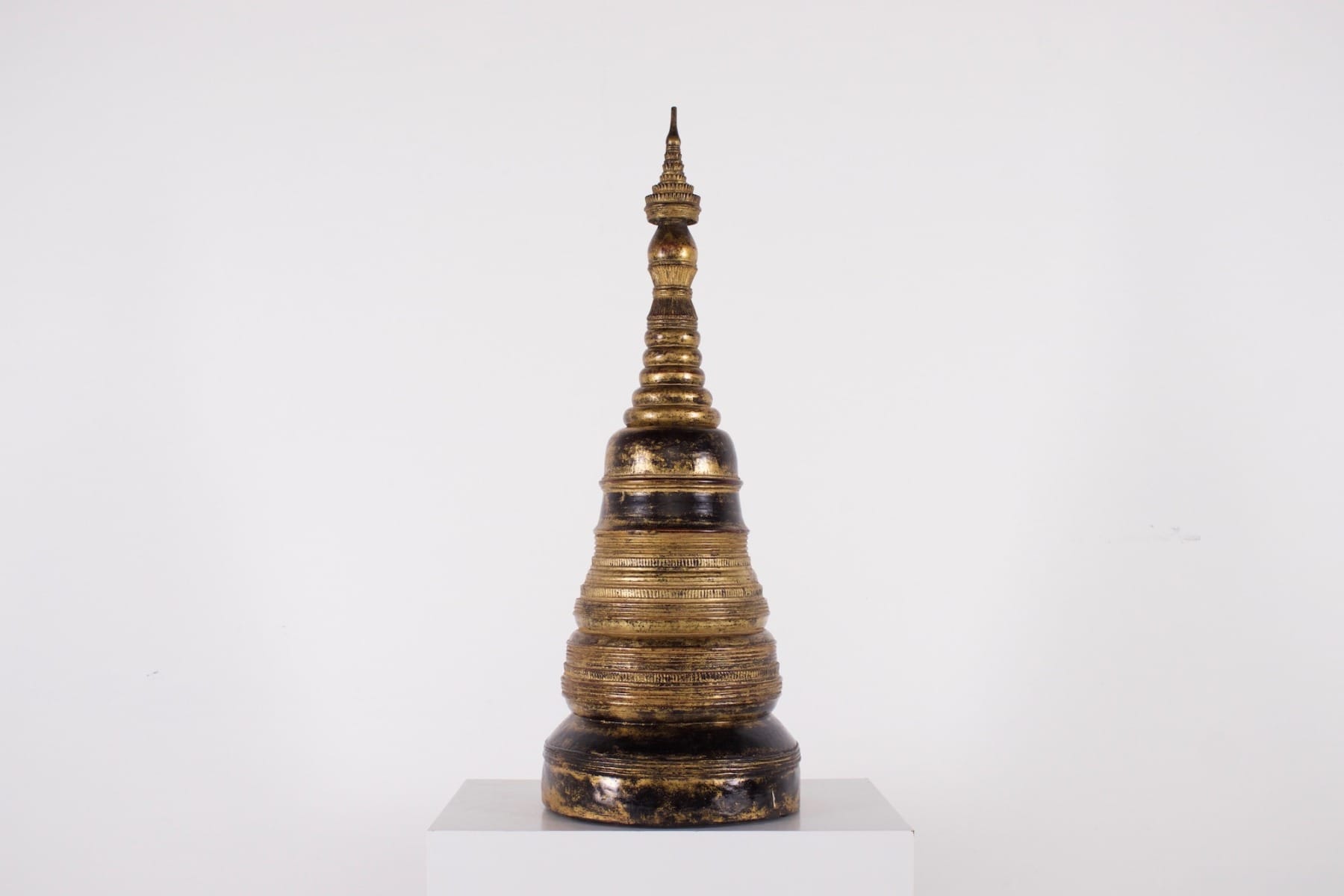
Great Buddha Amitayus, Nepal
€800,00





€1280,00
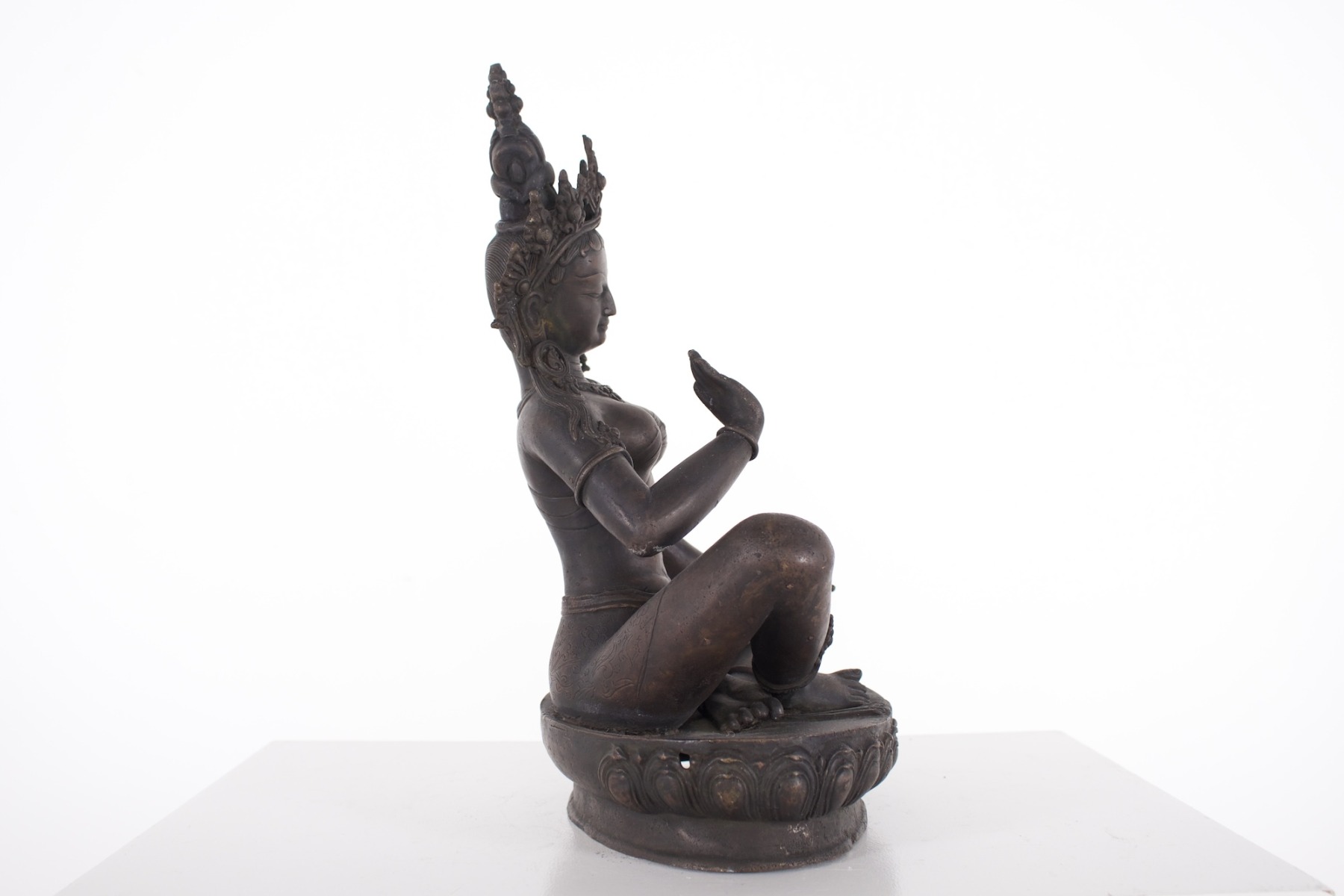
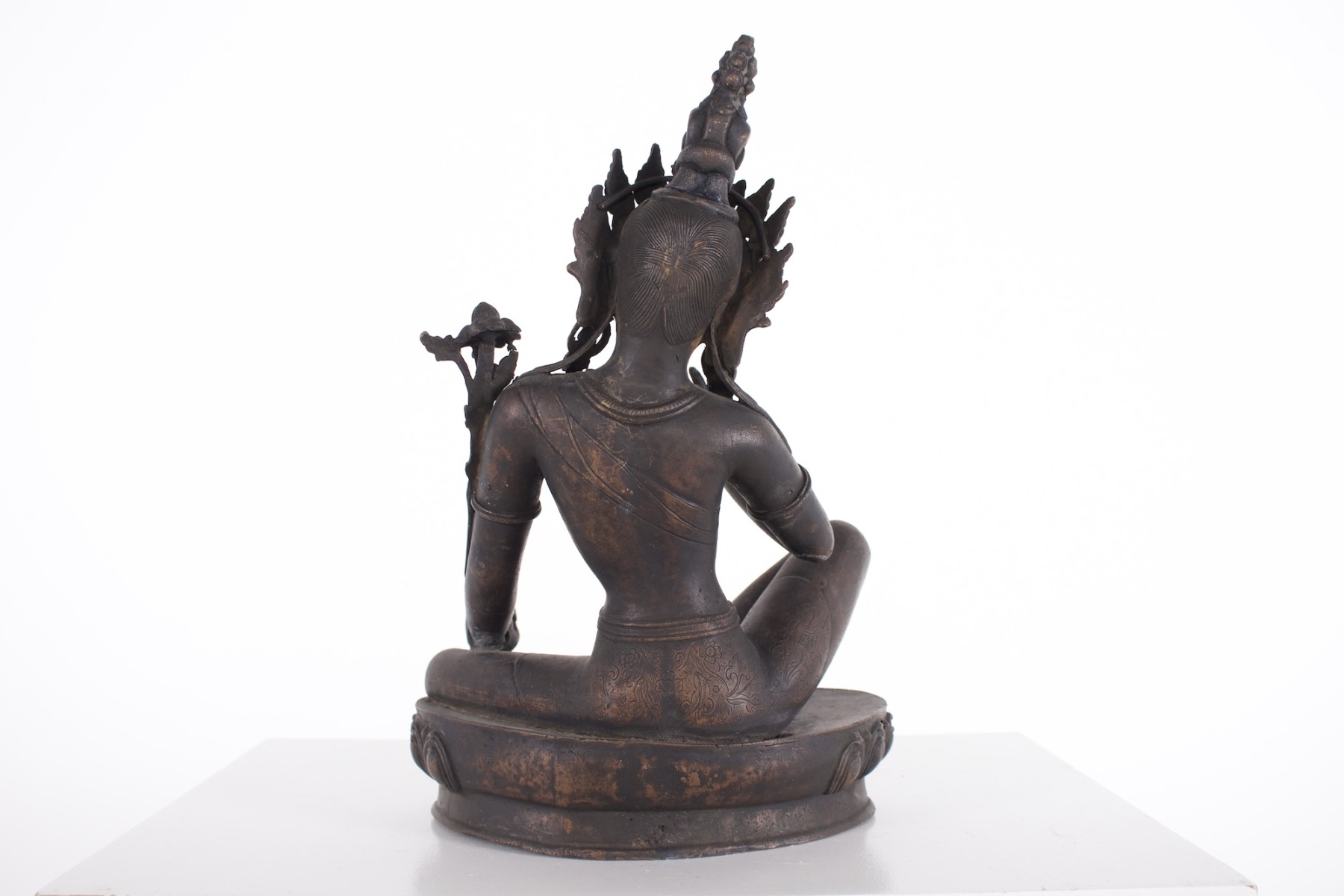
Green Tārā or Śyāmatārā statue, female bodhisattva, in copper alloy, Nepal, 19th century.
1 available in store

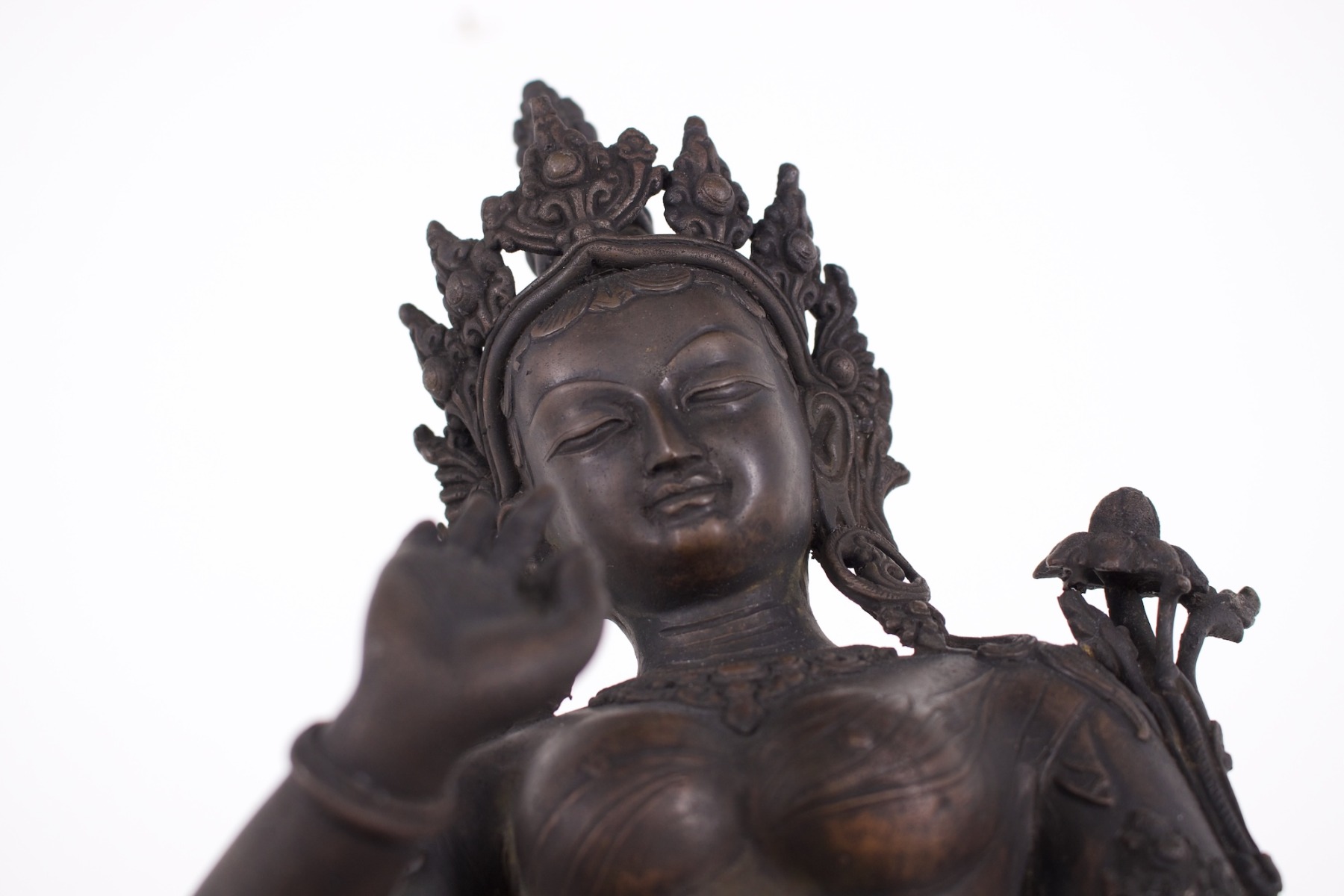
This statue represents a Green Tārā, one of the most popular figures in Mahāyāna and Vajrayāna Buddhism. Made of copper alloy, it belongs to the Newar artistic tradition of the Kathmandu Valley, the primary center of Nepalese Buddhist art.
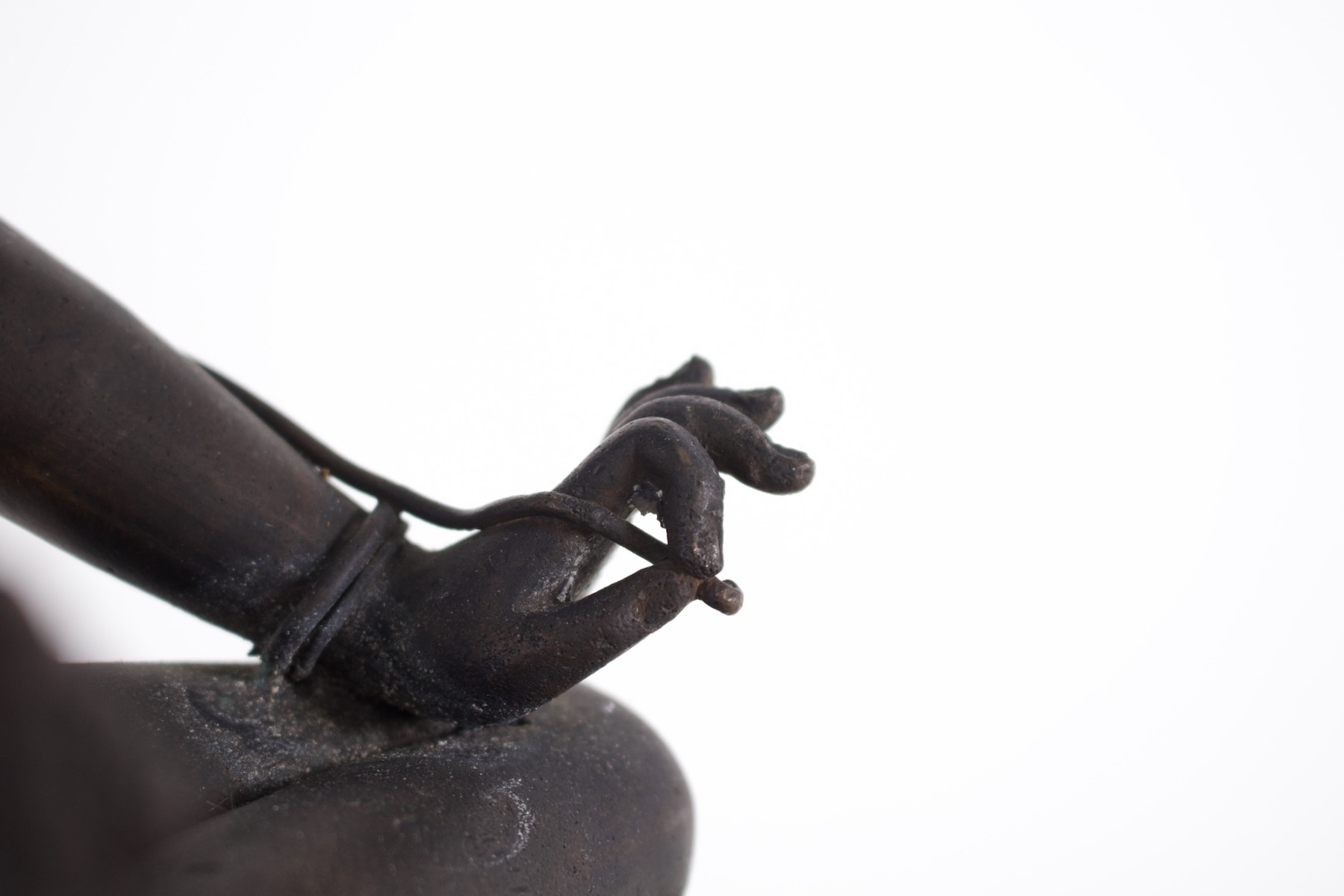
Several iconographic elements allow for this identification. The goddess is depicted in the lalitāsana posture, or “royal ease,” with one leg folded while the other remains ready to deploy. Her right hand forms the vitarka mudrā, a gesture of discussion and transmission of the doctrine, while her left hand holds the stem of a lotus that rises along the arm and blooms near the shoulder. The five-lobed crown refers to the Five Wisdom Buddhas of Vajrayāna, whose spiritual qualities are traditionally associated with enlightenment and the transformation of passions into wisdom. The serene face and harmonious proportions of the figure are characteristic of Tārā representations.
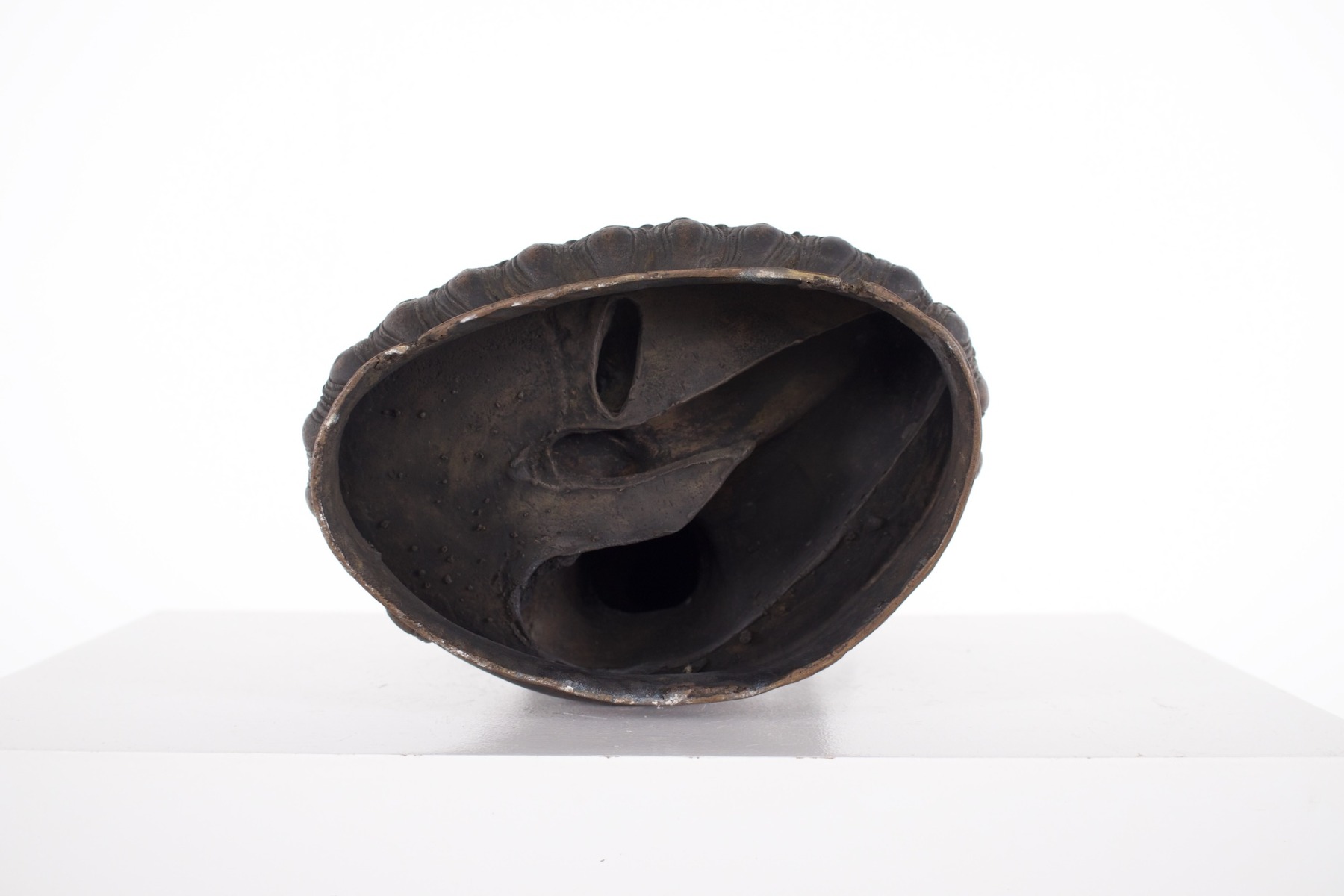
The treatment of the face, the half-closed eyes, the finely striated hairstyle visible at the back, as well as the engraved decorations on the legs, evoke Nepalese productions inspired by 17th and 18th-century models. The supple and elegant silhouette recalls works intended for private devotion rather than later Tibetan productions.
The delicacy of the lotus, the general quality of the modeling, and the balance of the composition testify to the expertise of the Newar workshops, whose influence extended for several centuries across all Himalayan Buddhist art.
The sculpture shows significant surface wear as well as visible metal loss around the base. The dark brown patina, old and heavily handled over time, nonetheless contributes to its character. Some deformations are also observable on the lotus located behind the shoulder.
Nepal, 19th century.
Provenance: former Claude de Marteau collection.