



Bhumisparsha mudra | Iconography of the Buddha's Enlightenment
This iconography is particularly widespread in Thailand, Burma, Sri Lanka, Cambodia, and the Himalayan regions, where many other mudras are also represented. This iconography is central to Theravada Buddhism, while also being fully integrated into the Mahayana and Vajrayana traditions.

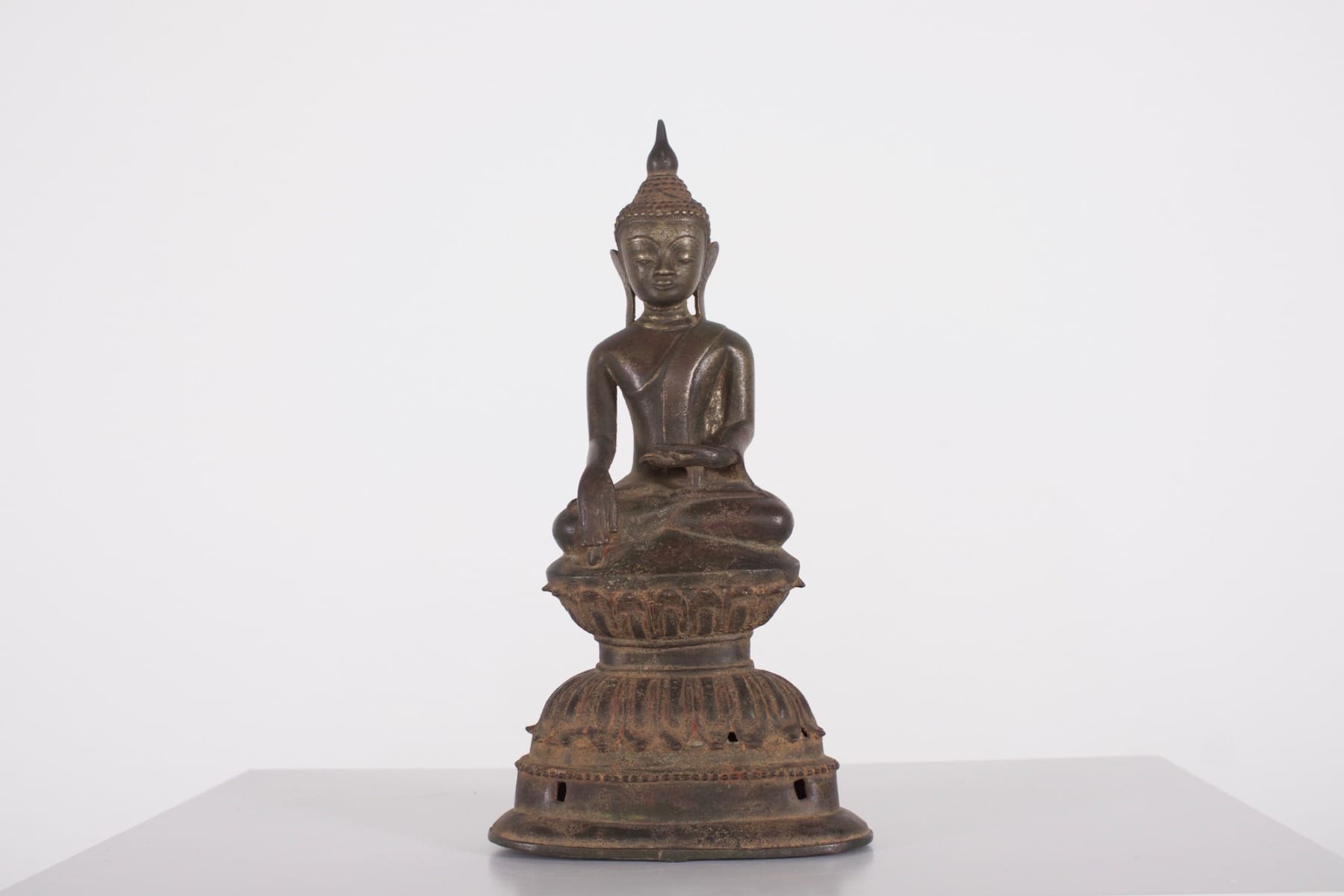
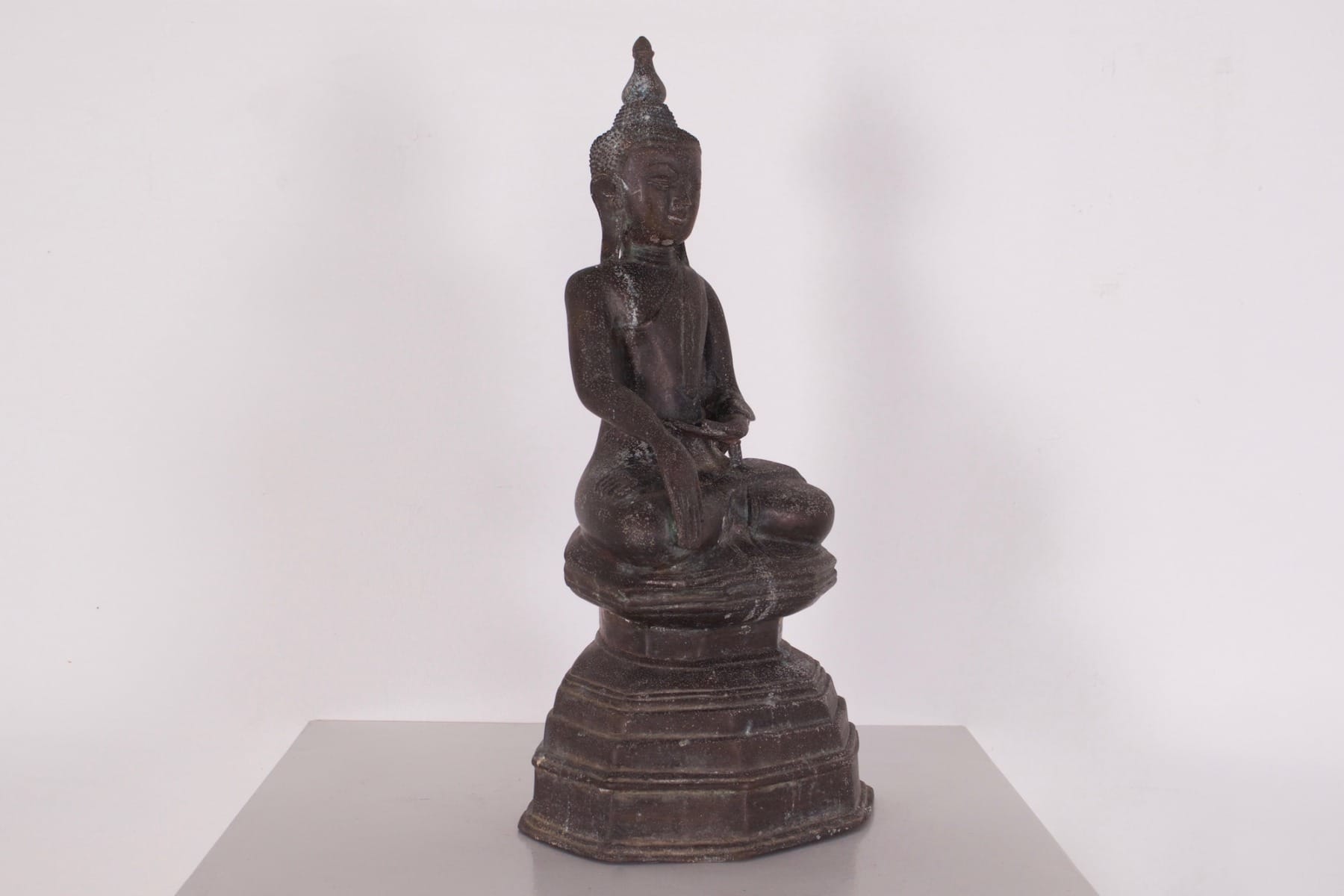

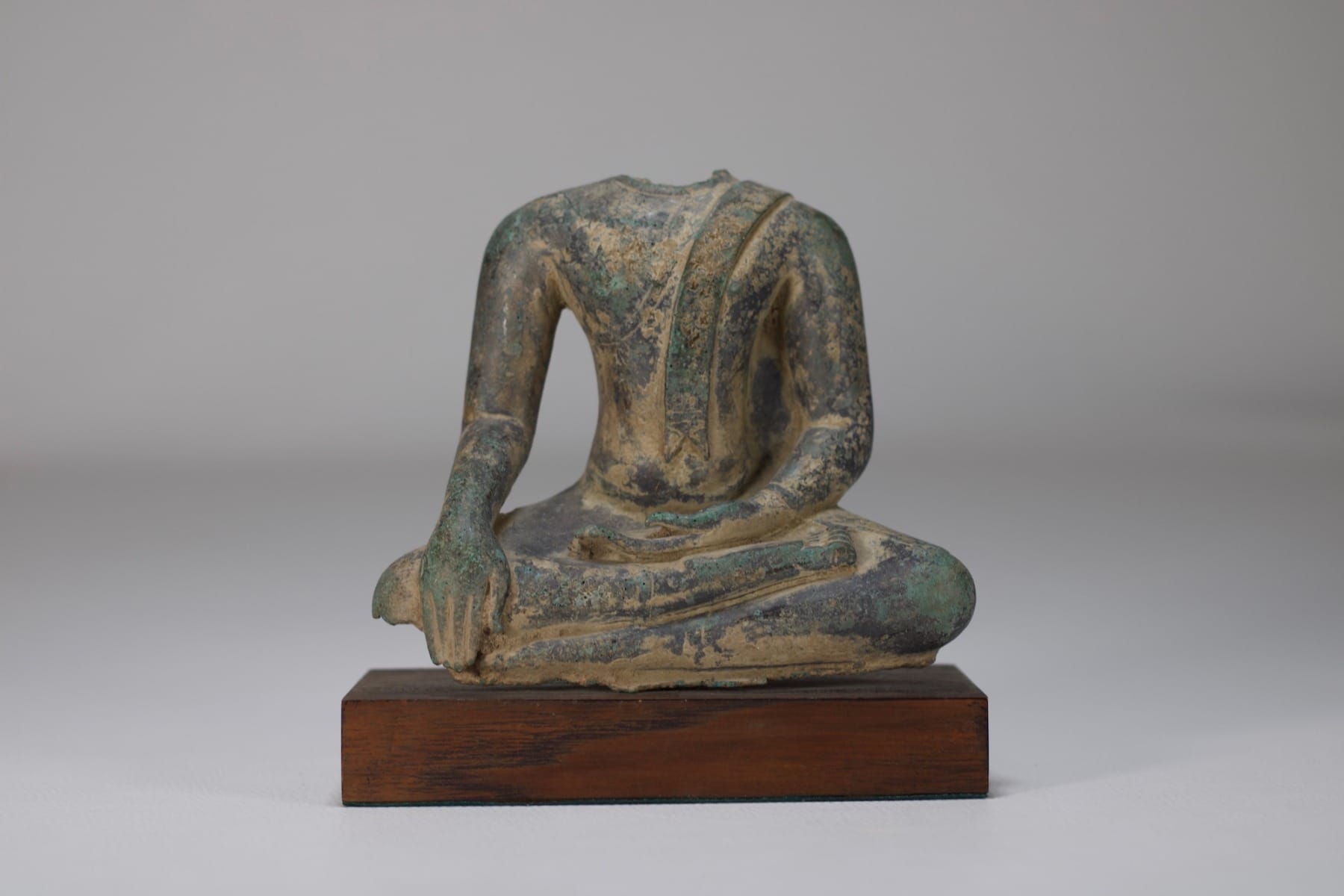


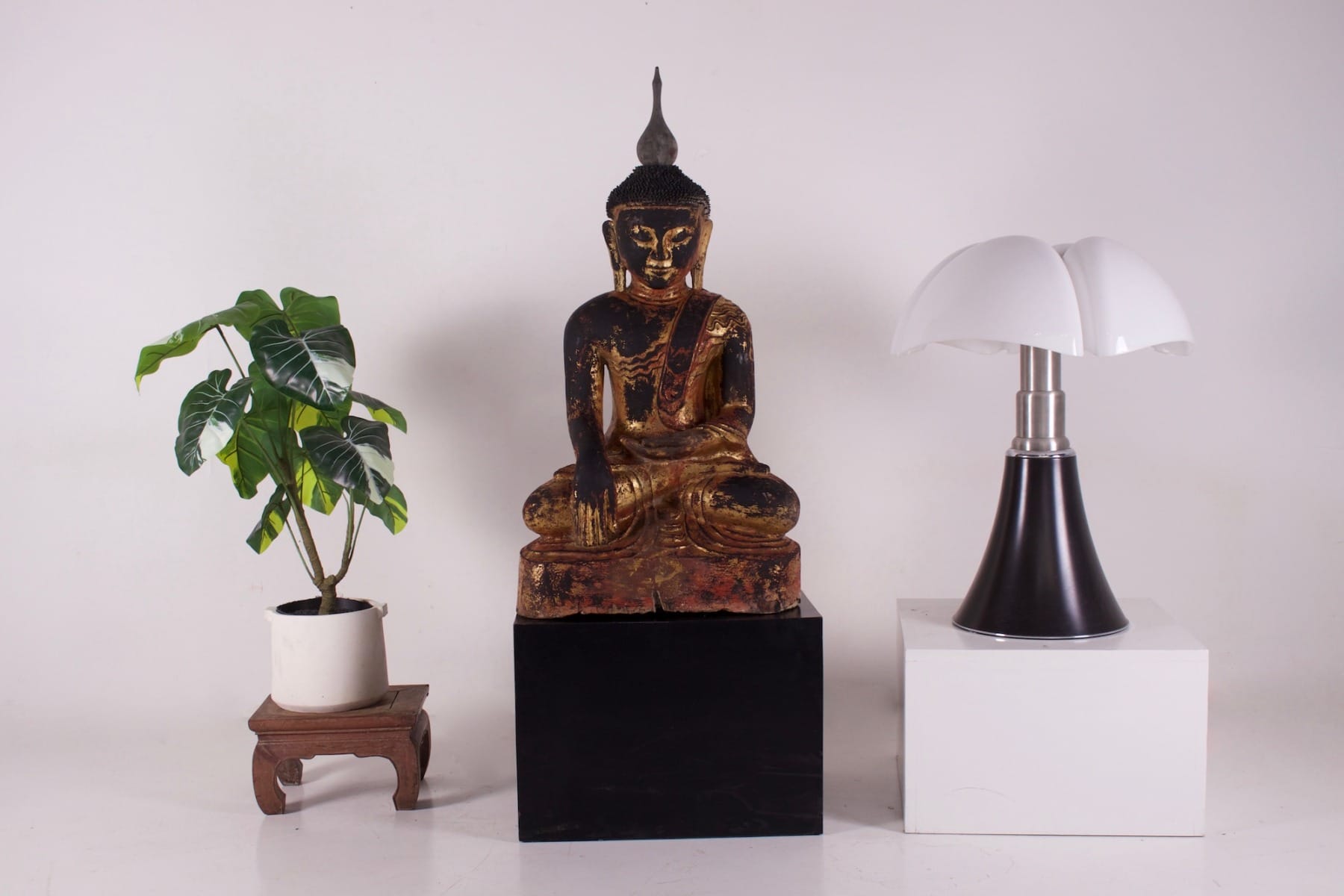

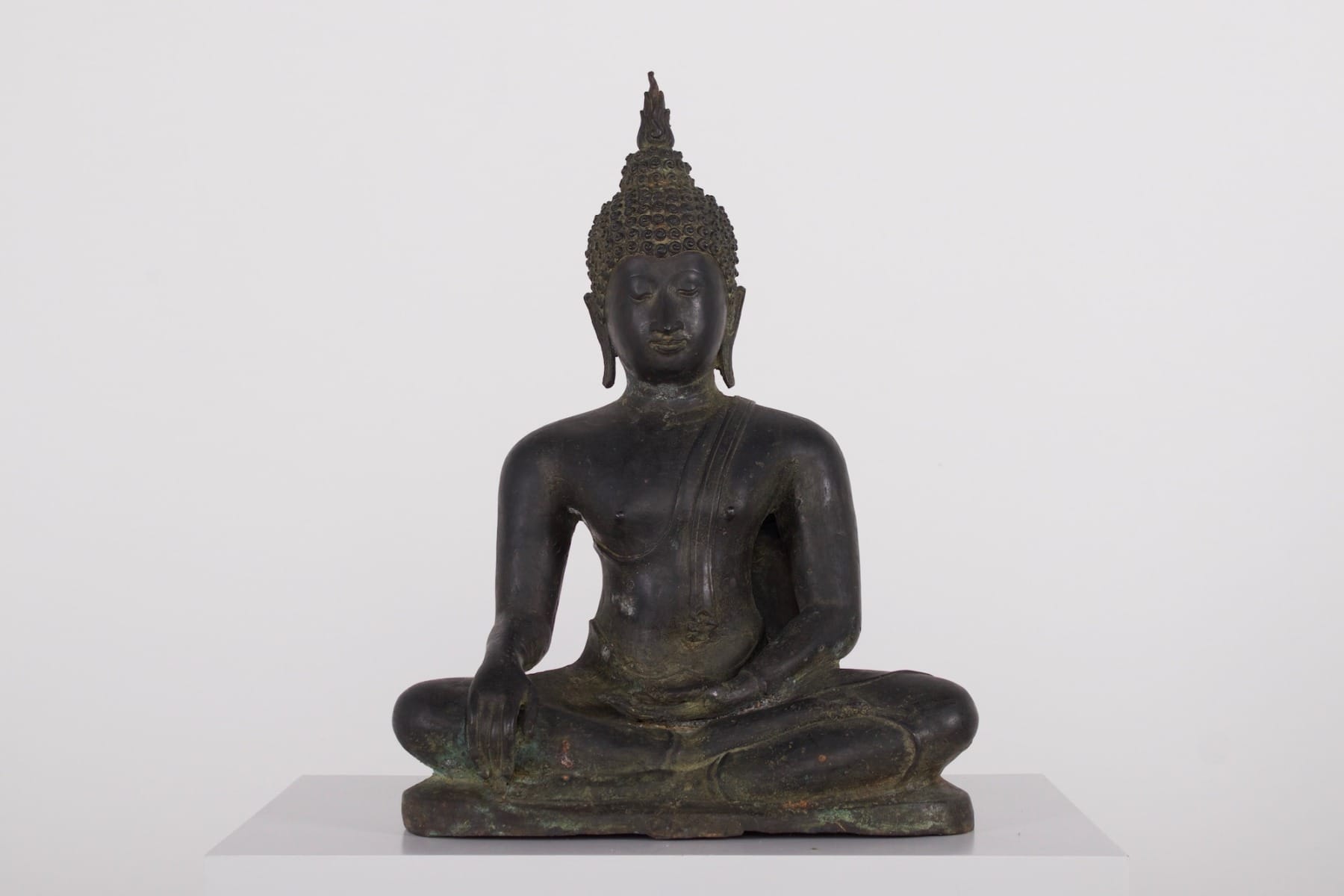
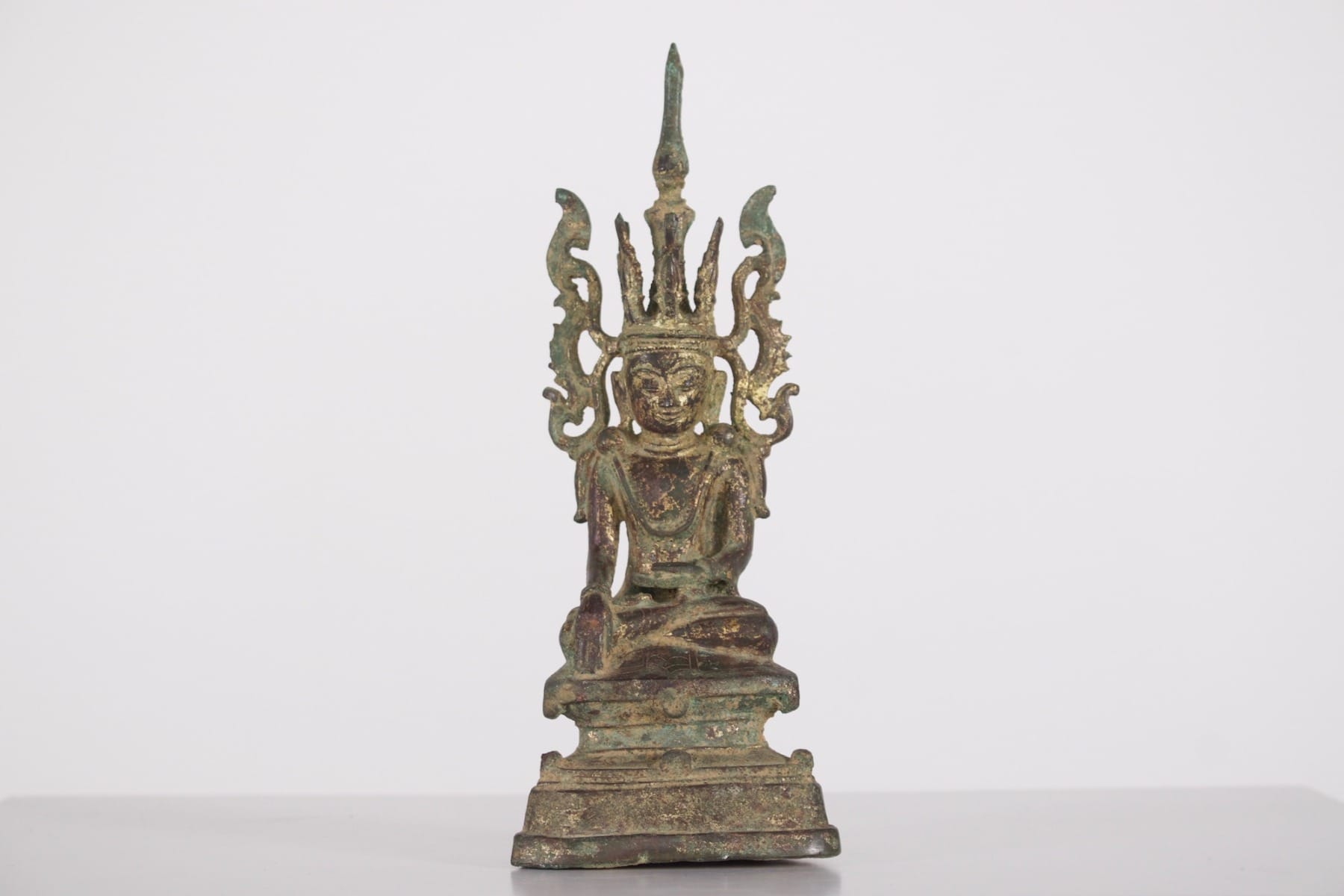
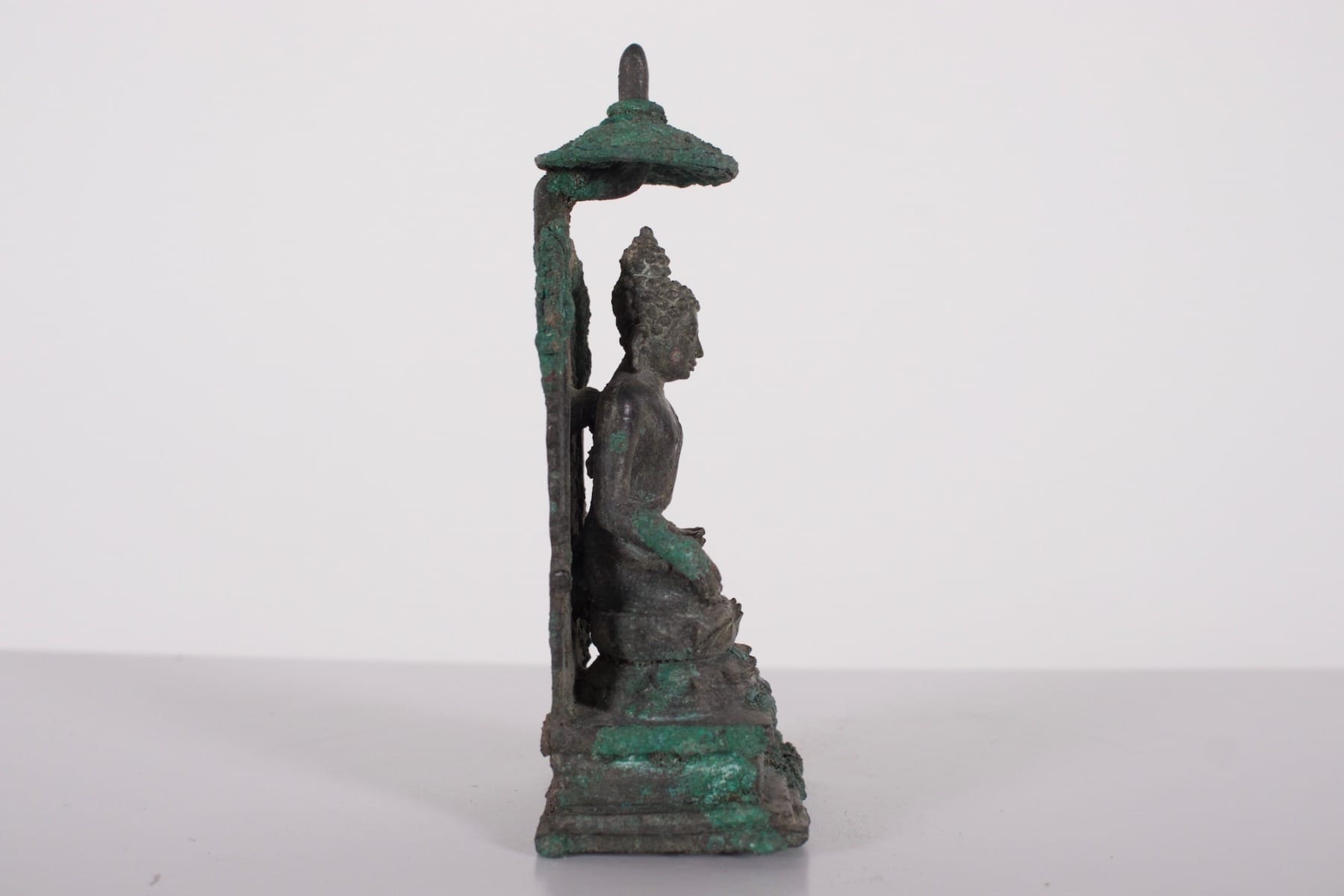
The bhūmisparśa mudrā, or “gesture of touching the earth as witness,” denotes the decisive moment when Siddhartha Gautama, meditating under the Bodhi tree in Bodh Gaya, touched the earth with his right hand so that it might attest to the fulfillment of his merits and his spiritual path.
This gesture marks the Buddha’s victory over Māra and the forces of illusion, an episode known as Maravijaya, and immediately precedes the attainment of enlightenment. This iconography is central to Theravada Buddhism, while also being fully integrated into the Mahayana and Vajrayana traditions.
In Buddhist art, the Buddha is depicted seated in meditation, with a serene face, an image of mastery of mind, inner stability, and spiritual accomplishment. This iconography is particularly widespread in Thailand, Burma, Sri Lanka, Cambodia, and the Himalayan regions, where many other mudras are also represented.