Willy Van Der Meeren – Belgian Modernist Designer
Willy Van Der Meeren (1923–2002) is a major figure in post-war Belgian design and architecture, whose work is rooted in a social, functional, and resolutely modernist approach.
Willy Van Der Meeren: Design at the Service of Society
Born on August 7, 1923, in Lebbeke, Belgium, Willy Van Der Meeren began studying medicine at the Catholic University of Leuven before turning to architecture. After a stint at the Brussels Academy, whose teaching he quickly rejected as incompatible with his modernist ideas, he continued his training at La Cambre from 1944. There, he evolved in an environment shaped by the great currents of European modernism.
His work belongs to a period of reconstruction, where the issues of housing and accessibility became central. Influenced by the principles of La Cambre, he developed a vision in which architecture and design must meet the needs of the many, rather than an elite. This orientation places him among the leading figures of post-war Belgian design, alongside figures such as Alfred Hendrickx or Jules Wabbes.
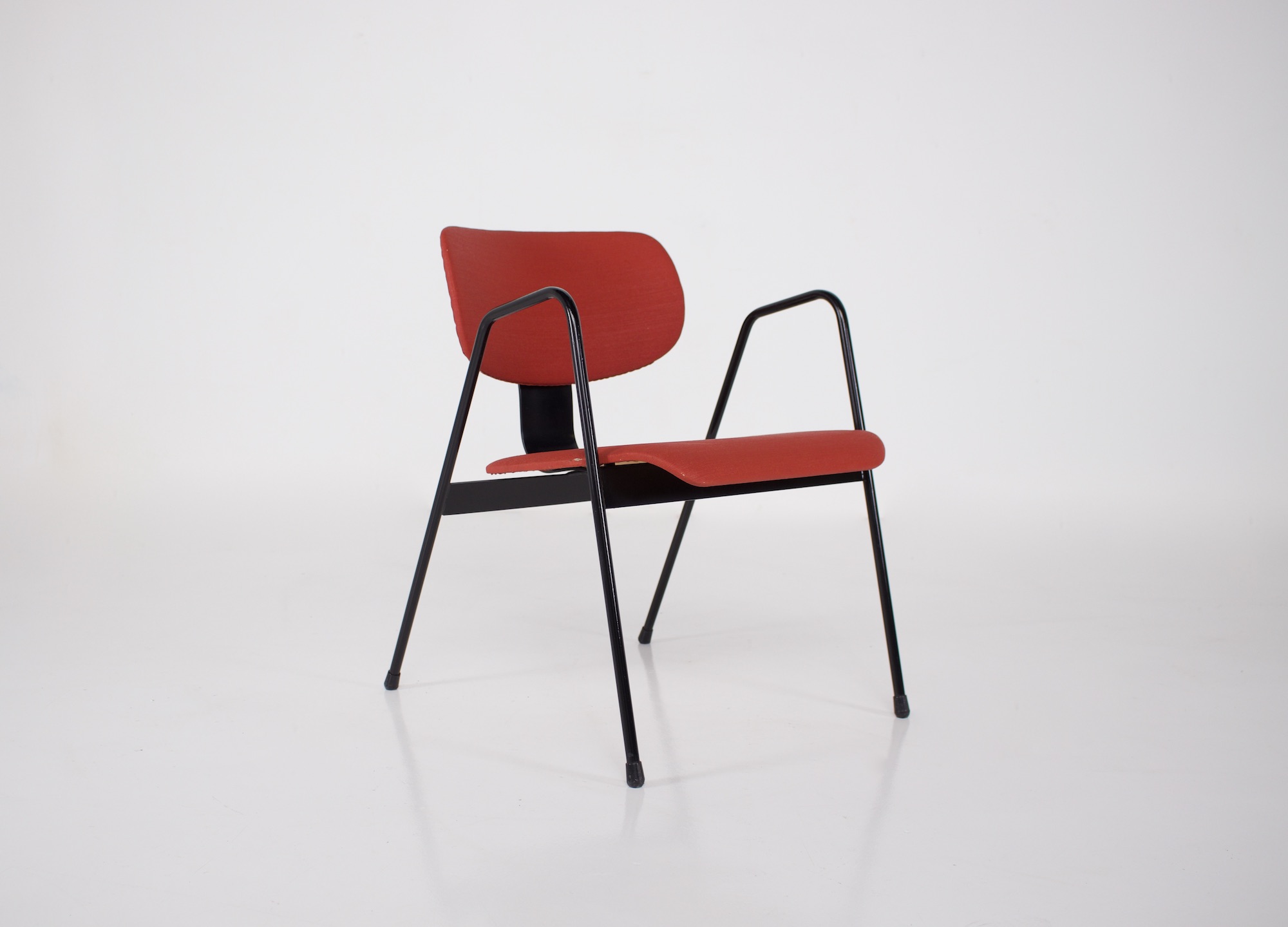
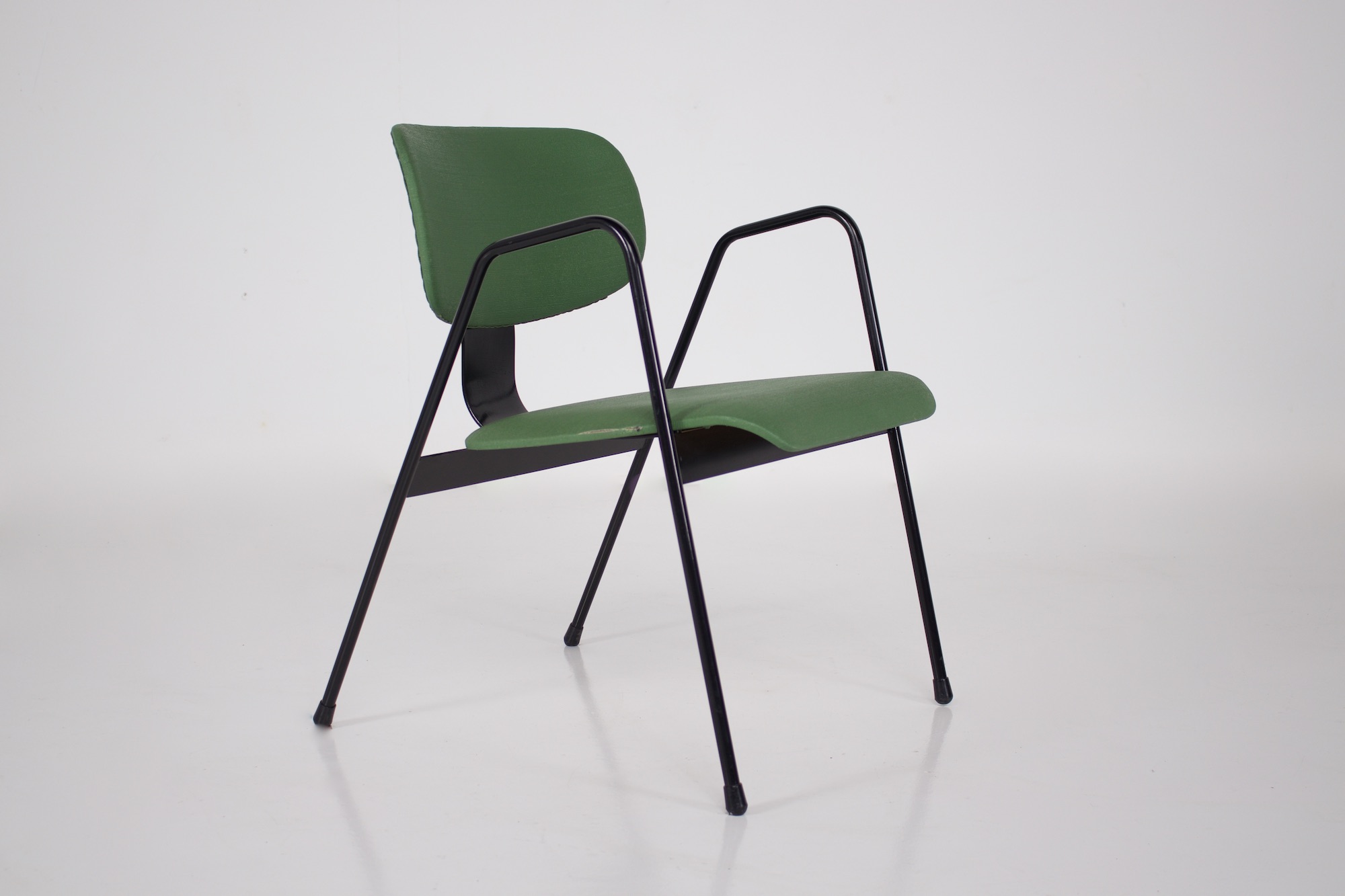
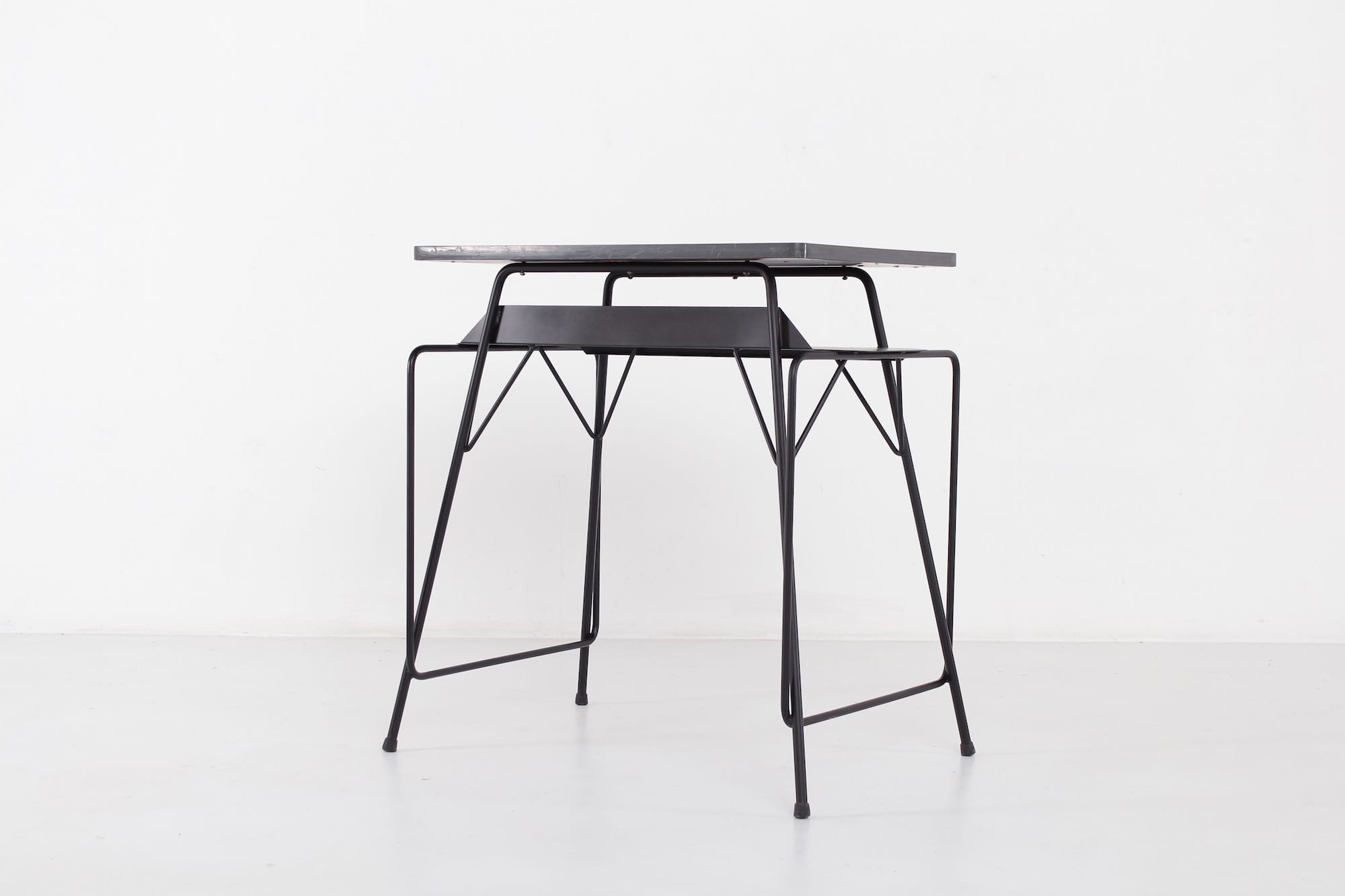
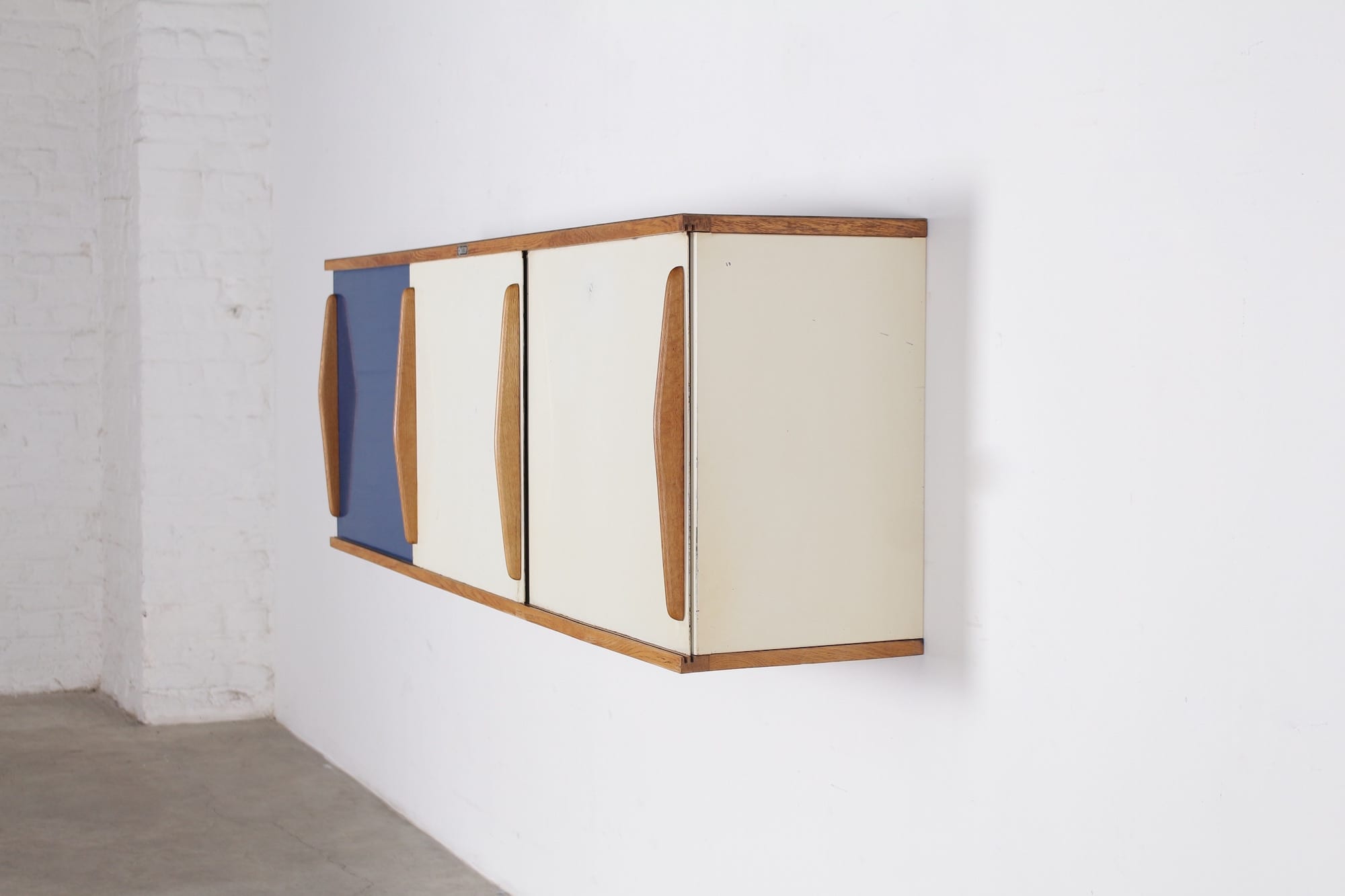
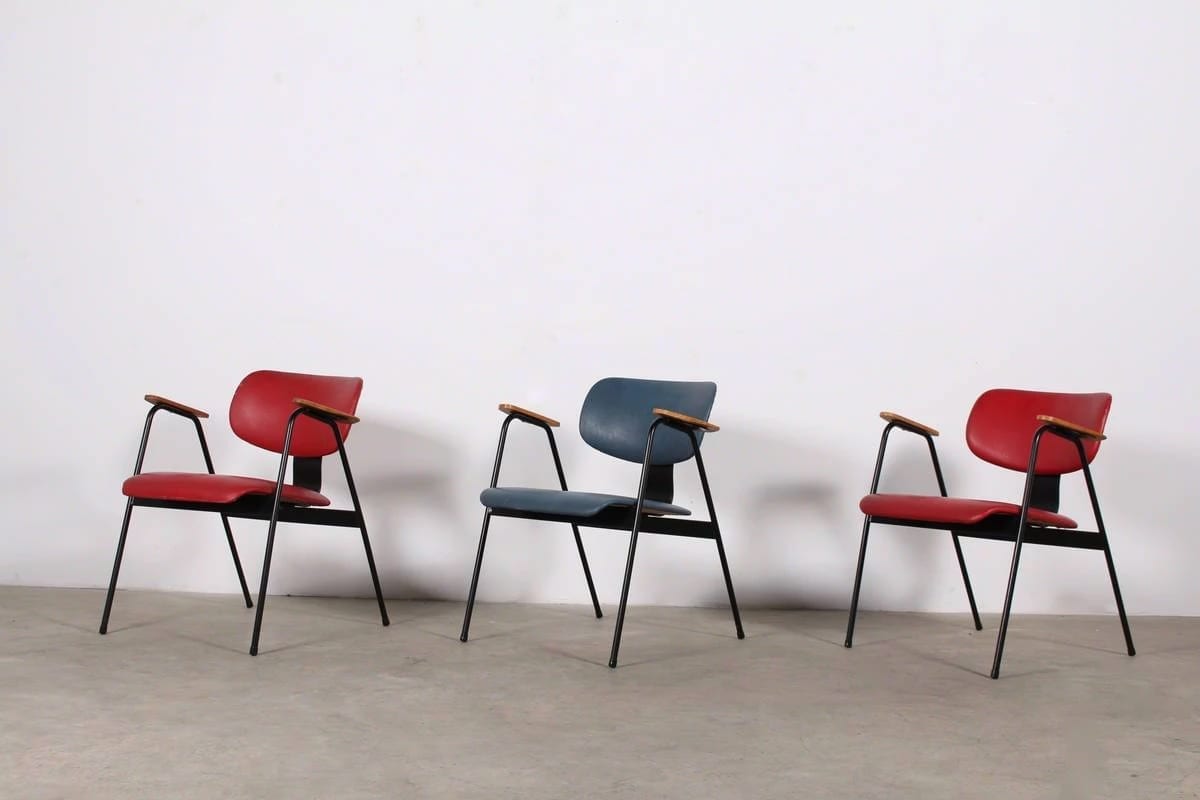
His collaboration with the Tubax company, specialized in functional furniture, marked a turning point in his career. Starting in the early 1950s, he designed a series of furniture pieces characterized by a great economy of means, structural clarity, and production adapted for large-scale distribution. The F1 armchair is one of its most emblematic expressions.
In these creations, the structure is intentionally visible. Tubular steel, standardized elements, and simple assemblies reflect a rational approach to design, directly linked to the economic and industrial constraints of the time. This aesthetic, stripped of all superfluous ornament, gives his pieces a formal strength that is fully part of the international modernist movement.
Alongside his work as a designer, Willy Van Der Meeren developed several architectural projects related to social housing. Among the most notable is the CECA house, designed with architect Léon Palm for the European Coal and Steel Community. This project offered a prefabricated house that was economical and quick to build, adapted to the needs of heavy industry workers.
In the same vein, he created the “Chacun sa maison / Ieder zijn Huis” social housing complex in Evere, consisting of over one hundred units. This project illustrates his interest in new forms of collective housing, integrating innovative technical solutions and a spatial organization designed for daily life.
Today, Willy Van Der Meeren’s work is recognized as one of the most coherent contributions to 20th-century Belgian design. His furniture, initially designed for affordable production, is now sought after for its formal rigor, constructive intelligence, and its place in the social history of design.
Bibliography:
– Mil De Kooning, Willy Van Der Meeren. Furniture Design , 2007.
– Mil De Kooning, research on Tubax and post-war Belgian design, Ghent University.
– Archives and collections of the Design Museum Gent.