



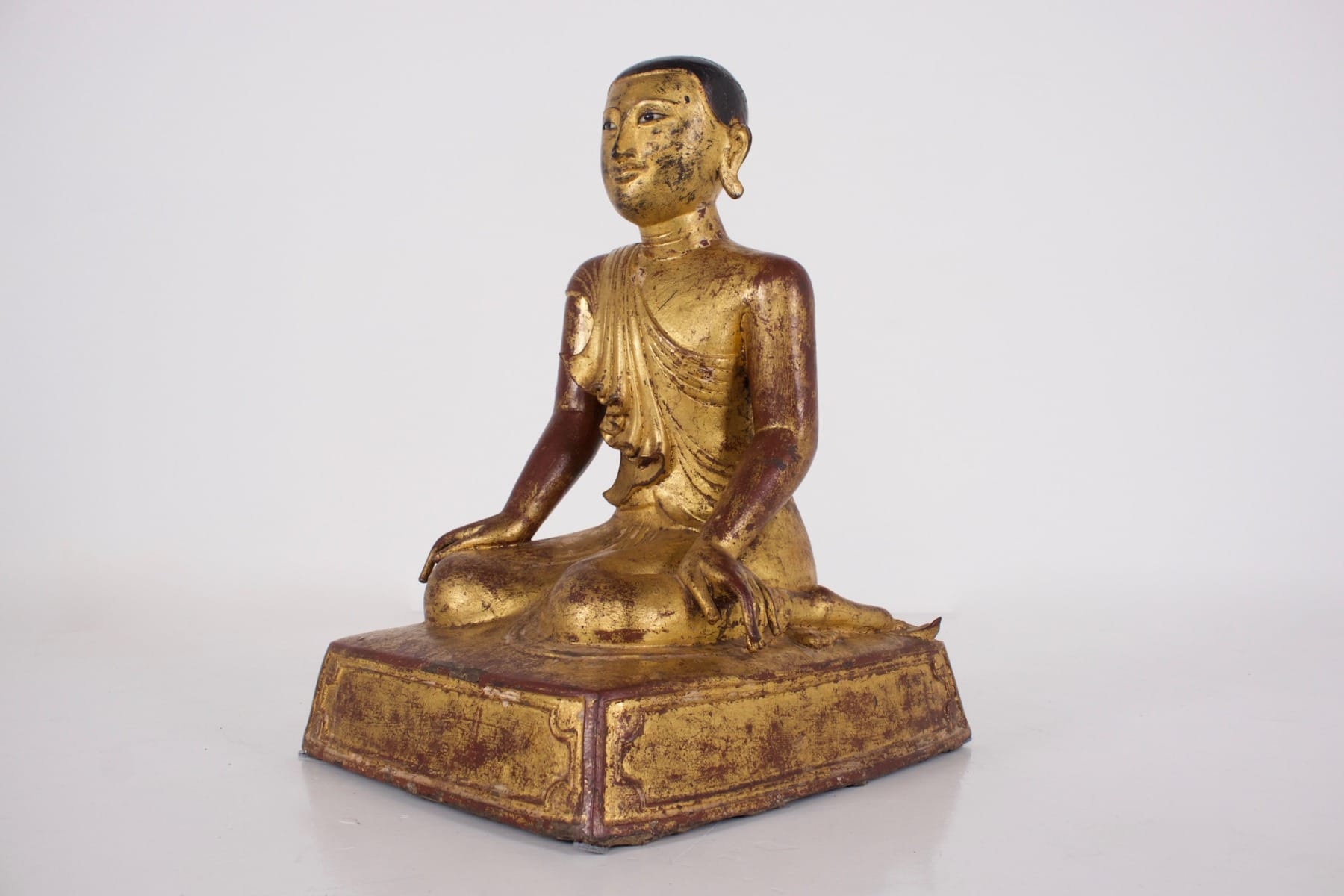




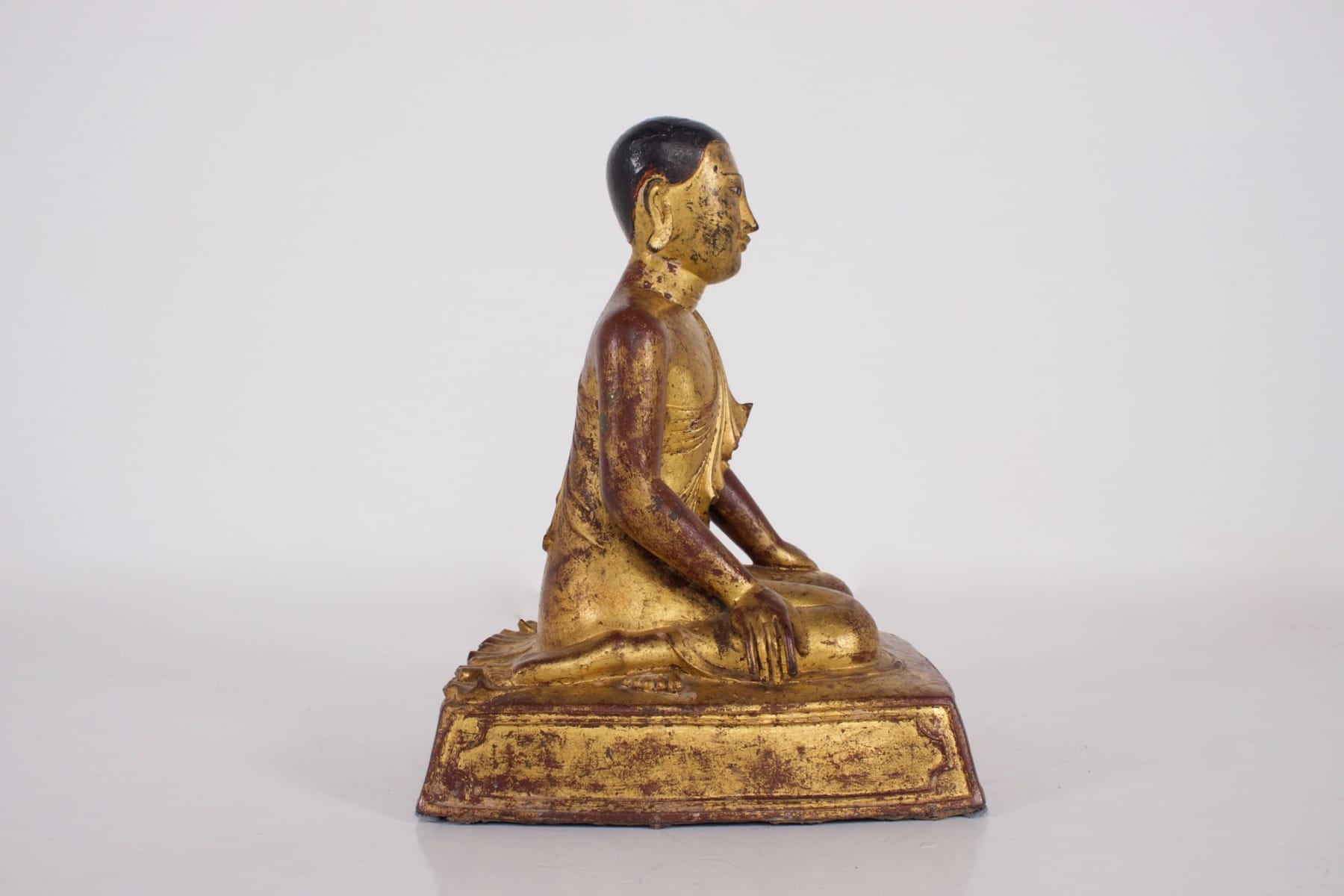


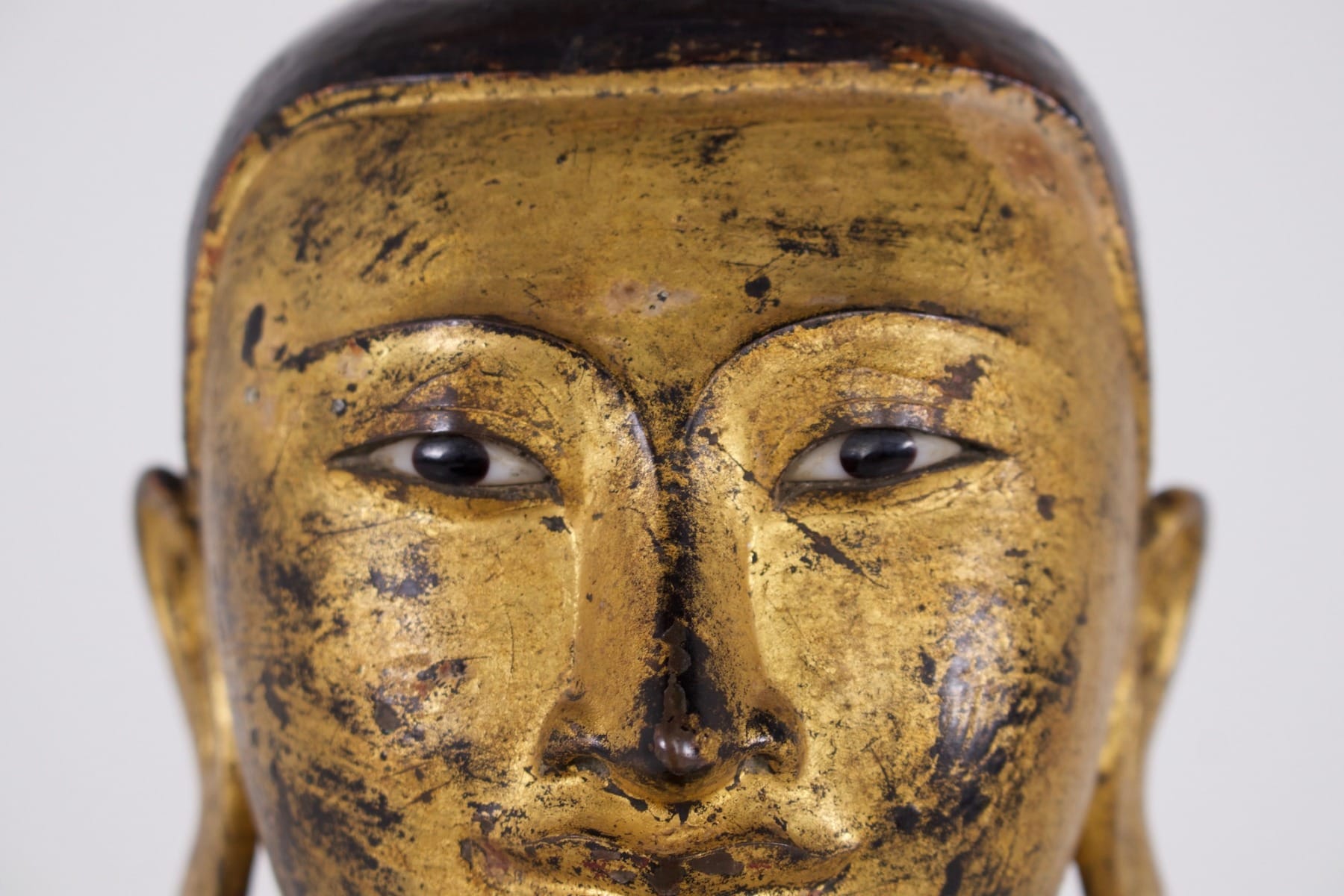



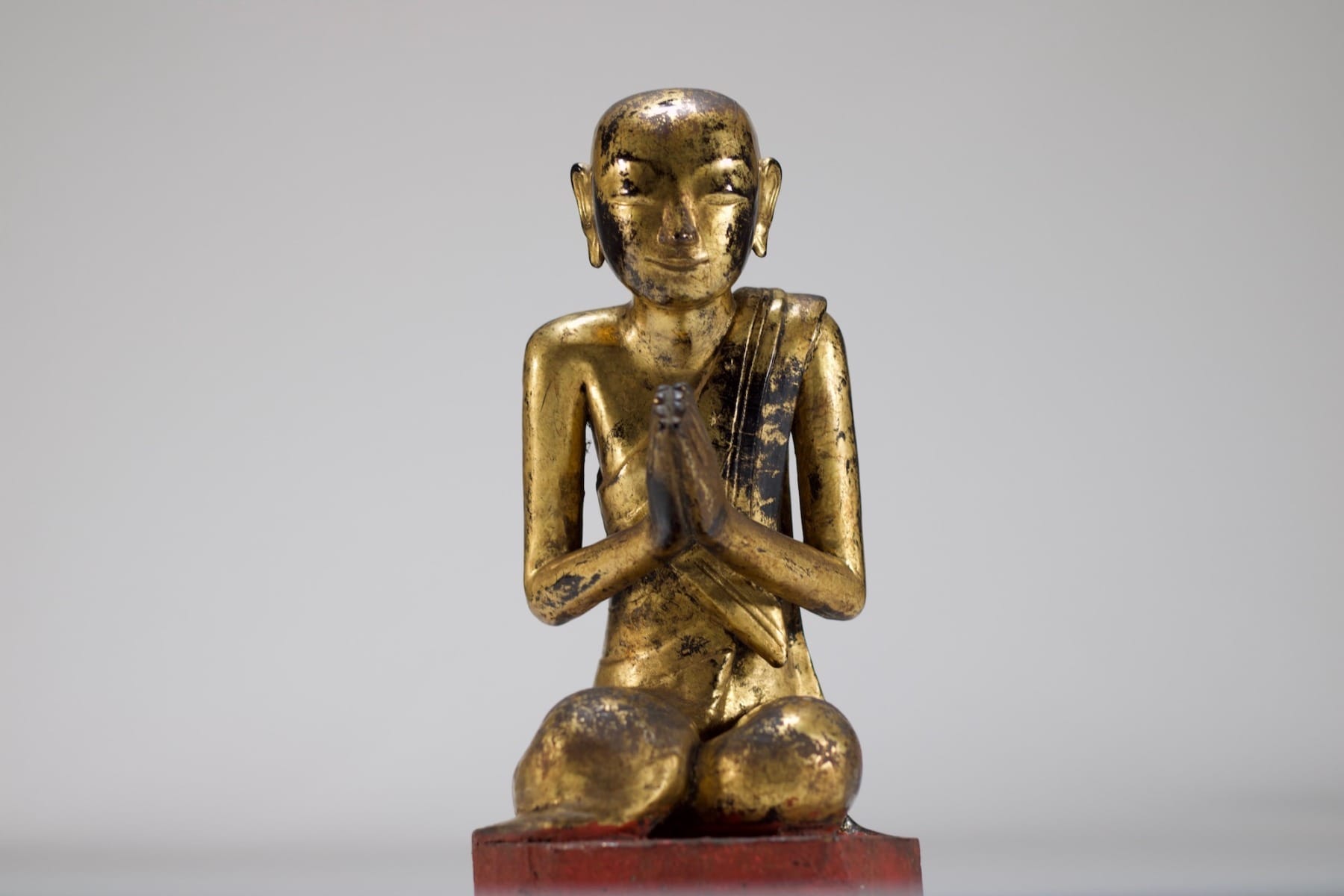
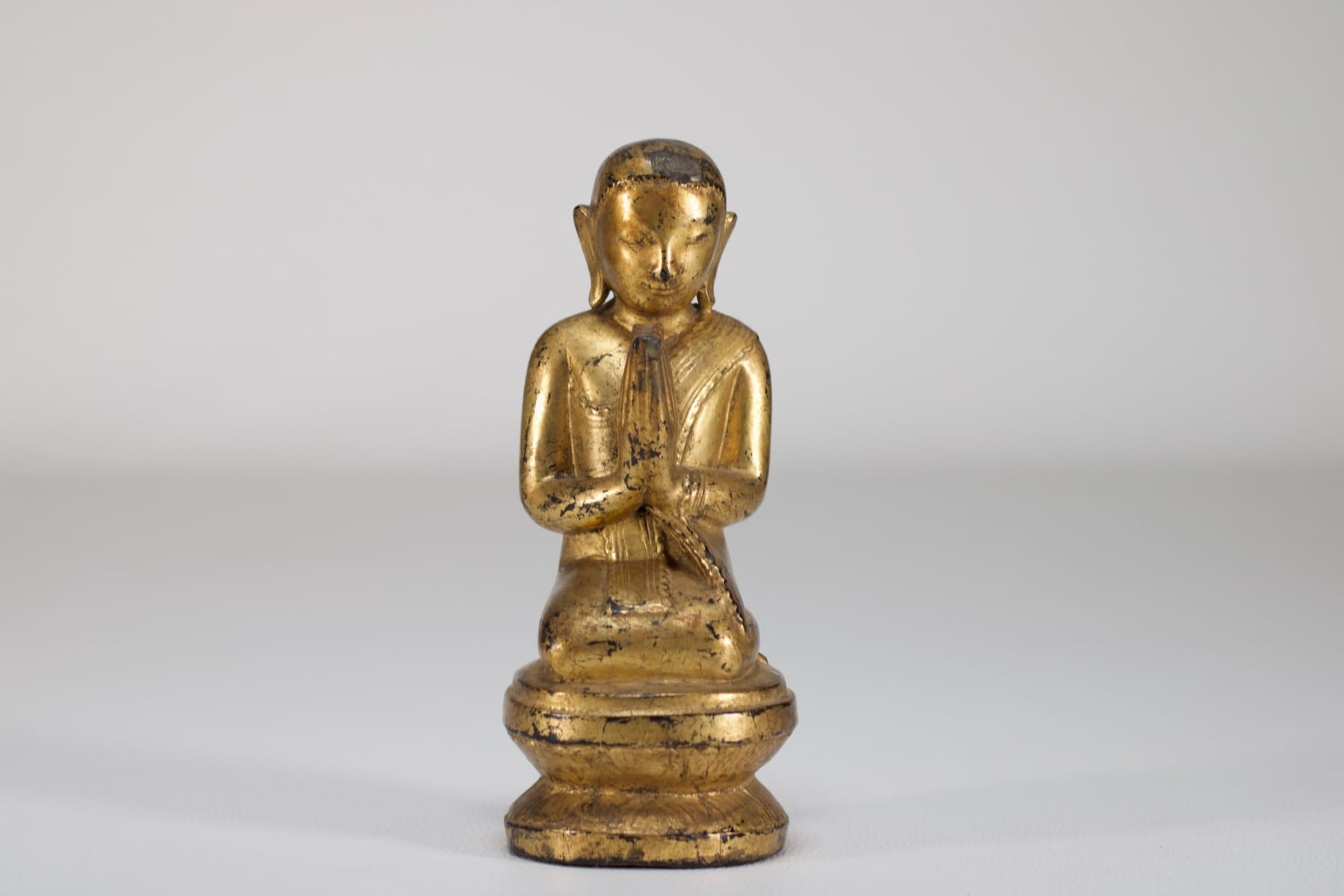
Burmese adoring monk in gilt bronze
- Elegant representation of the worshipper Sāriputta, one of the two most popular Buddha worshippers in Burma. Mandalay period, 19th century.
- Bronze, lacquer and gilding
- H 59 cm x D 45 cm x W 37 cm
- Weight: 18.170 kg
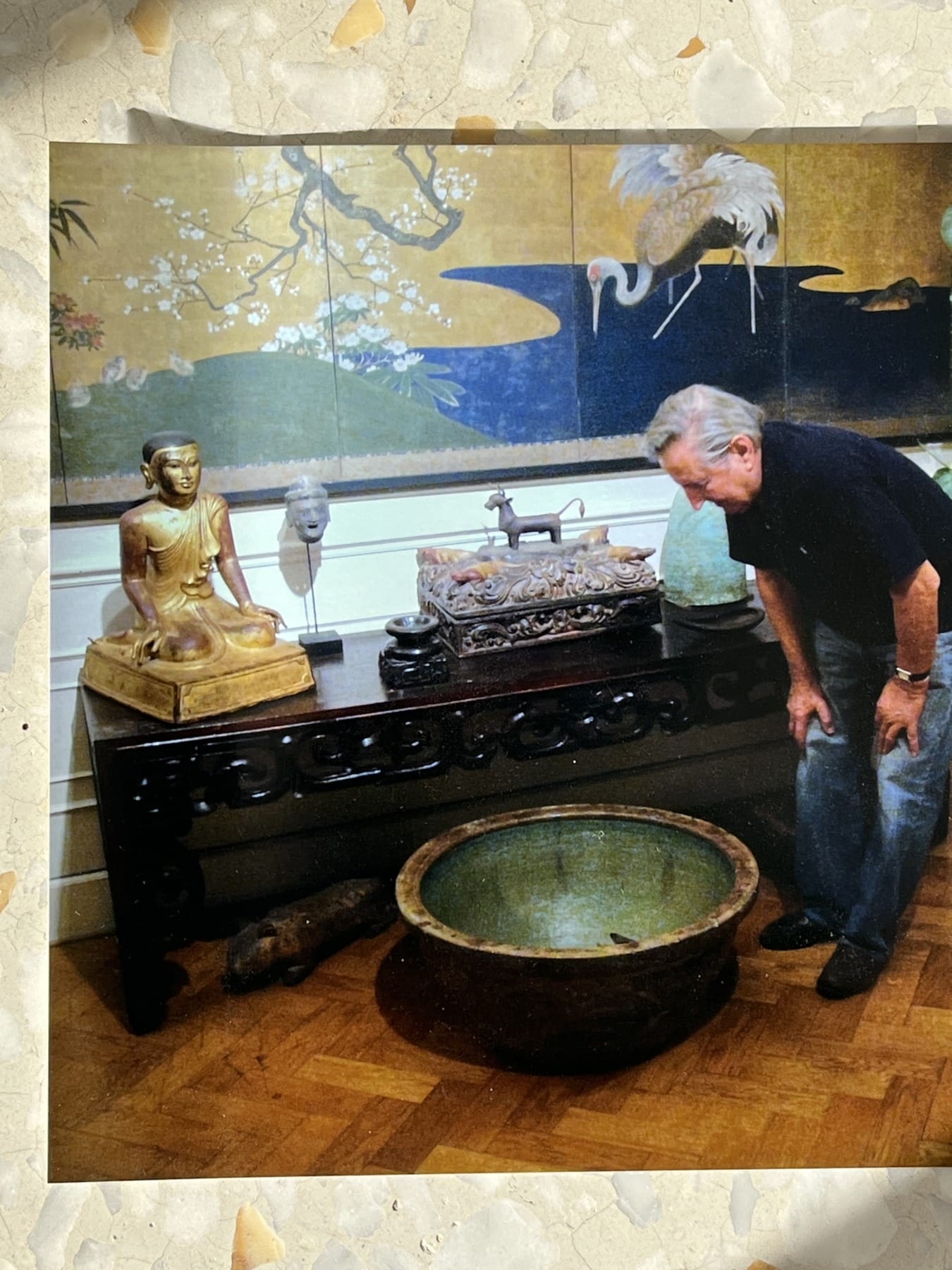
- Provenance: Estate of Asian art dealer and collector Claude de Marteau
- Sold with certificate of origin.
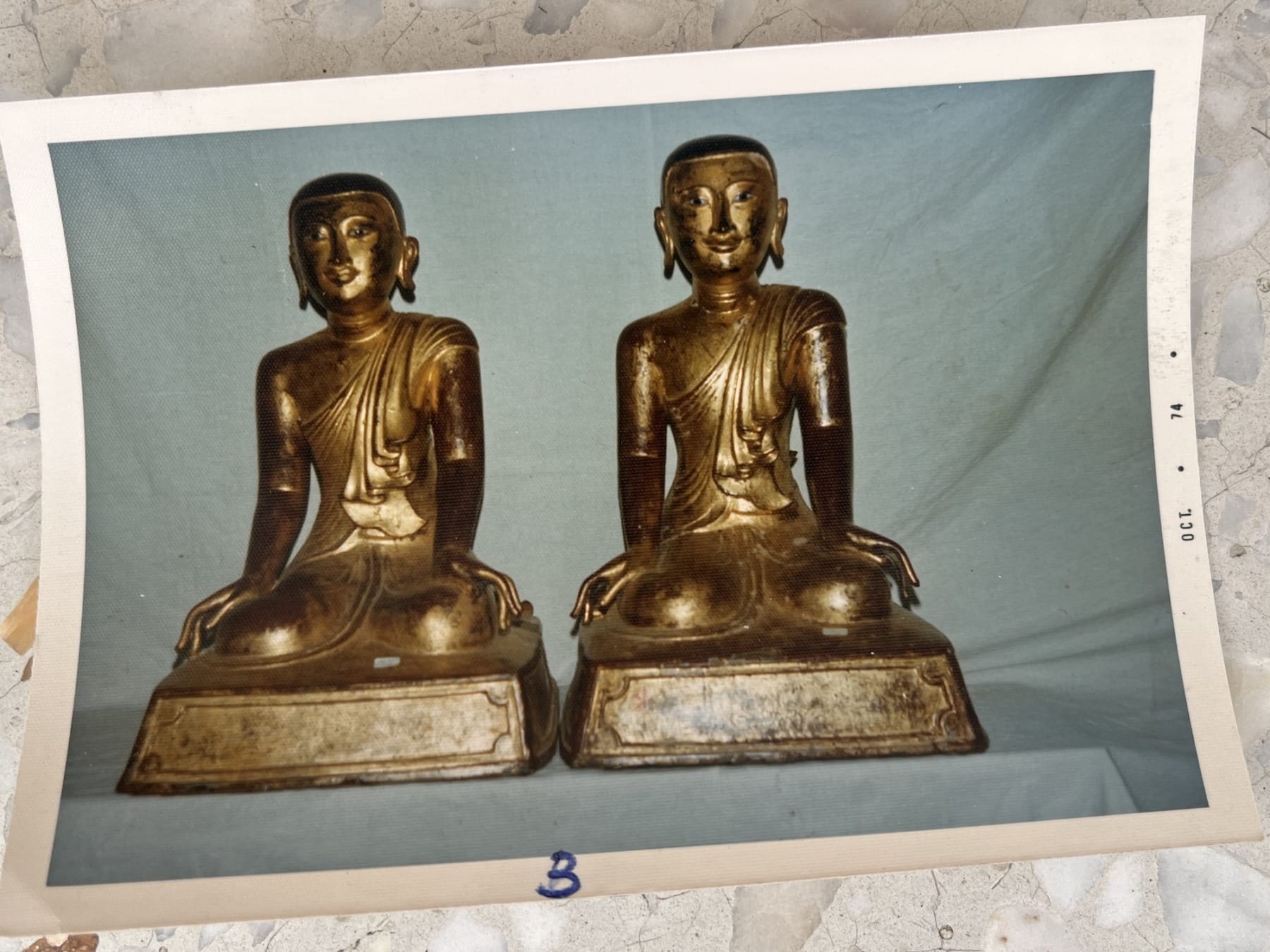
- Another copy (almost identical) is also available.
In Burma, bronze worshippers were made primarily for religious reasons. They were used for devotion and veneration of Buddhist figures, often placed in temples or domestic altars to accompany Buddha statues. These pieces reflected the spiritual fervor and refined craftsmanship of the period.
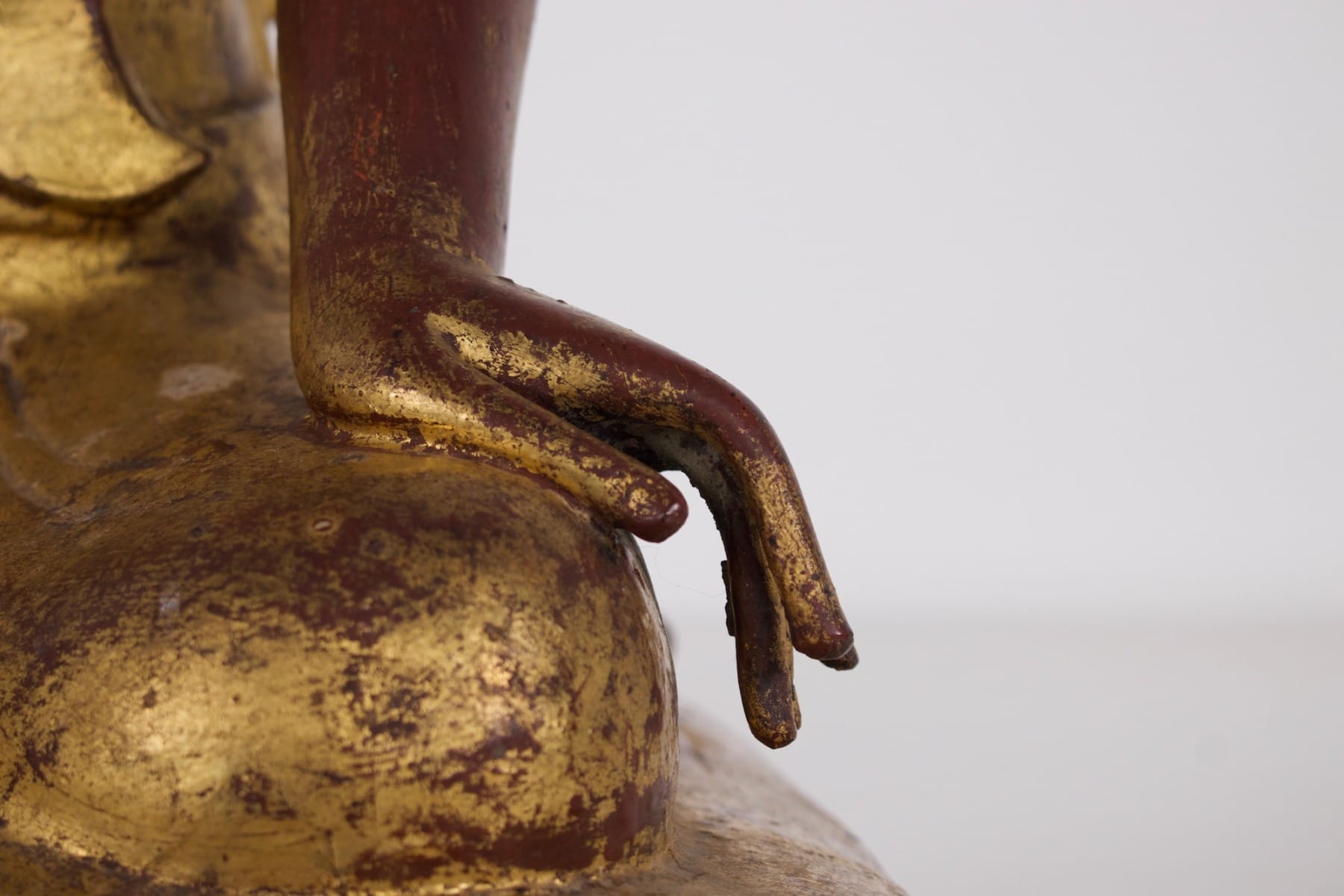
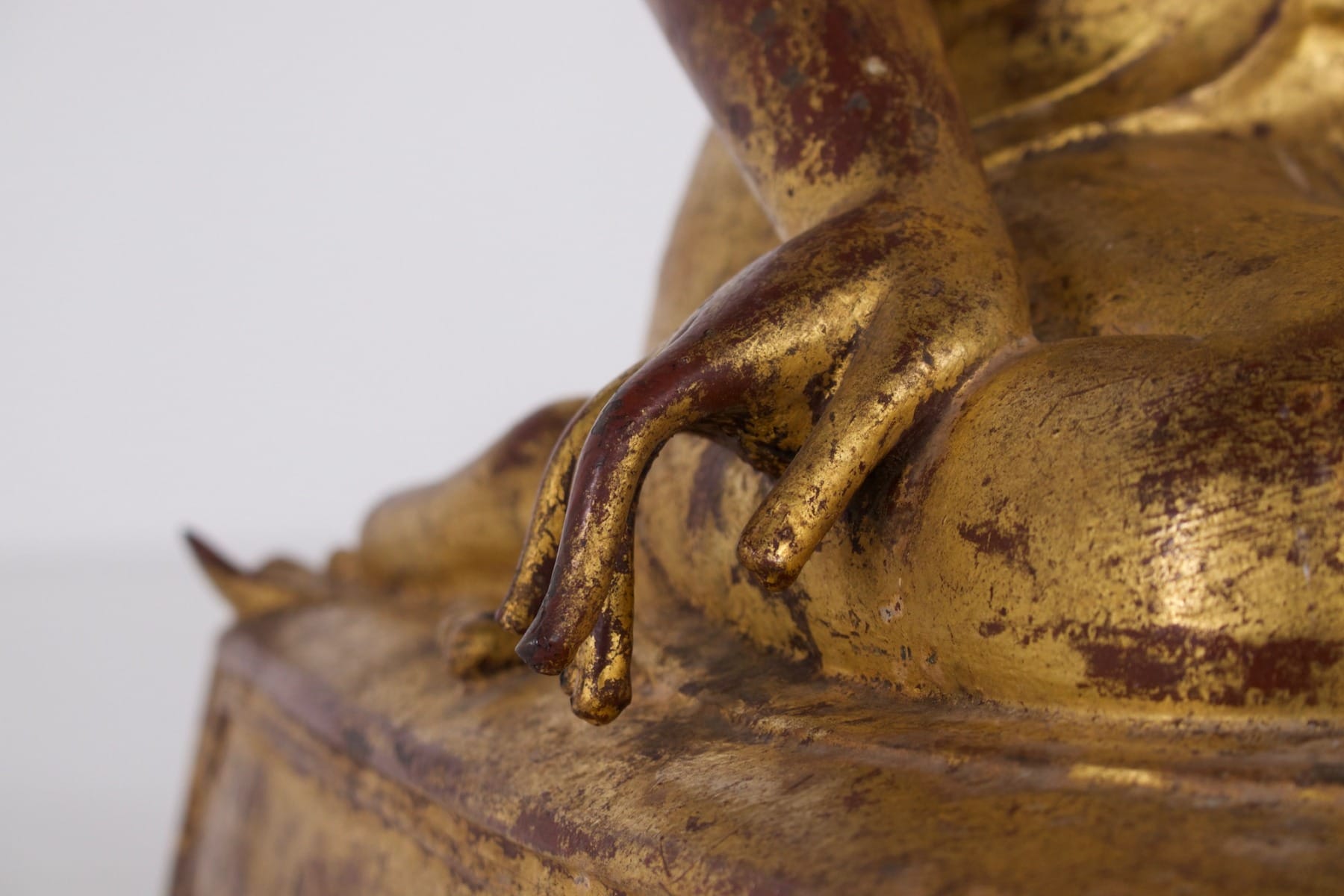
The posture of the hands is an important distinguishing feature. Sāriputta is often depicted with the hands resting on the knees or one hand resting on the ground. Here, the hands are placed more laterally and delicately, which could indicate a specific interpretation or regional difference.
Sold
- The kneeling position with hands on knees evokes representations of Buddha’s disciples, probably Sāriputta, or of donors at prayer. The trapezoidal base adorned with a decorative cartouche is typical of late 19th-century Burmese statues. These bronze worshippers were often offerings commissioned by devotees to obtain spiritual merit, express their devotion, or in gratitude for granted wishes.
- The cartouche at the base of the statue sometimes contained dedicatory inscriptions or blessings. In the Burmese context, it could also contain information about the donor, the craftsman, or even prayers. This was a way of adding a personal and spiritual dimension to the statue, reinforcing its role as an offering or meditation support.
- Worshippers were often placed in temples or domestic altars to accompany Buddha statues. These pieces reflected the spiritual fervor and refined craftsmanship of the period.
Buddha’s ten main disciples include:
Mahā-Moggallāna, the most represented along with Sariputta in Burma. Renowned for his supernatural powers, he is often depicted with a serene, ascetic appearance, in a posture of meditation or veneration, kneeling or standing and dressed in monastic robes. His features are posed and he may be accompanied by symbolic attributes such as a begging bowl. In some representations, he is depicted with disciples, underlining his important role among the Buddha’s principal followers.
Mahā-kāśyapa: Renowned for his rigorous asceticism, he is often depicted as an older monk, with a meditative or preaching posture. He is known to have presided over the first Buddhist council, and is sometimes depicted with a grave, meditative air.
You might also like…


Delivery in Belgium

Delivery in France

Delivery in Luxembourg
