






Gilt Bronze Amitayus Figure – 18th Century, Qianlong, China
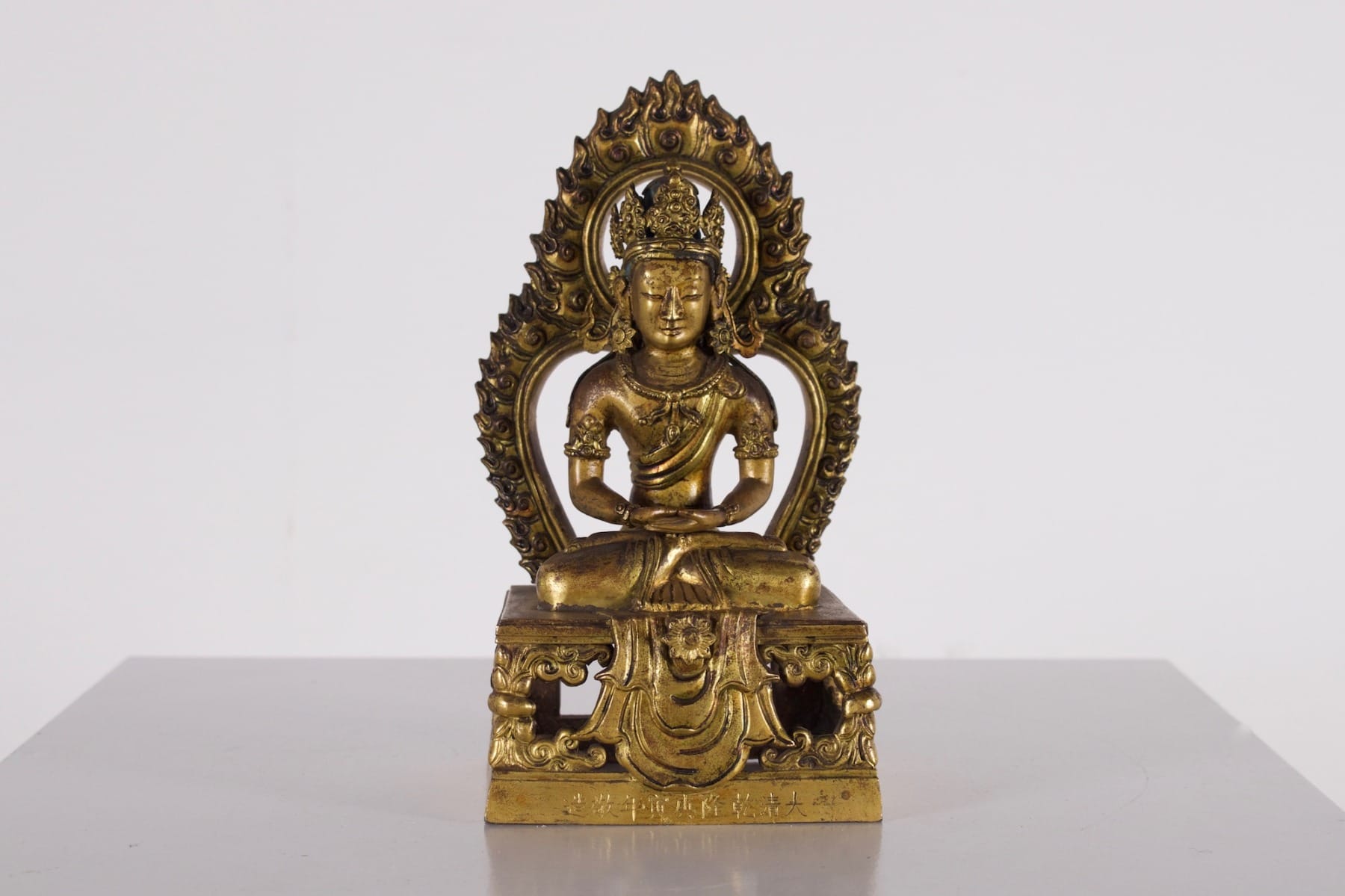
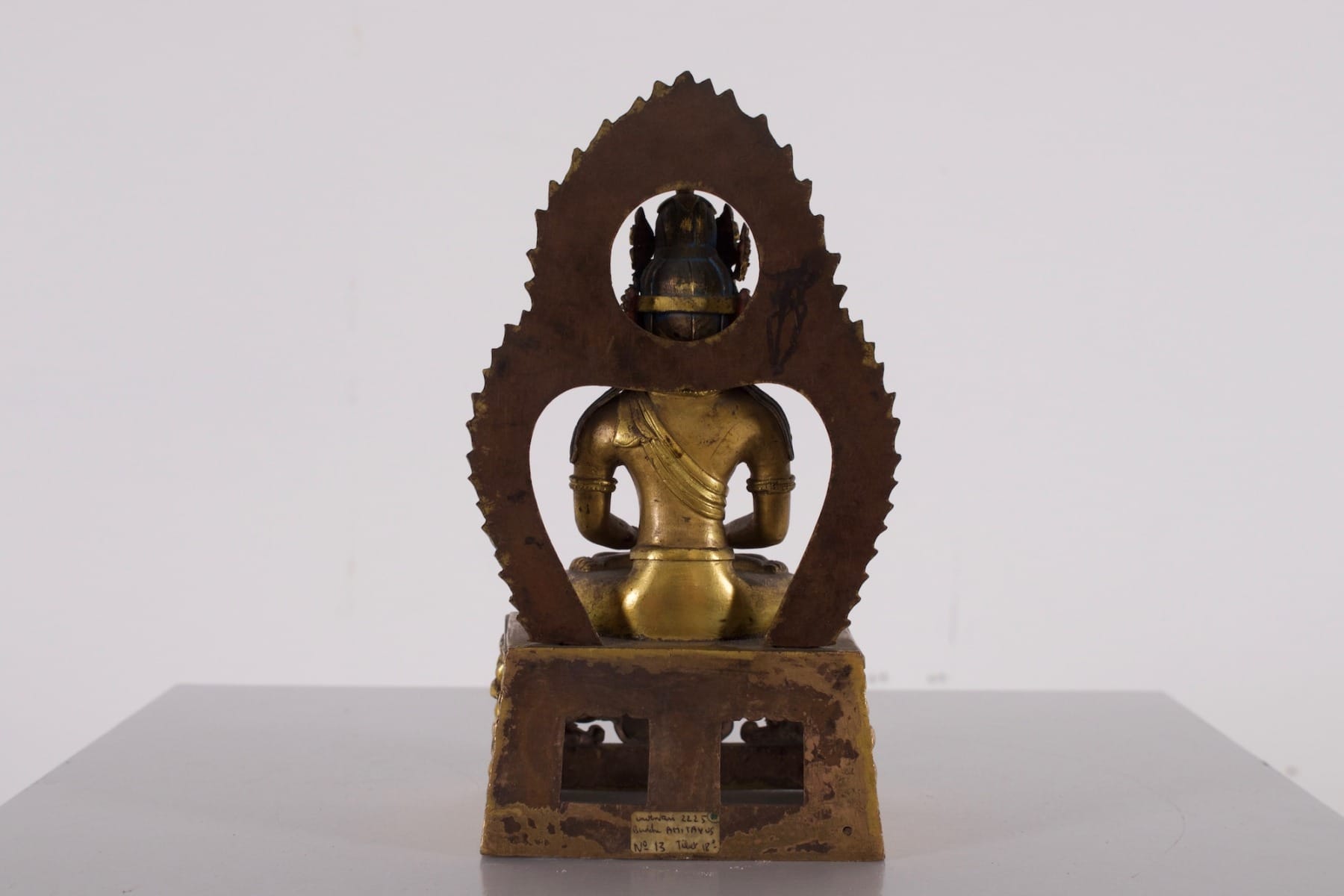
Gilt bronze figure of Buddha Amitayus, China, Qianlong period, late 18th century
- H 20.5 cm
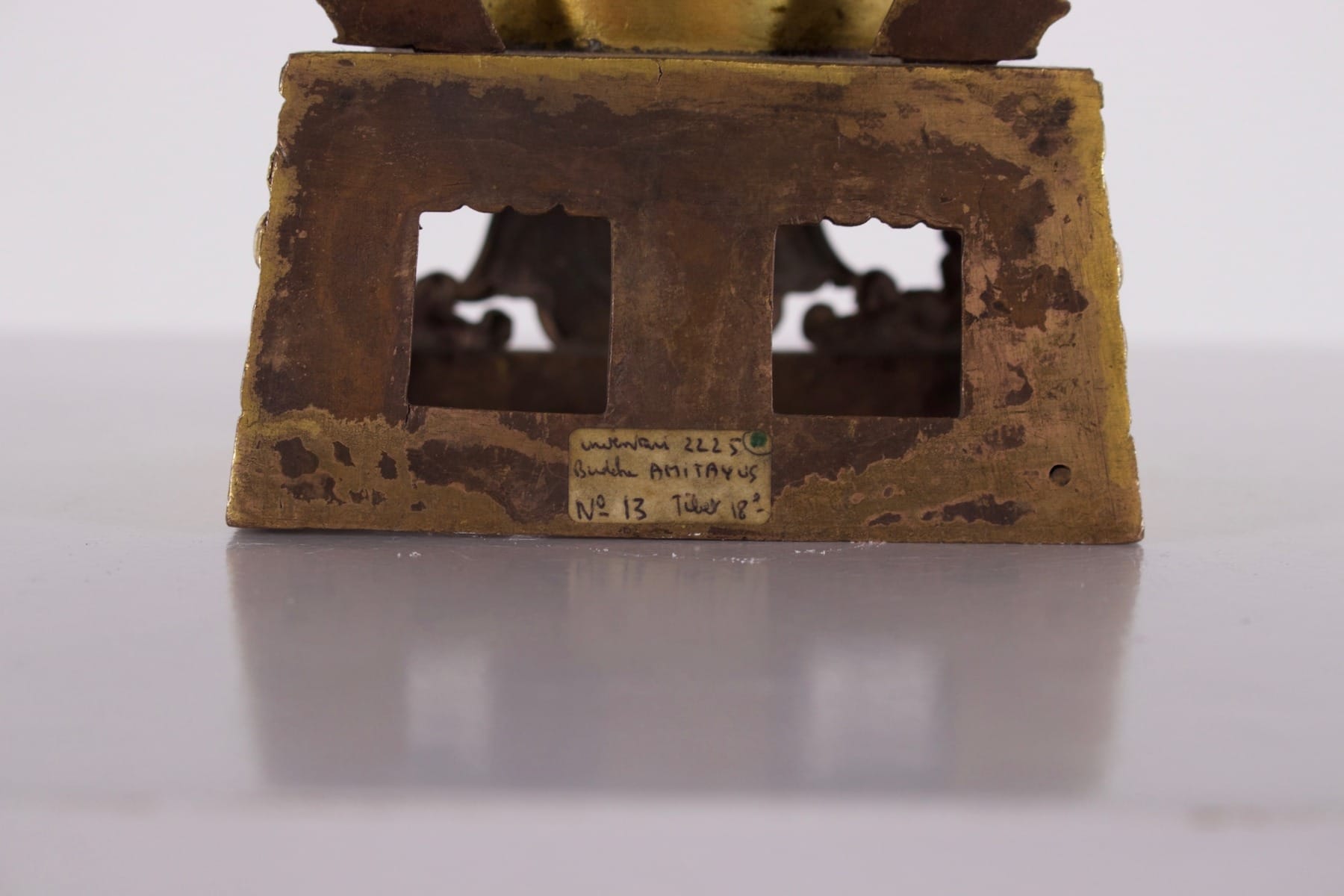
- Provenance: Estate of the collector Claude de Marteau.
- Sold with certificate of origin.
Sold

Bronze Amitayus – Imperial Commissions from the Qianlong Period
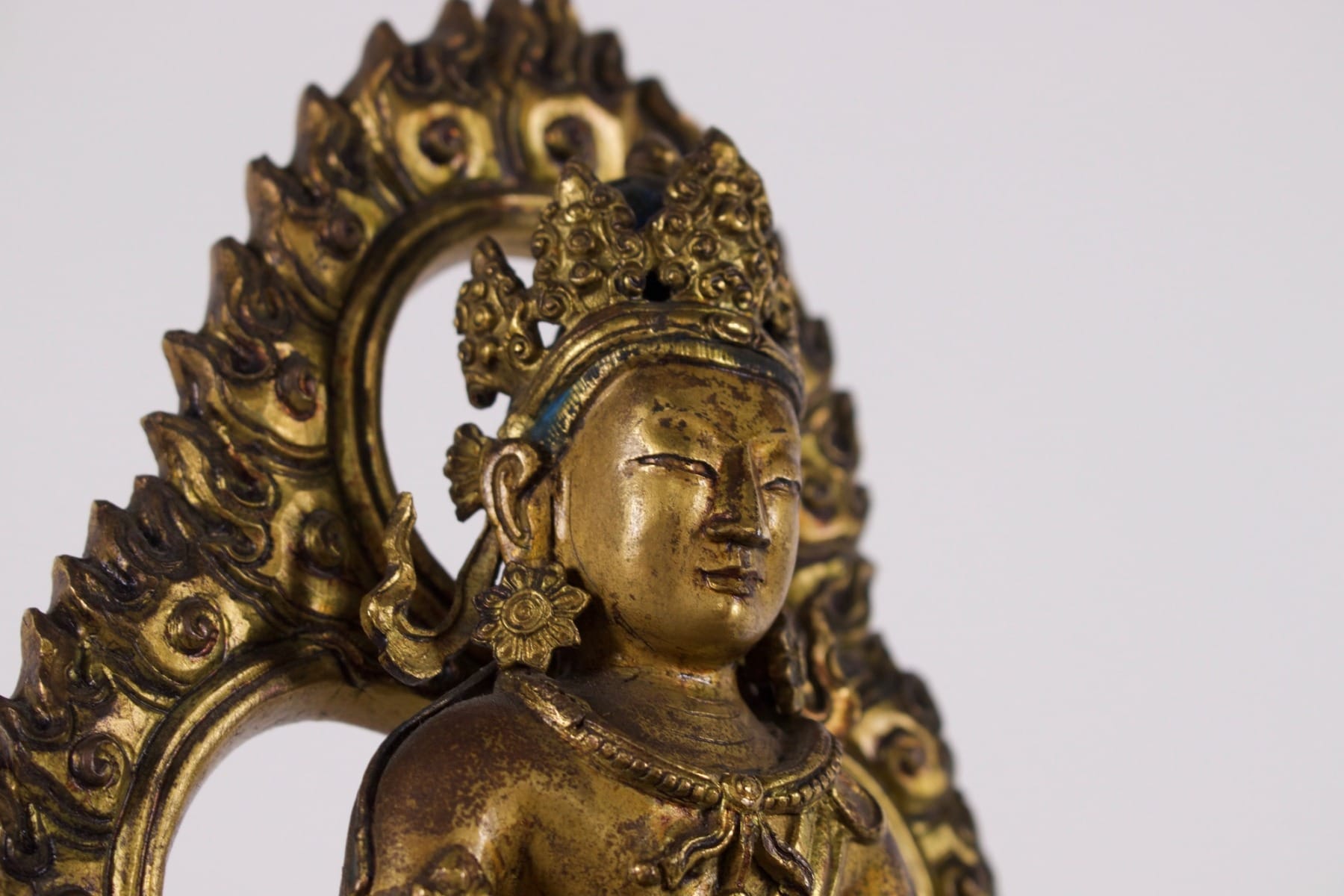
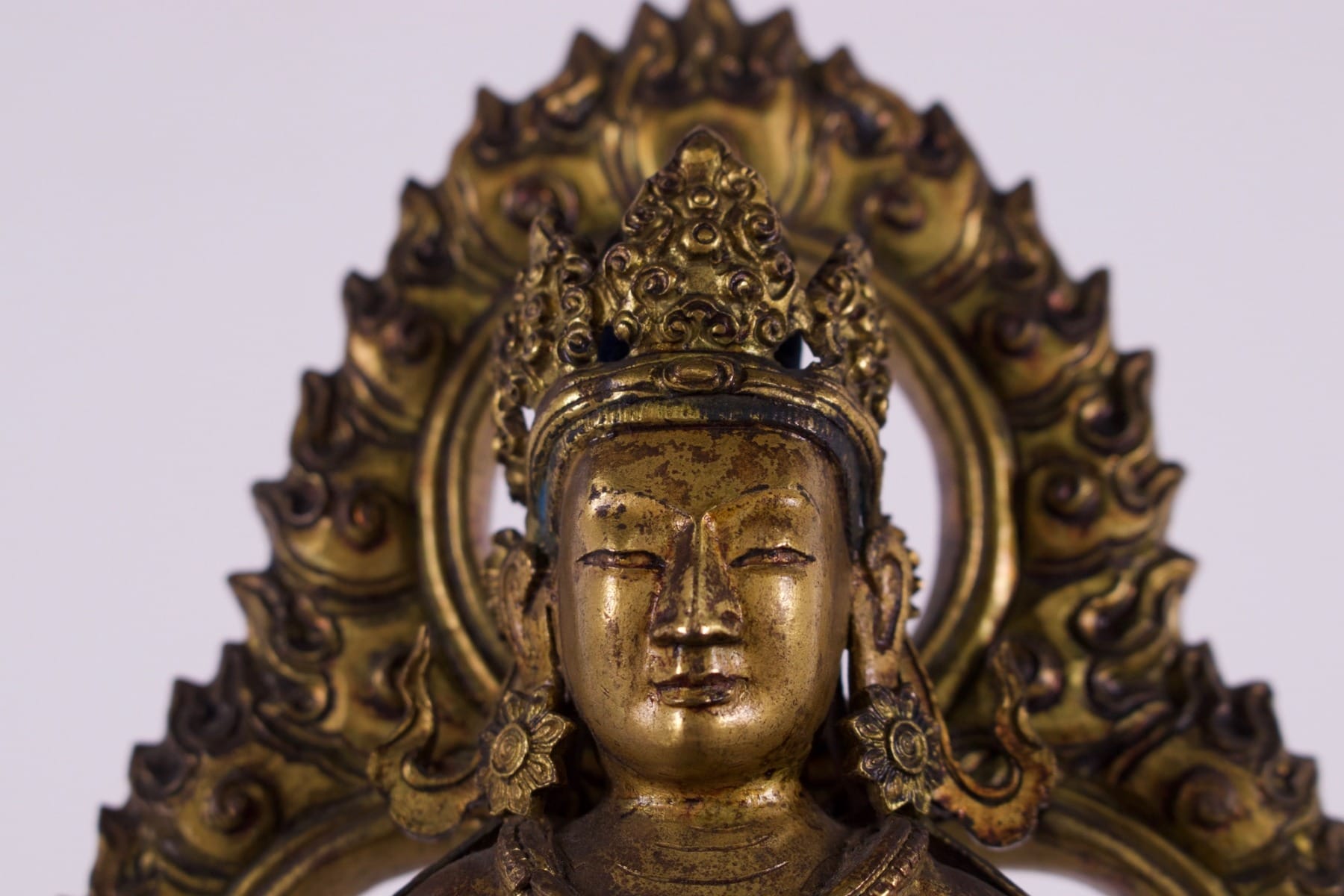
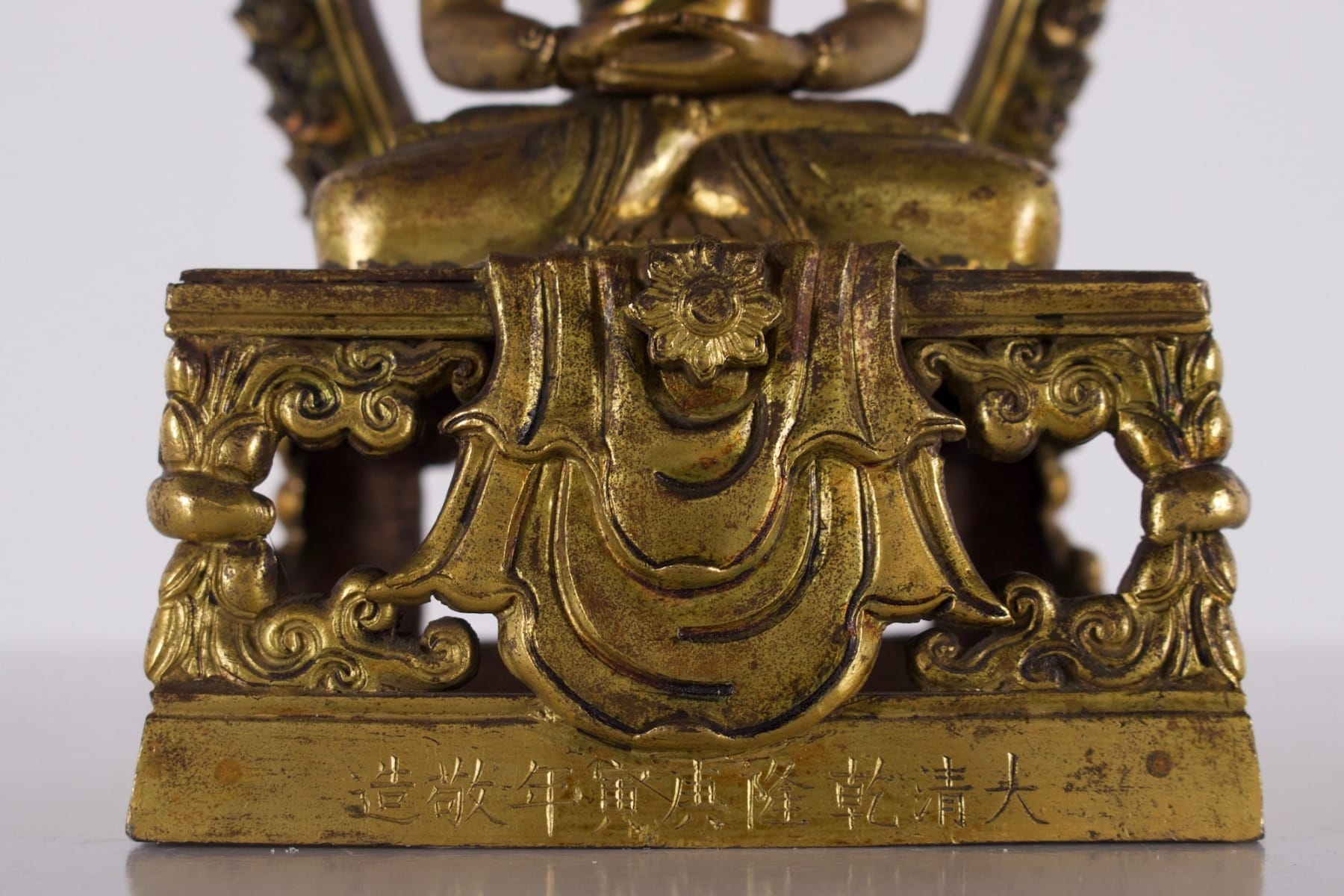
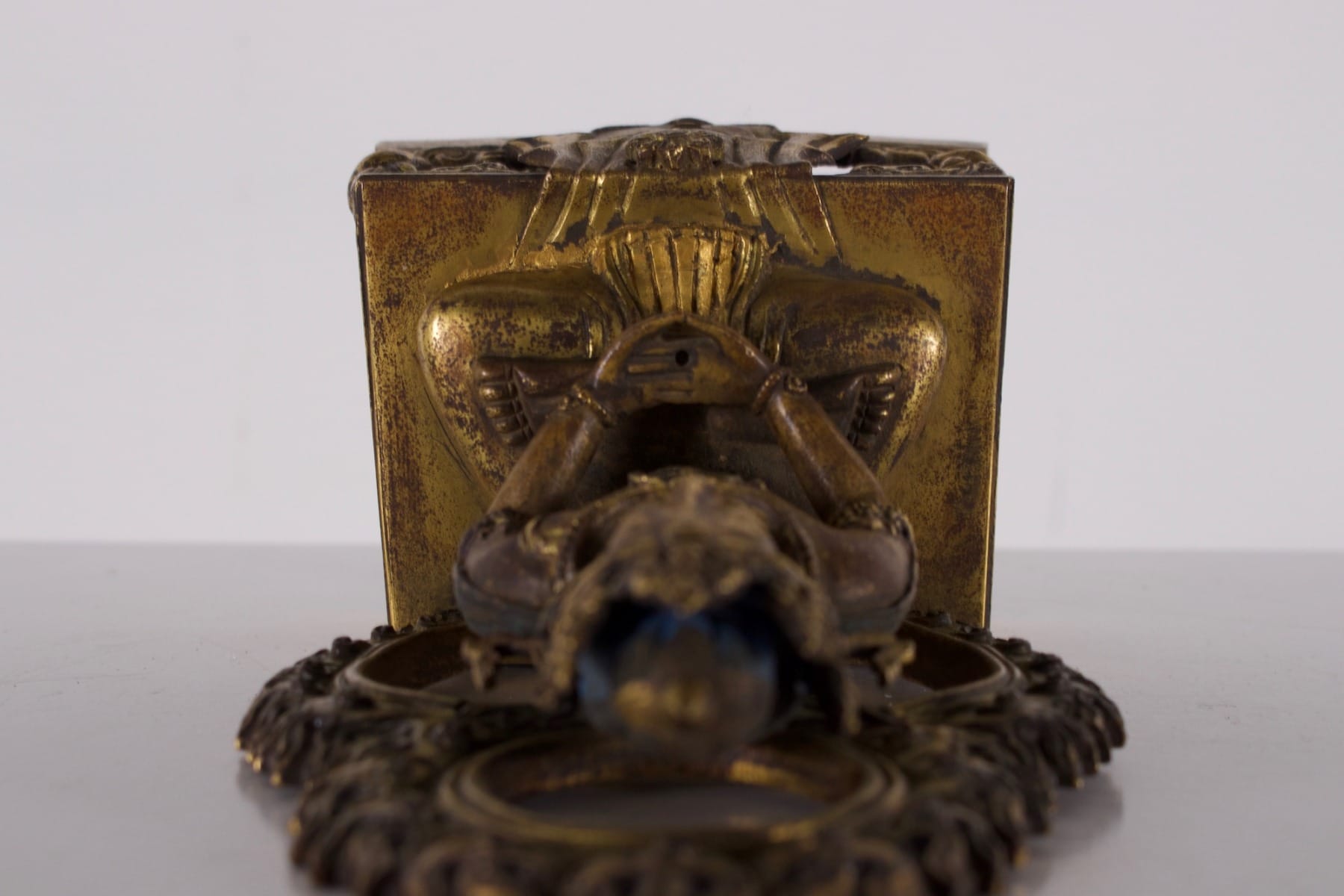
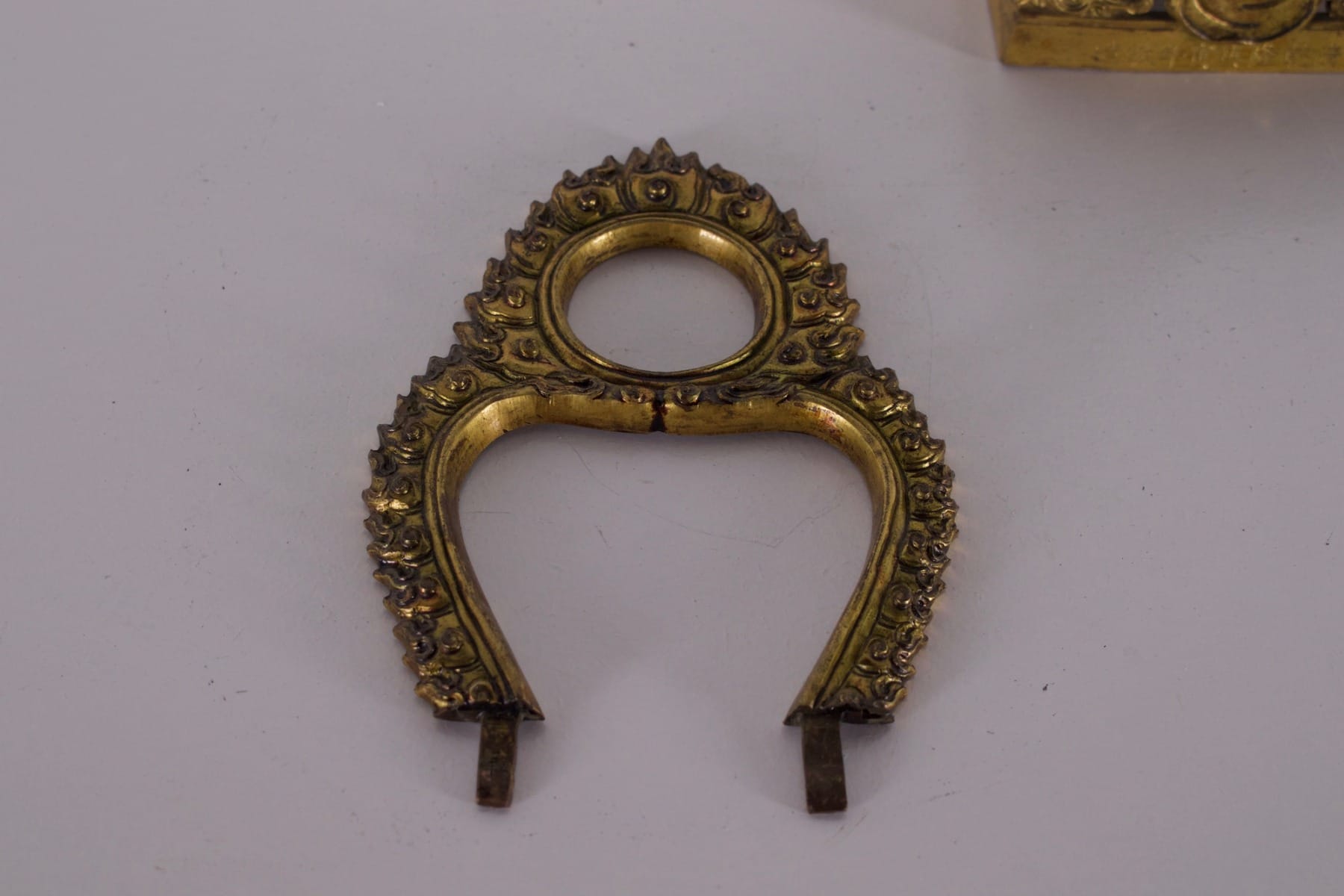
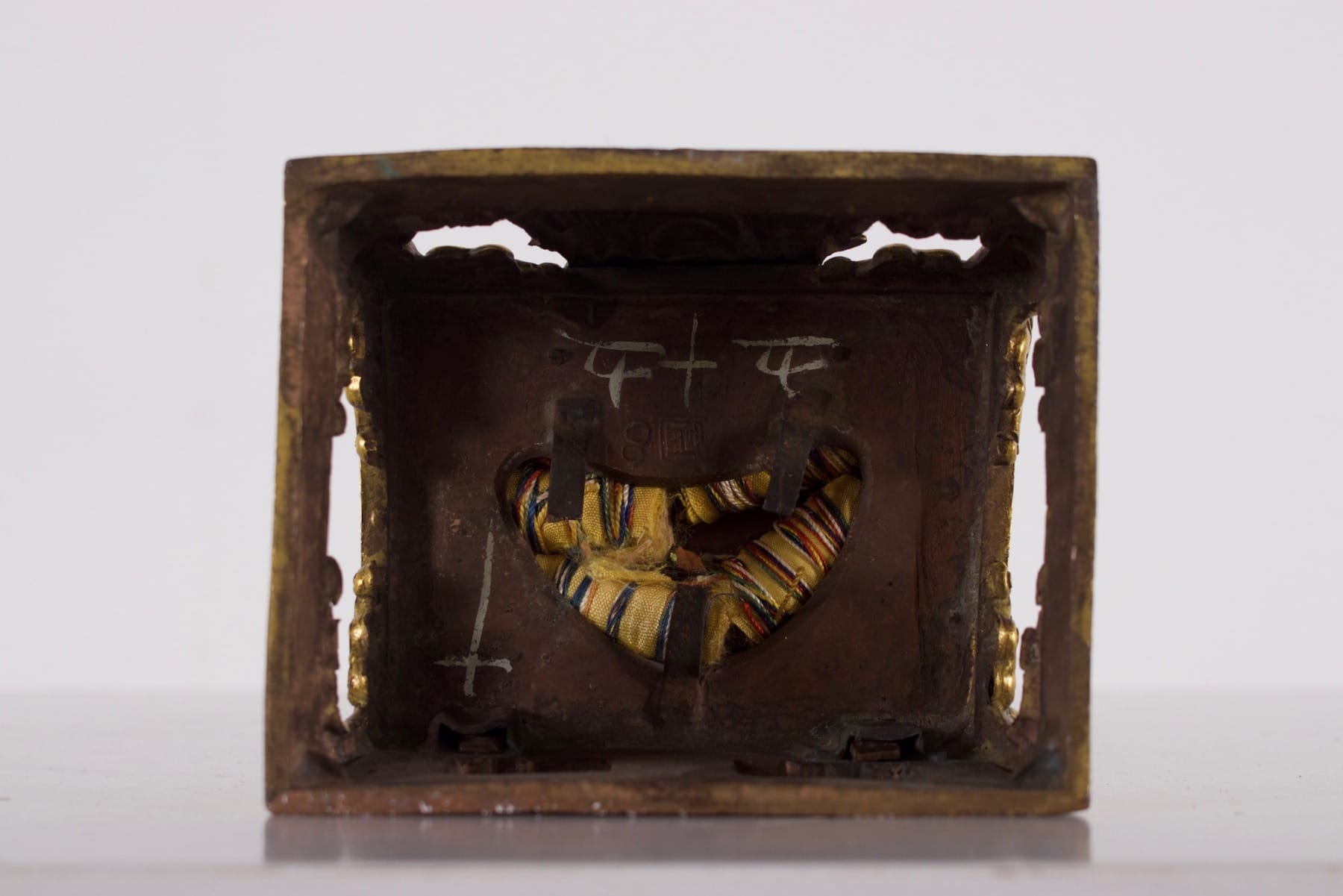
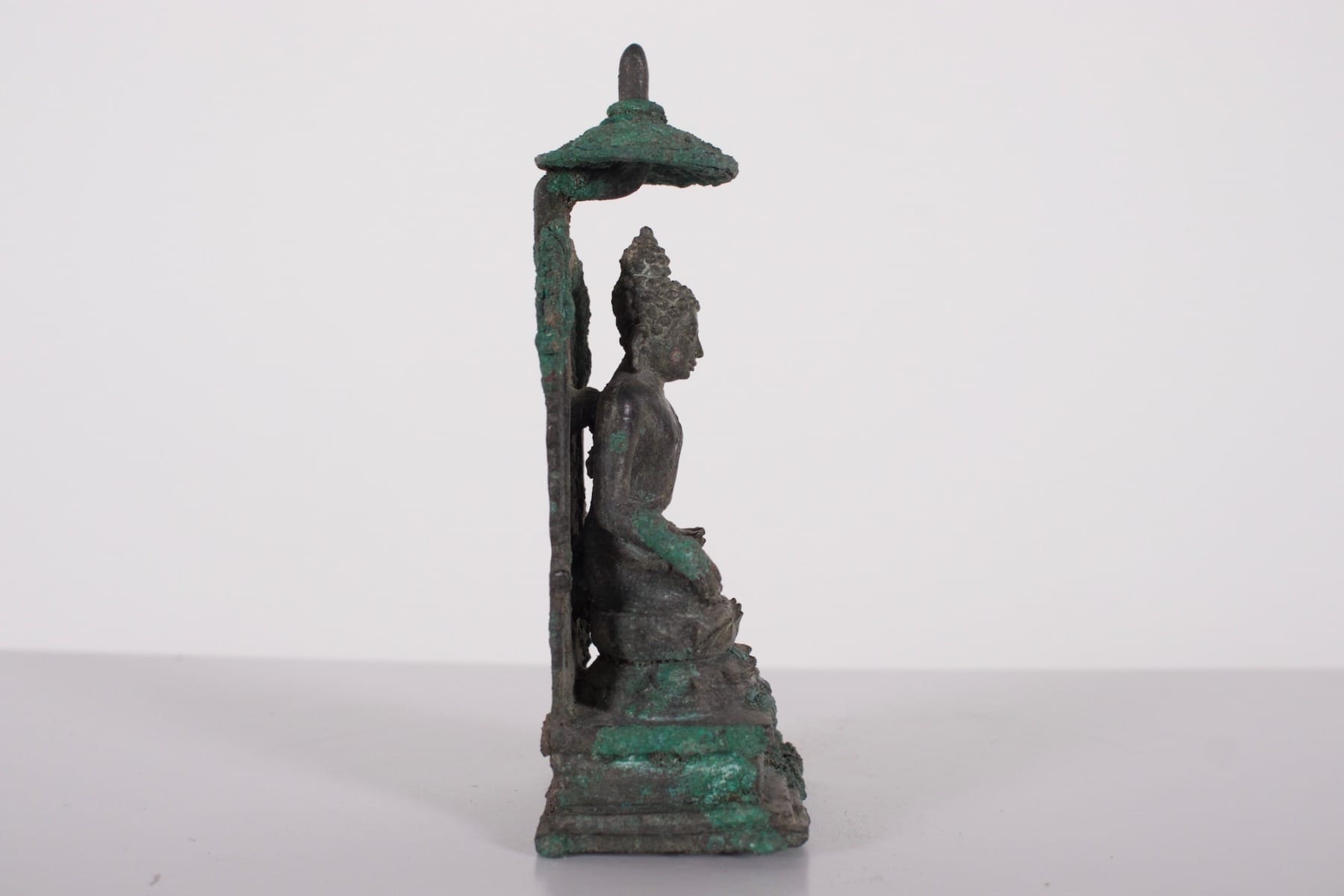
Gilt bronze figure of Amitayus, an aspect of the Bodhisattva Amitabha, seated in dhyānāsana on a rectangular throne, hands joined in dhyāna mudrā. The deity is dressed in a simple monastic robe adorned with jewels and enhanced by a separately cast double flaming mandorla. The base is incised with a nine-character Qianlong mark with the cyclic year gengyin: “Da Qing gengyin nian zhizao” (“Respectfully made in the gengyin year during the Qianlong period of the Great Qing Dynasty”), corresponding to the year 1770.
The kalasha is missing.
Amitayus was one of the most popular deities in the Tibetan Buddhist pantheon during the Qing Dynasty, particularly during the Qianlong period. Qianlong (qián lóng) is not a proper name but the reign name of Emperor Hongli, generally translated as “Heavenly Abundance.” Considered one of the most erudite emperors in Chinese history, he showed a profound interest in Tibetan Buddhism and actively encouraged the production of imperial images for worship and court celebrations.

A comparable Amitayus published in Gunter Markret’s book “Buddhas-Götter und Dämonen”
Figures of Amitayus, a symbol of longevity, were notably commissioned in gilt bronze and porcelain for the 60th and 70th birthdays of Empress Dowager Chongqing. The date on this figure precisely coincides with her 70th birthday.
An identical example from the same date is illustrated by Ulrich von Schroeder in Indo-Tibetan Bronzes (p. 158B), where the author specifies that these sculptures were produced using reusable molds, thus explaining the existence of identical examples bearing different dates.
Former collection of Claude de Marteau.
You might also like…


Discover also...


Delivery to Belgium

Delivery to France

Delivery to Luxembourg
