



Pierre Guariche
From the early 1950s, Pierre Guariche developed a personal body of work while collaborating with leading French manufacturers. The designer created now-iconic seating for Steiner, Airborne, and Huchers-Minvielle, characterized by the use of lightweight structures and early exploration of molded plywood.
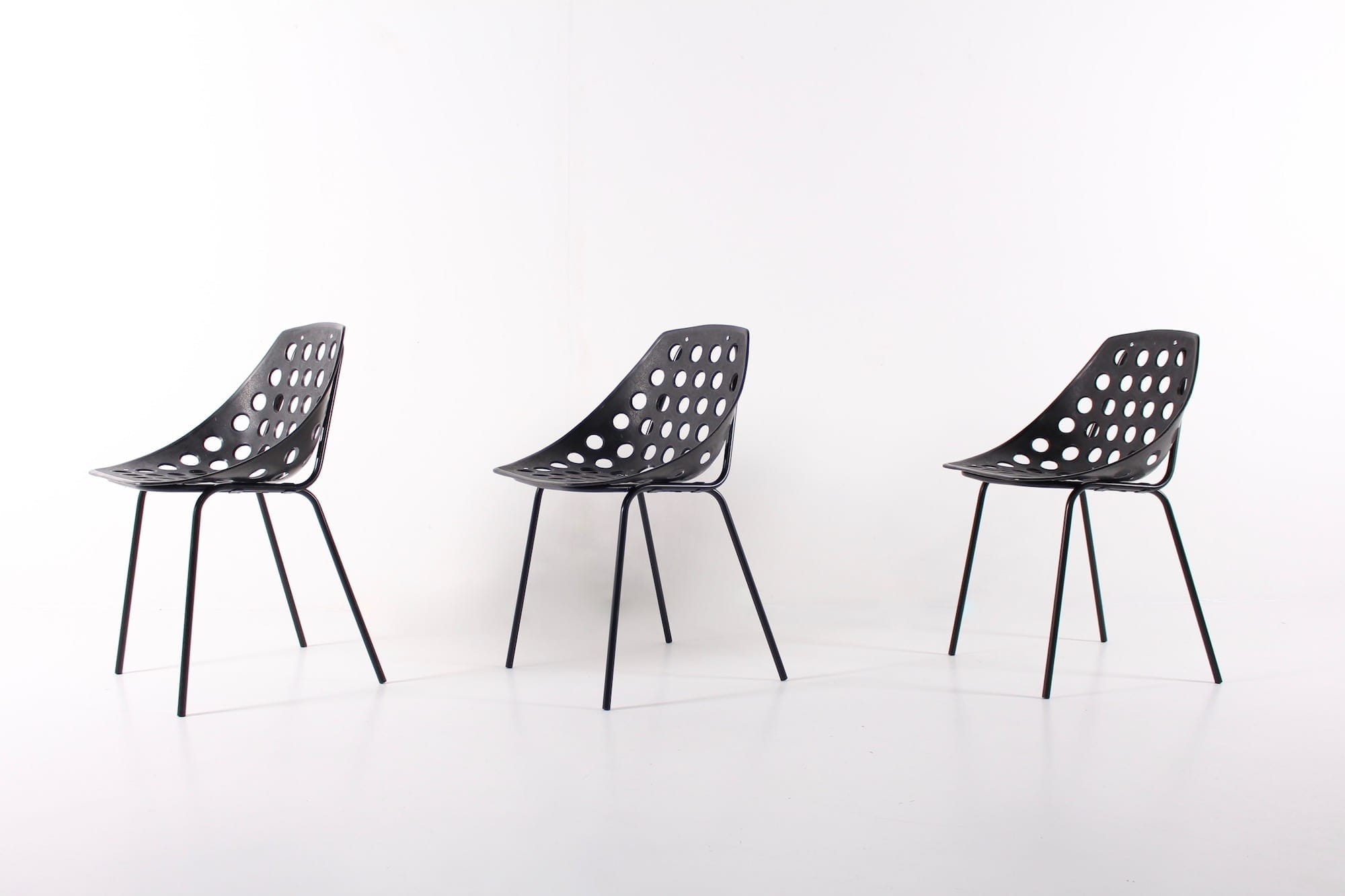


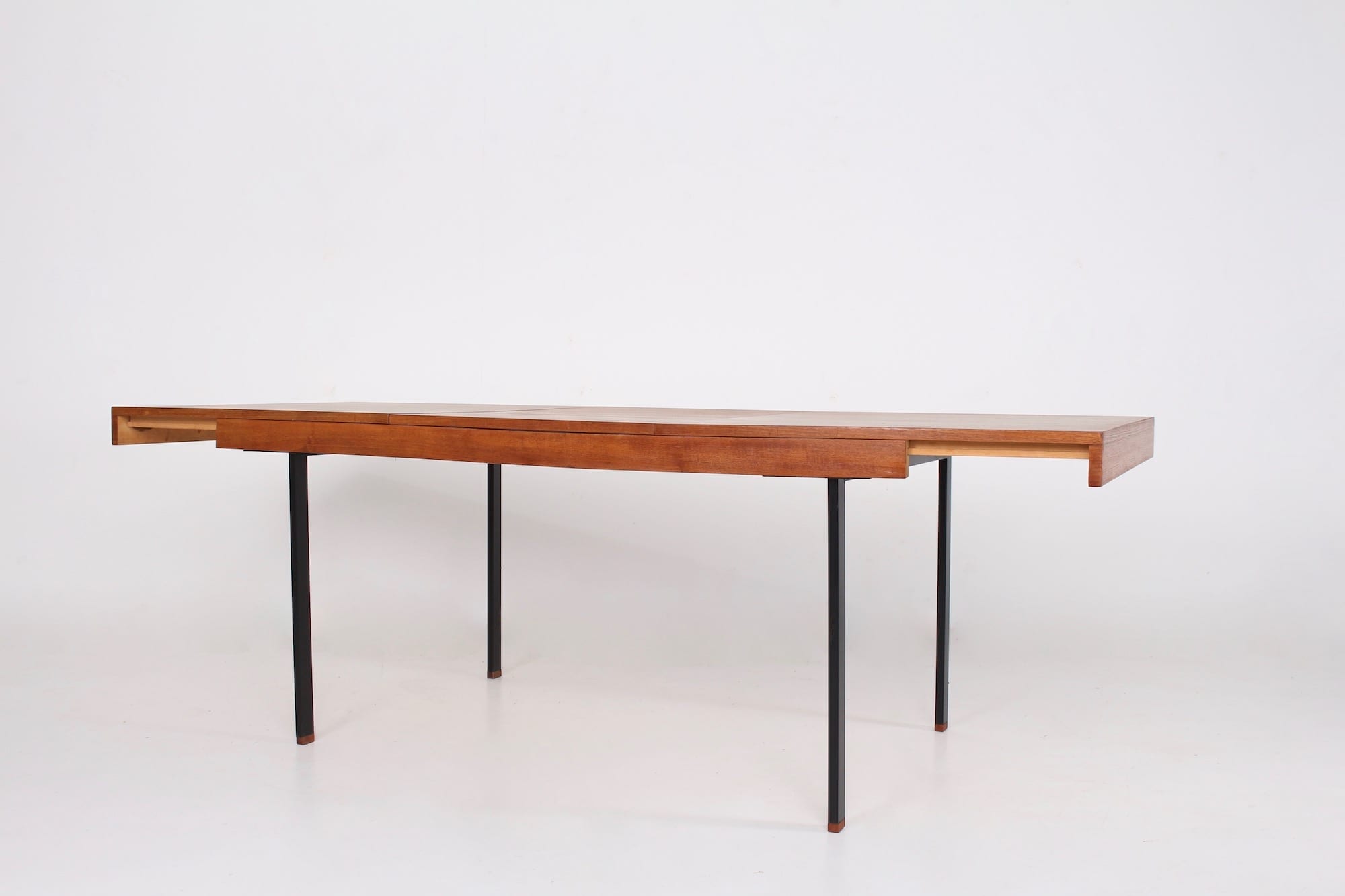
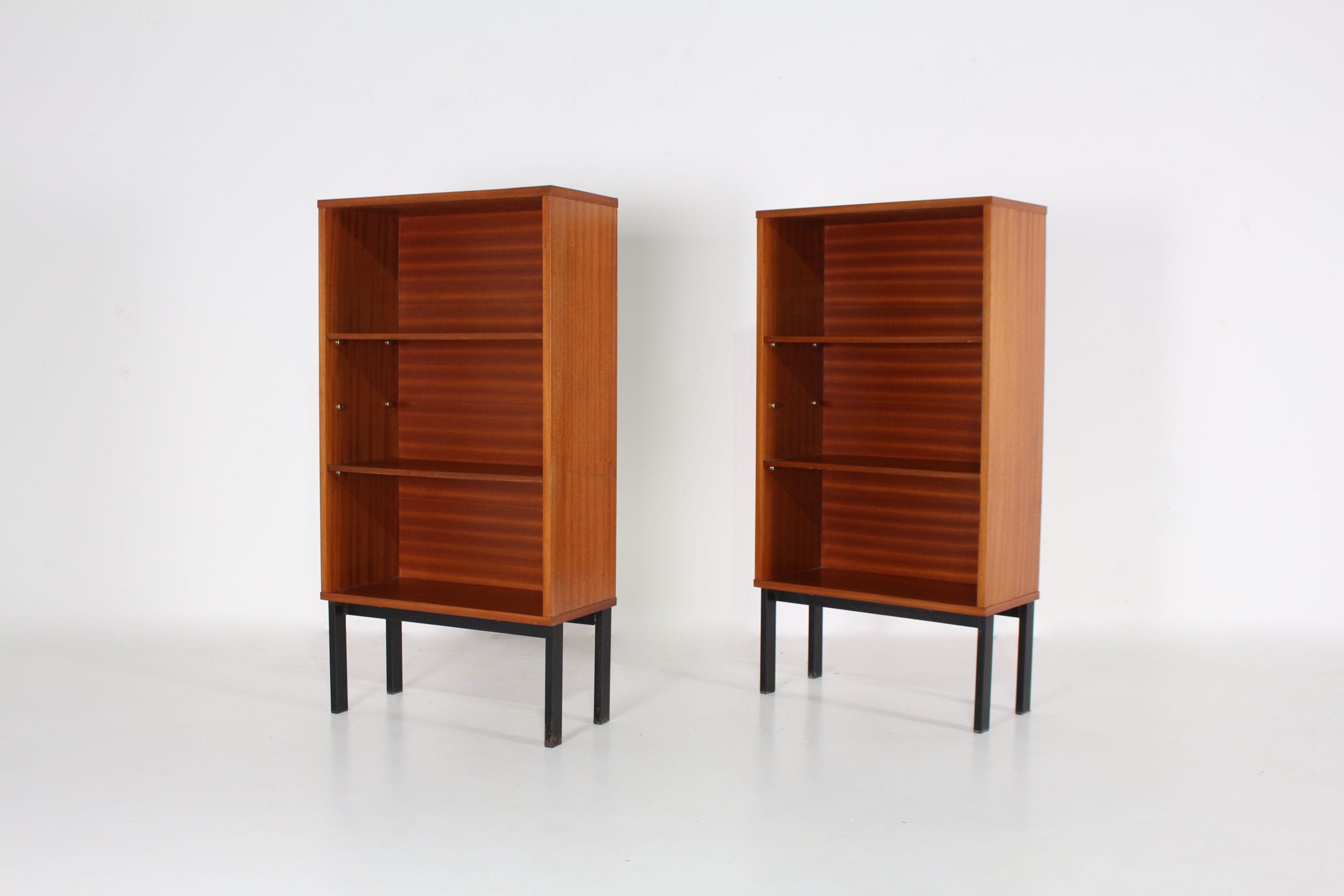
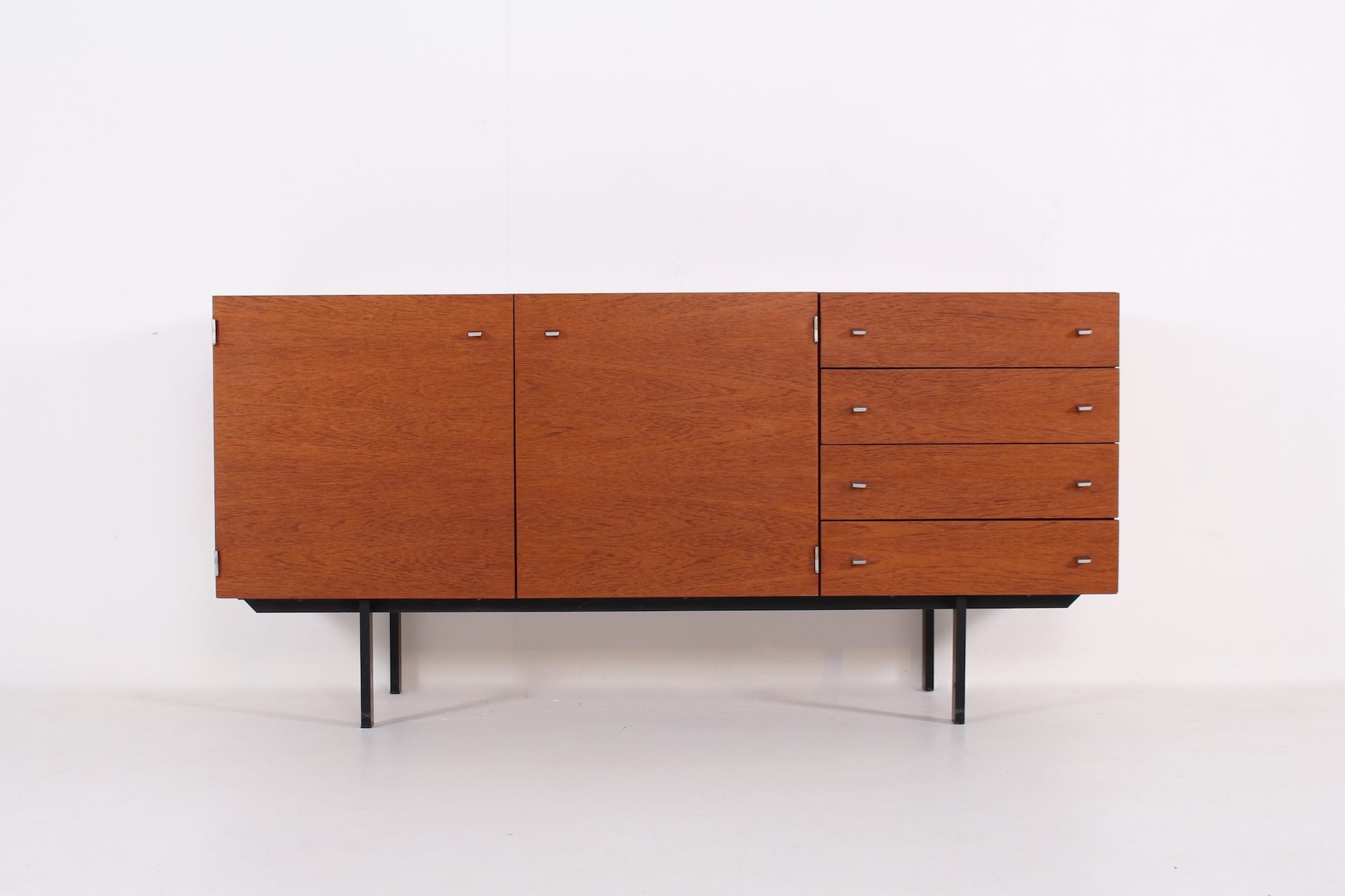
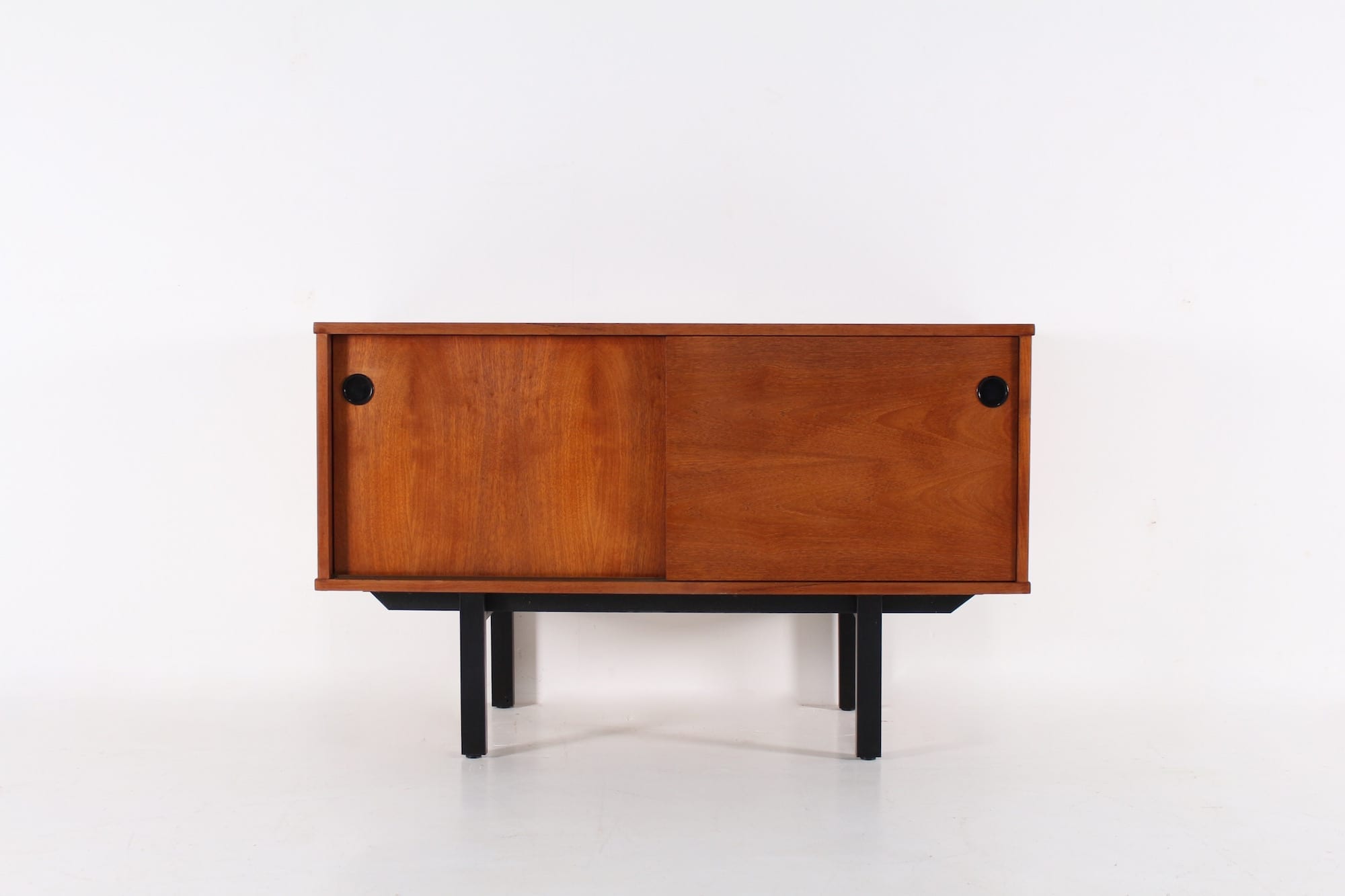
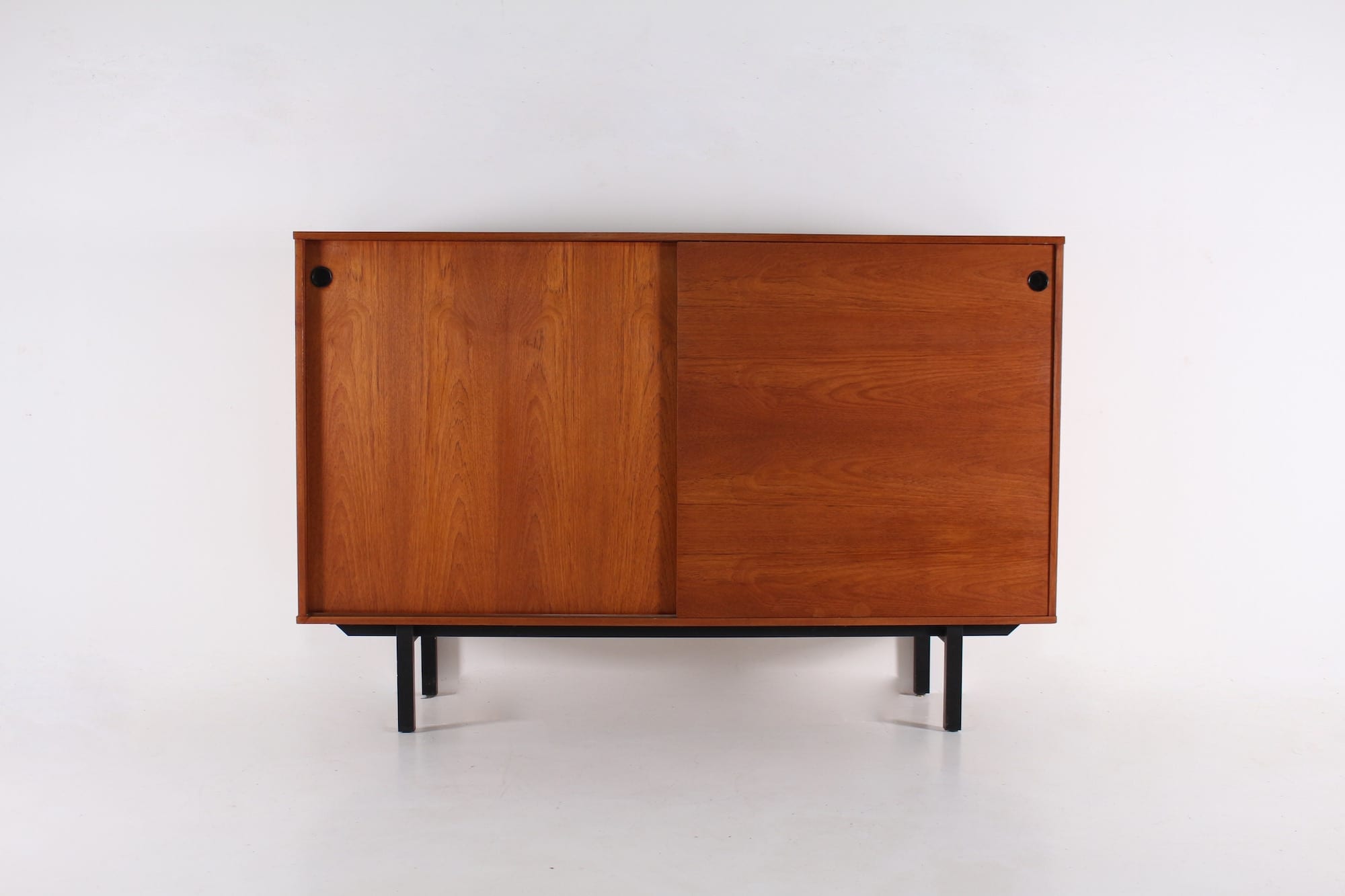
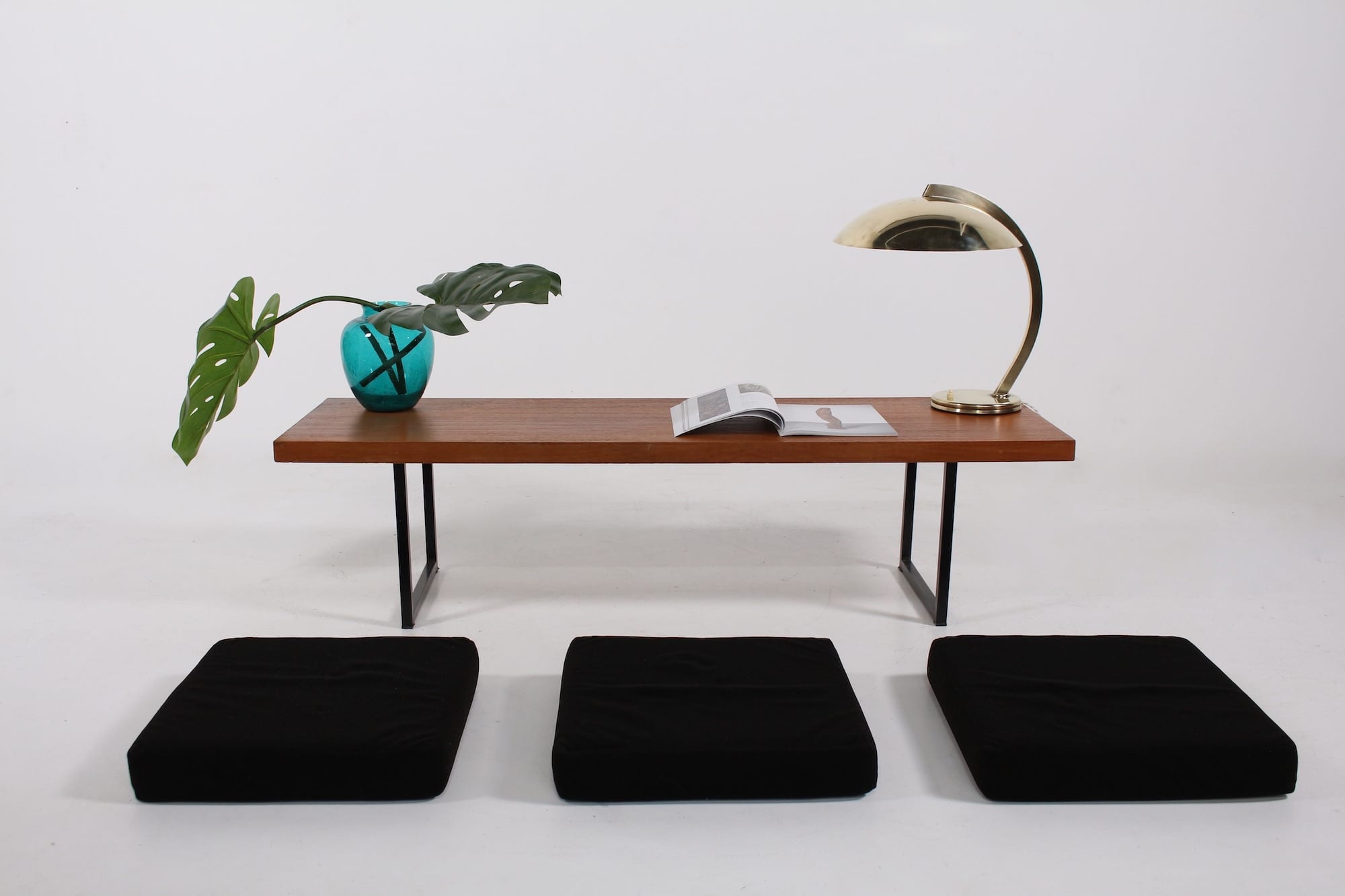
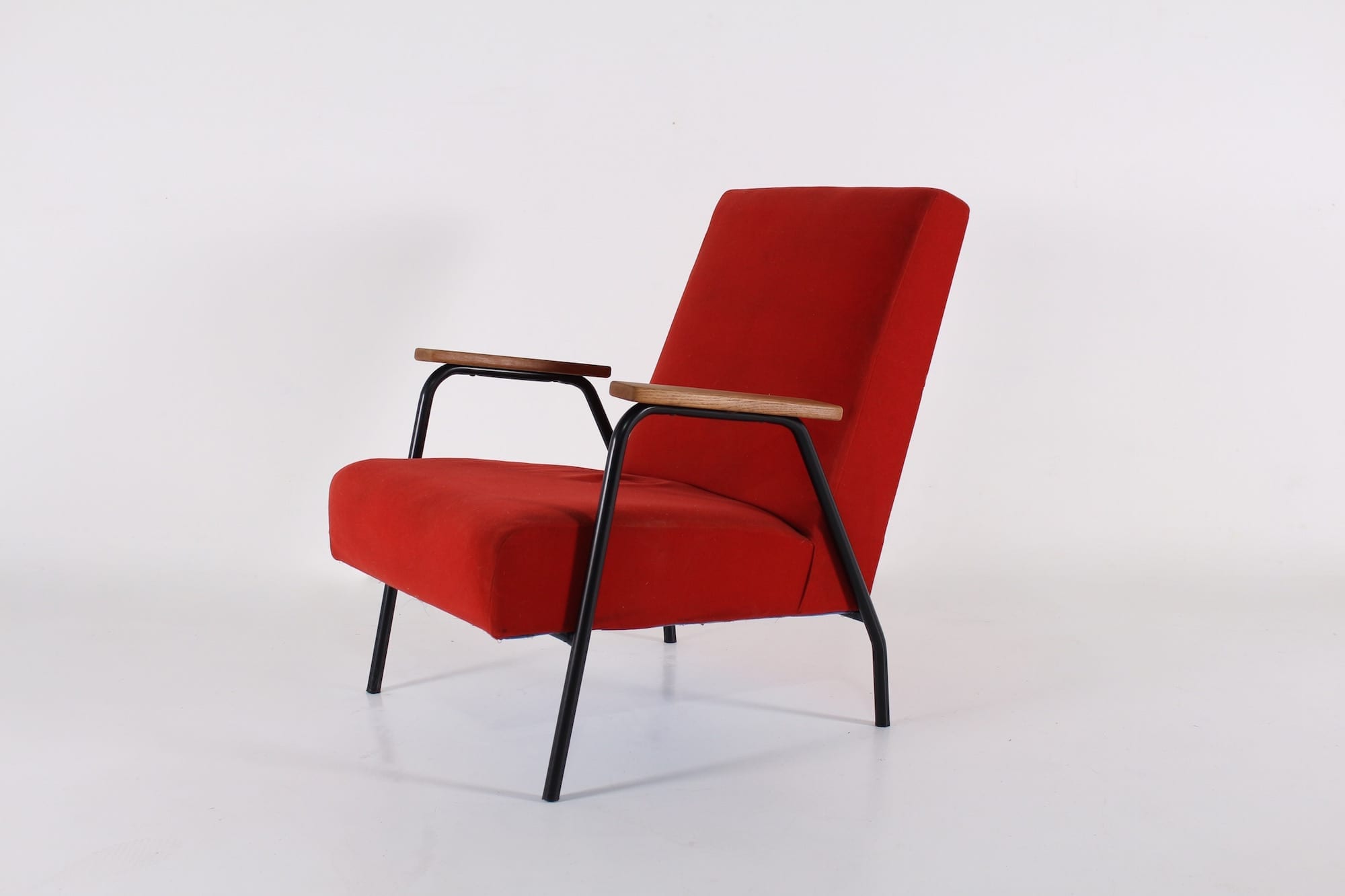

Pierre Guariche (1926–1995) established himself as one of the major figures of postwar French design. Trained at the École nationale supérieure des Arts Décoratifs in Paris, he followed in the continuity of Reconstruction principles alongside René Gabriel and Marcel Gascoin, favoring a rational approach to furniture designed for mass production and contemporary uses.
Pierre Guariche’s furniture and lighting
From the early 50s, Pierre Guariche developed a personal body of work while collaborating with leading French manufacturers. The designer created now-iconic chairs and armchairs for Steiner, Airborne, and Huchers-Minvielle, characterized by the use of lightweight structures and early exploration of molded plywood.
In parallel, Pierre Guariche participated in the renewal of lighting alongside creators like Serge Mouille and Jacques Biny. With the publisher Disderot, he developed a coherent range of lighting designed for the various spaces of the modern home. His work is distinguished by a particular attention to light quality, through devices combining direct, indirect, and diffused lighting.
In 1954, Pierre Guariche founded the Atelier de Recherches Plastiques (ARP) with Michel Mortier and Joseph-André Motte. Their collaboration gave rise to innovative furniture programs intended for mass production, notably multifunctional modular systems that achieved significant commercial success and contributed to the evolution of domestic furniture.
From the 60s, he shifted his focus toward interior architecture. Guariche became artistic director for the Belgian manufacturer Meurop, for whom he developed an accessible and coherent mass-produced furniture line including chairs, armchairs, tables, desks, and storage furniture. He also completed several major projects, including the interior design of the Maison de la Culture in Firminy, designed by Le Corbusier, as well as various public facilities in Essonne.
Pierre Guariche’s work follows a comprehensive approach, from furniture to spaces, with constant attention to proportions, use, and clarity of forms. His vocabulary evolved in the 1960s with the introduction of exposed metal structures and more taut lines.
Alongside his activity as designer and interior architect, Pierre Guariche taught at the École d’architecture in Tournai and at the École nationale supérieure des Arts Décoratifs (ENSAD), contributing to the transmission of design thinking based on rigor and functionality.
Pierre Guariche’s entire body of work demonstrates a constant desire to reconcile industrial production, quality of use, and rigor. Pierre Guariche remains today an essential reference in 20th-century French design.