




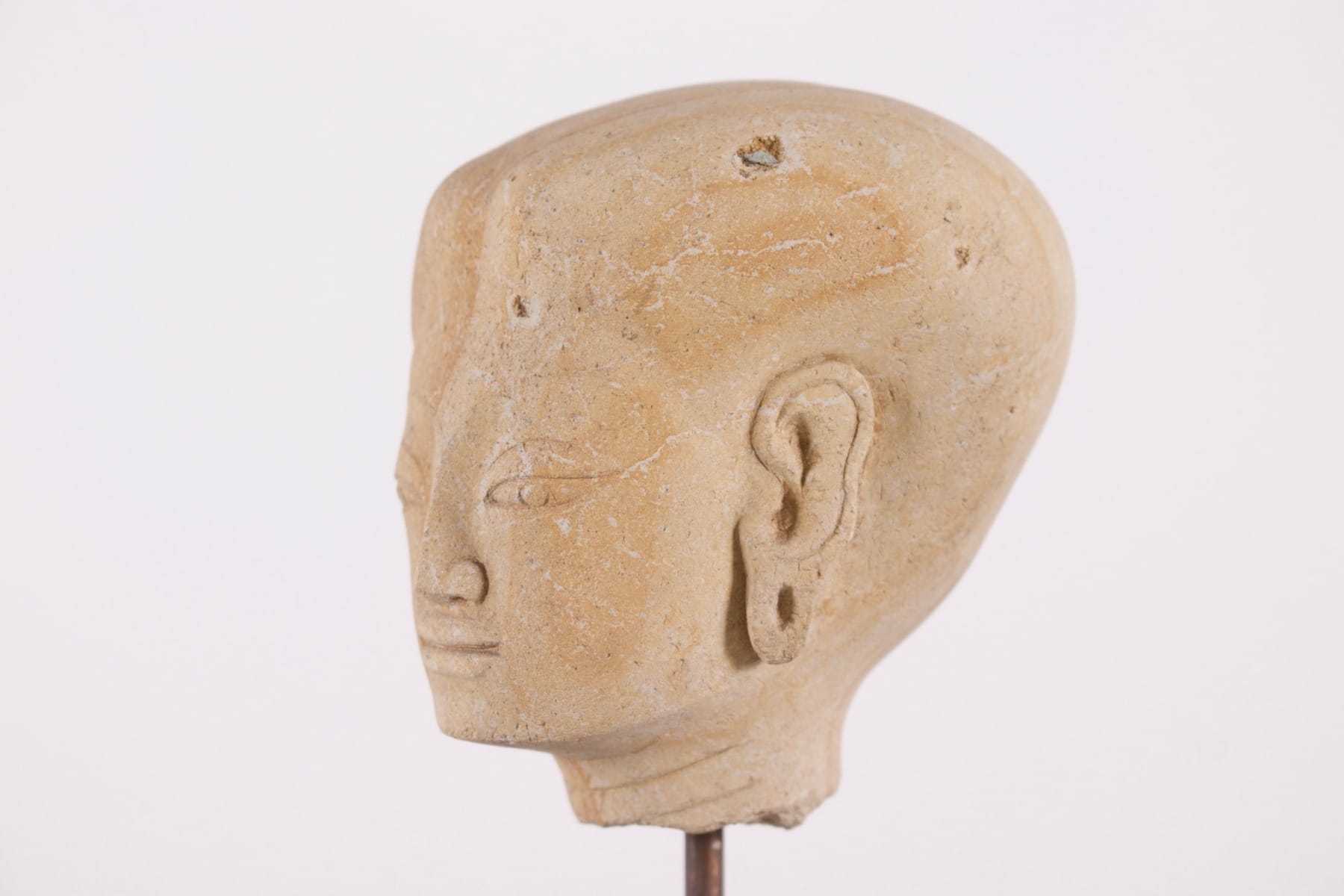
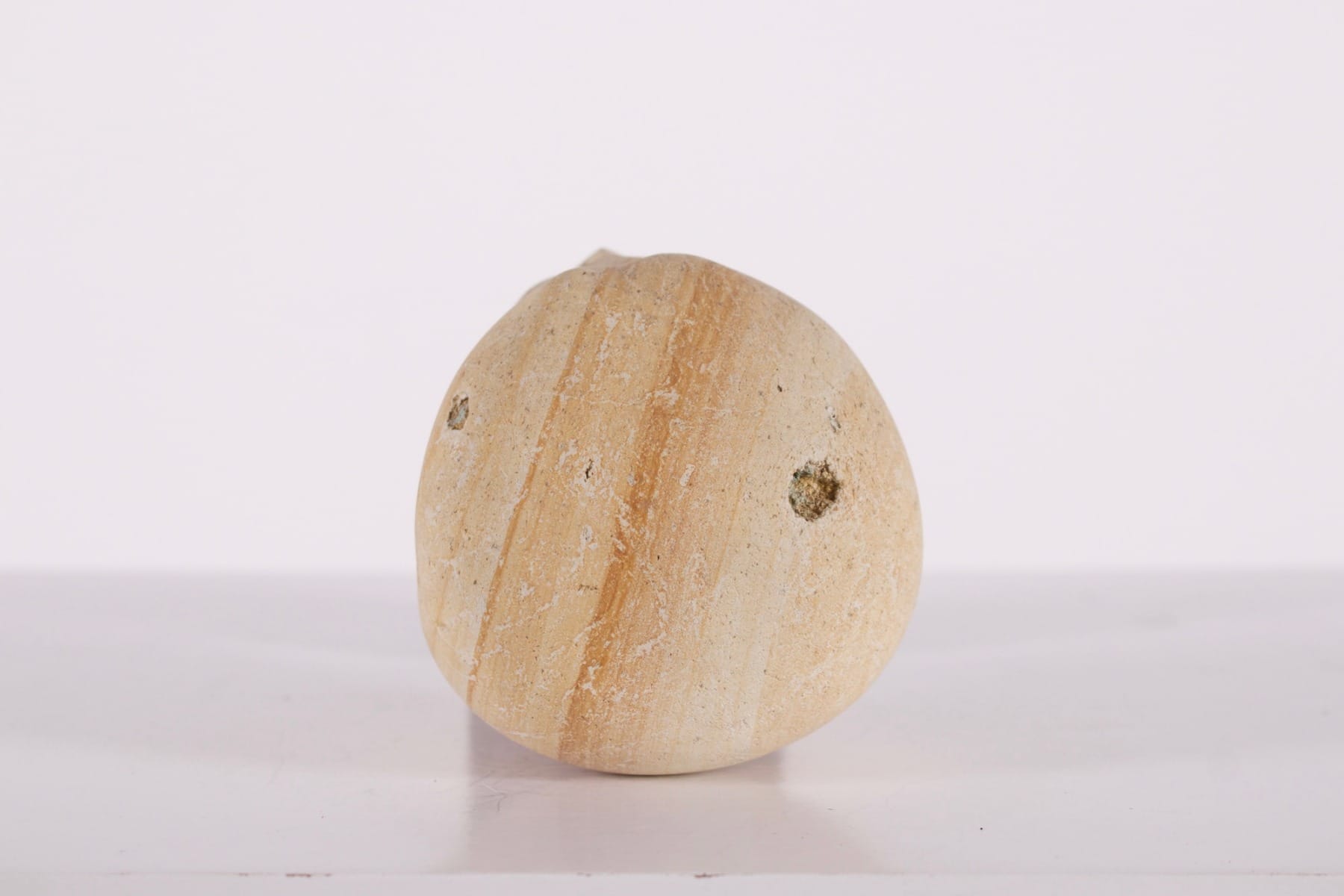


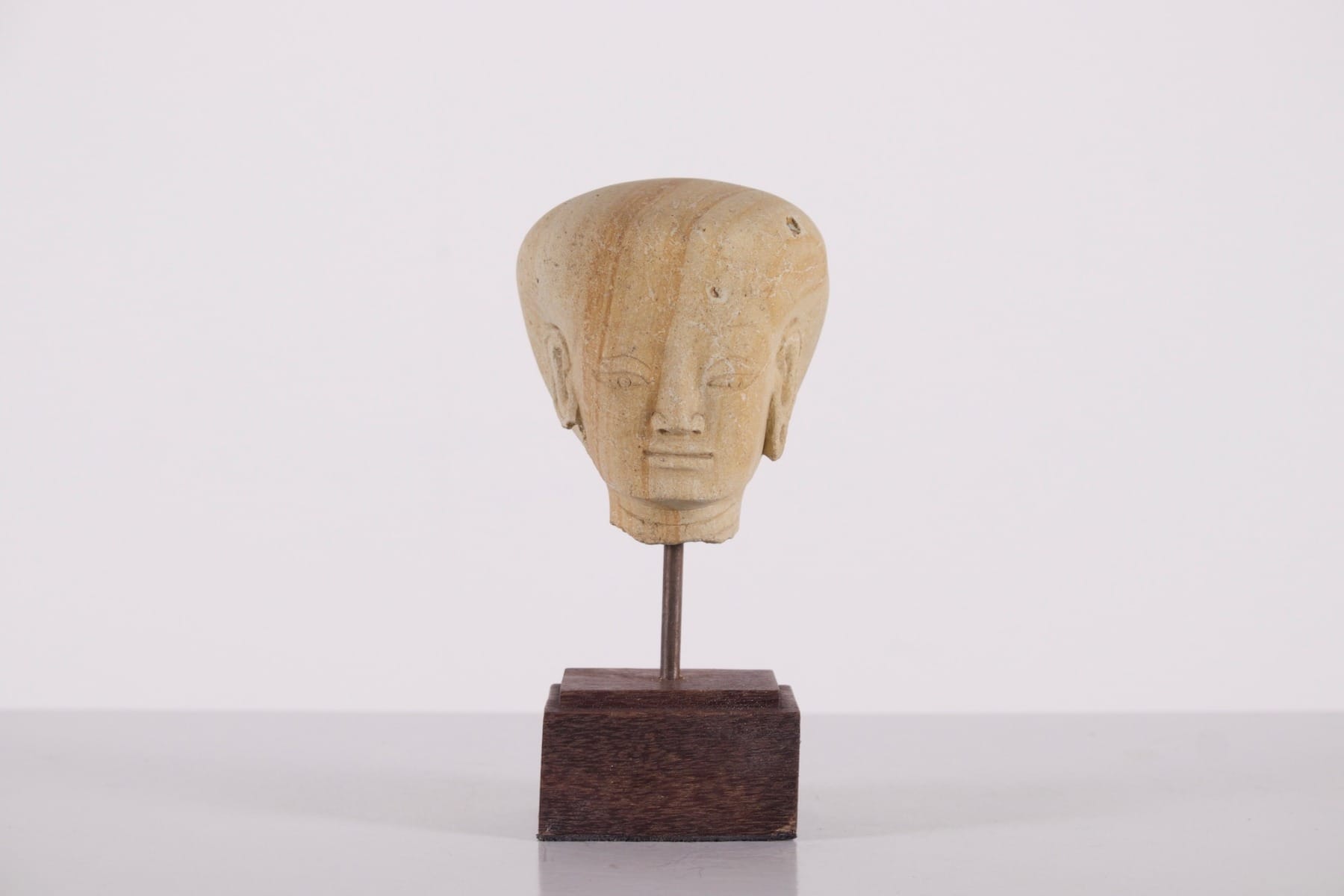
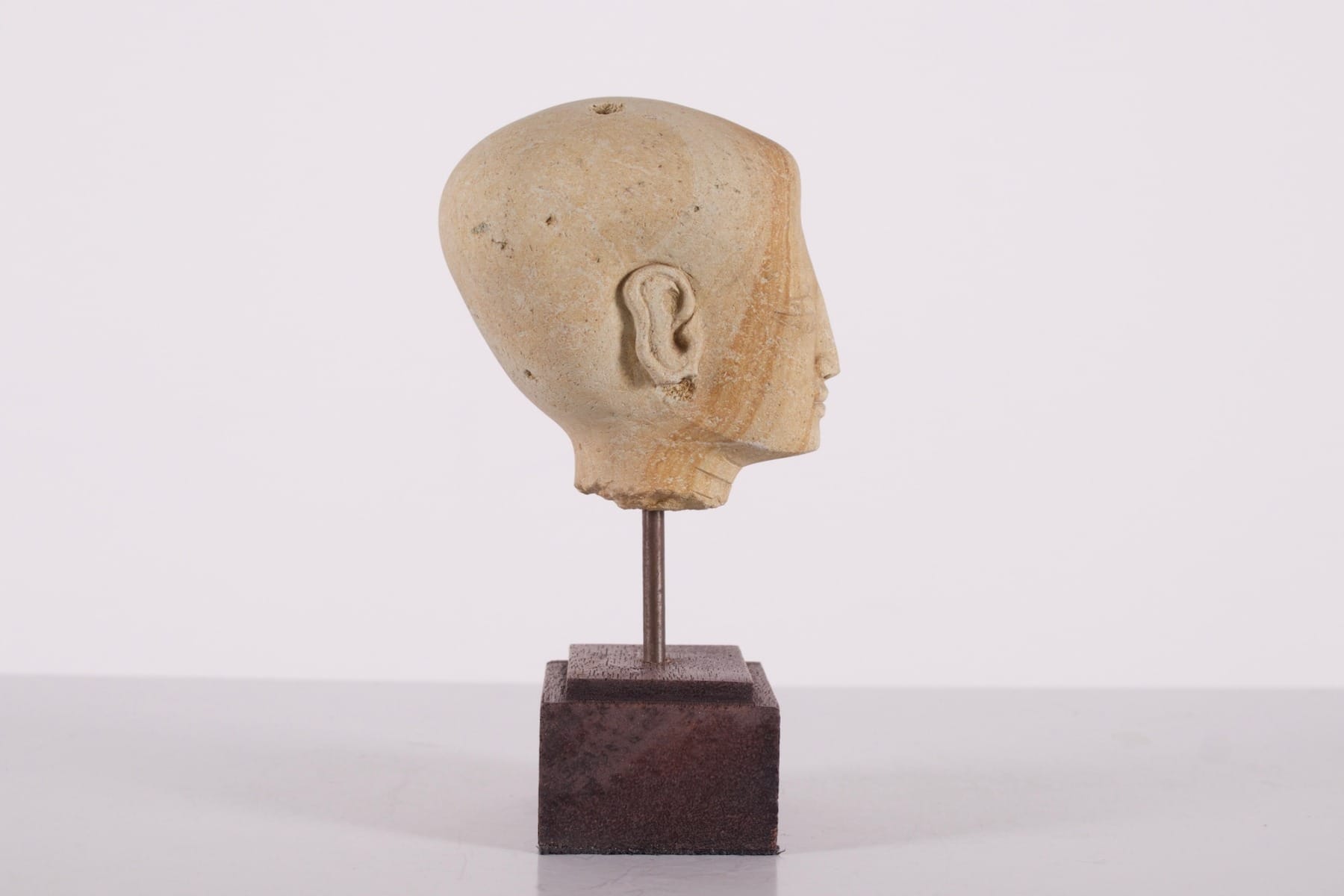
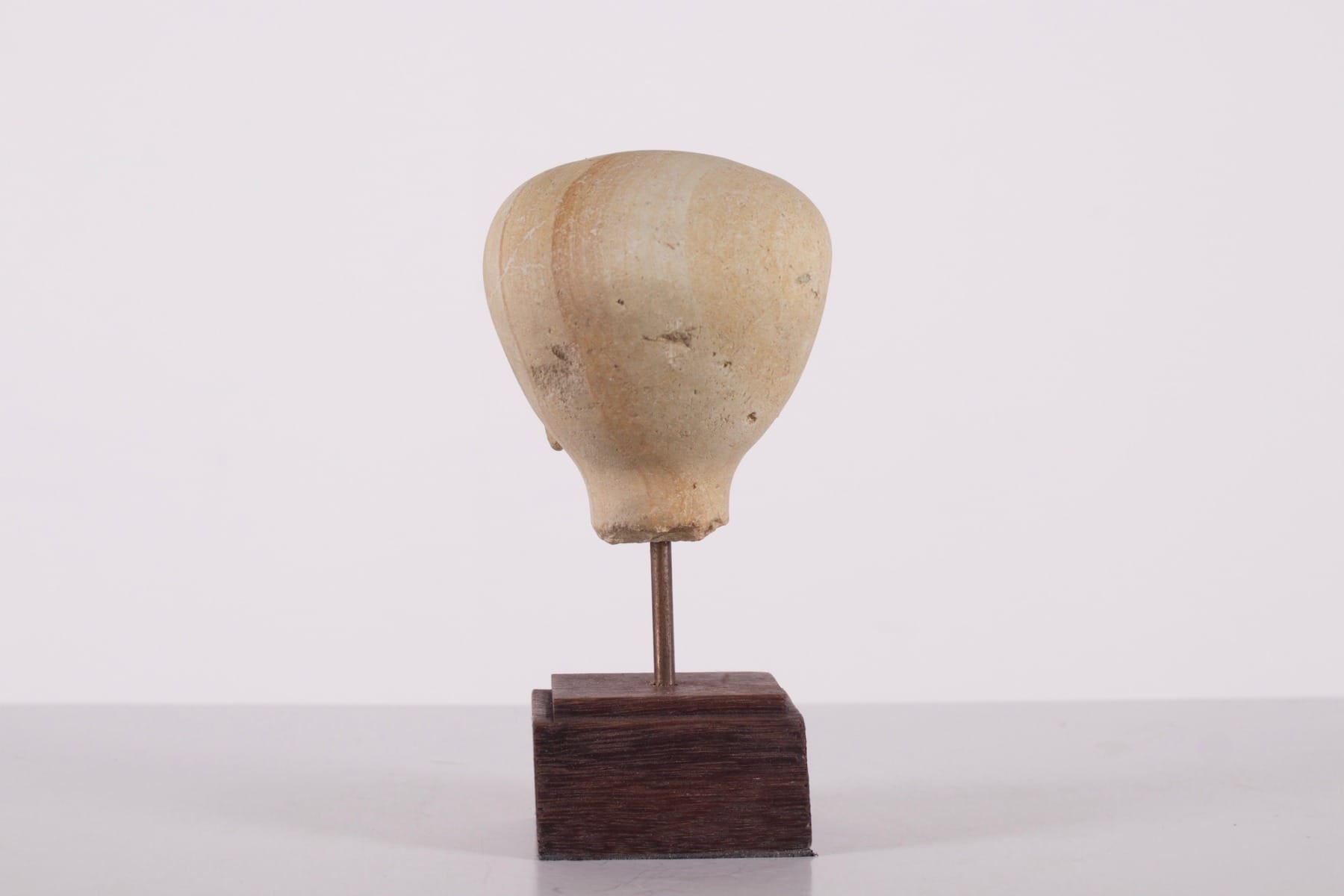
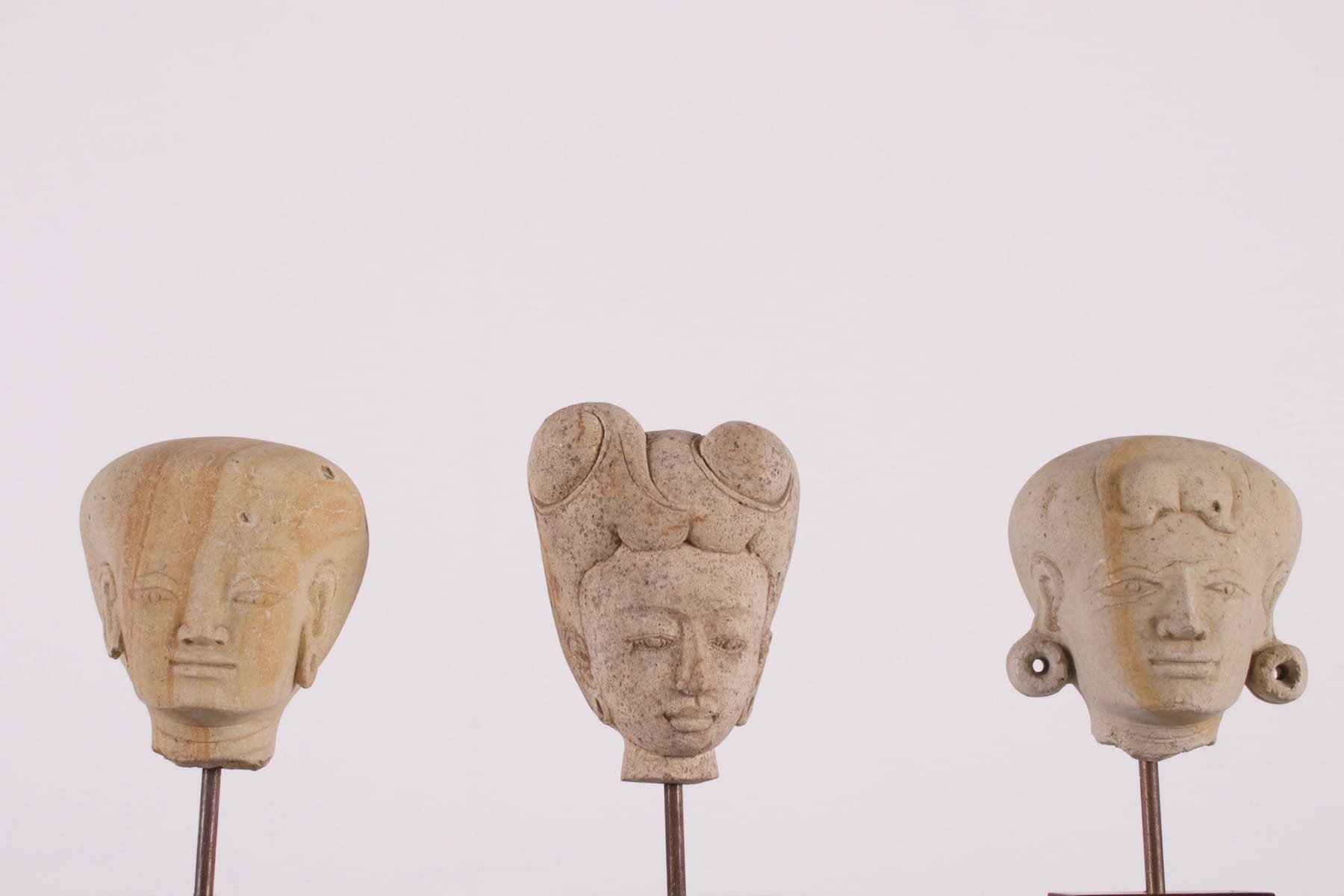
Tuff Head Majapahit Kingdom
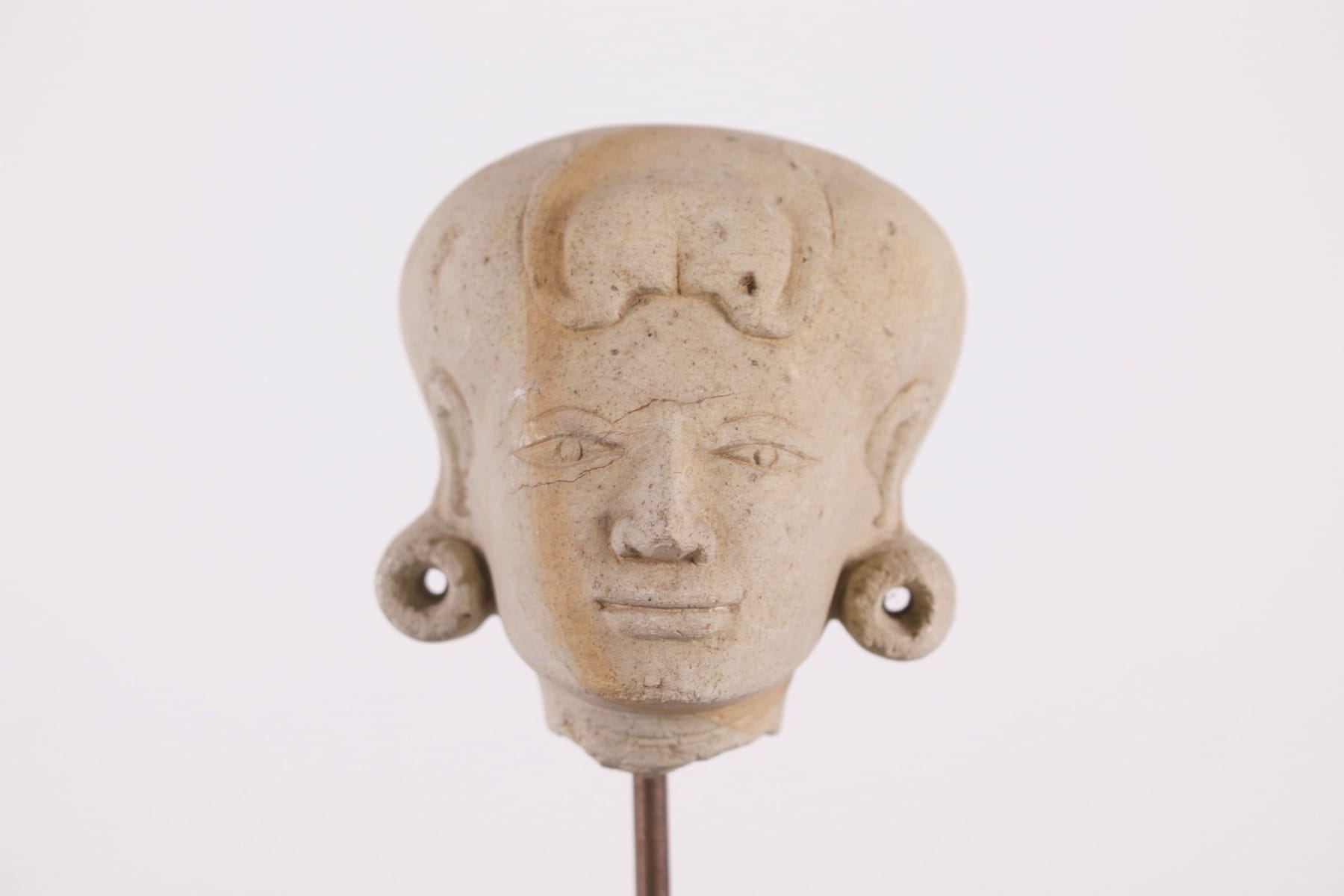
- Head of aMajapahit court deity or dignitary, Sumatra, 13th/15th century. Made of tuff, a volcanic rock formed by the accumulation of ash and debris thrown up by eruptions.
- Although the Majapahit kingdom developed from Java, it features a stylized headdress from Sumatran art of the time. The kingdom expanded into Sumatra in 1377, annexing Sriwijaya. This head therefore dates from the late 14th century.
- Head only H 9 cm x W 8 cm x D 9 cm
- H on base 16 cm
- Provenance: Claude de Marteau Collection
- Sold with certificate of origin.
- 3 Majapahit heads are available (unit price)
Sold

Delivery in Belgium

Delivery in France

Delivery in Luxembourg

Worldwide delivery
- The kingdom of Majapahit, founded in 1293 on the island of Java, was one of the most powerful empires of insular Southeast Asia. Its capital was located in Trowulan, and its golden age took place in the XIVᵉ century, under the reign of King Hayam Wuruk (1350-1389) and his famous Prime Minister Gajah Mada. The latter’s ambition was to unify the entire Malay archipelago, the Nusantara, which led Majapahit to extend its influence over a vast region including Java, Sumatra, Borneo, Bali, Sulawesi, the Malay Peninsula(southern Thailand) and even parts of the Philippines.Majapahit was a centralized state based on a complex network of vassal kingdoms and alliances. Religiously, it was distinguished by a refined syncretism between Hinduism and Buddhism, reflected in its art, its literature in Old Javanese, and its architecture, notably the red-brick temples with their rich bas-reliefs.The kingdom’s decline began in the 15th century, weakened by internal conflicts and the rise of Muslim kingdoms such as the Sultanate of Demak, which finally supplanted it around 1527. Majapahit remains a powerful symbol in the Indonesian collective memory, inspiring to this day the idea of national unity around the concept of Nusantara, a kind of unity in diversity.
You might also like…

Tuff head, Majapahit Kingdom
€800,00