



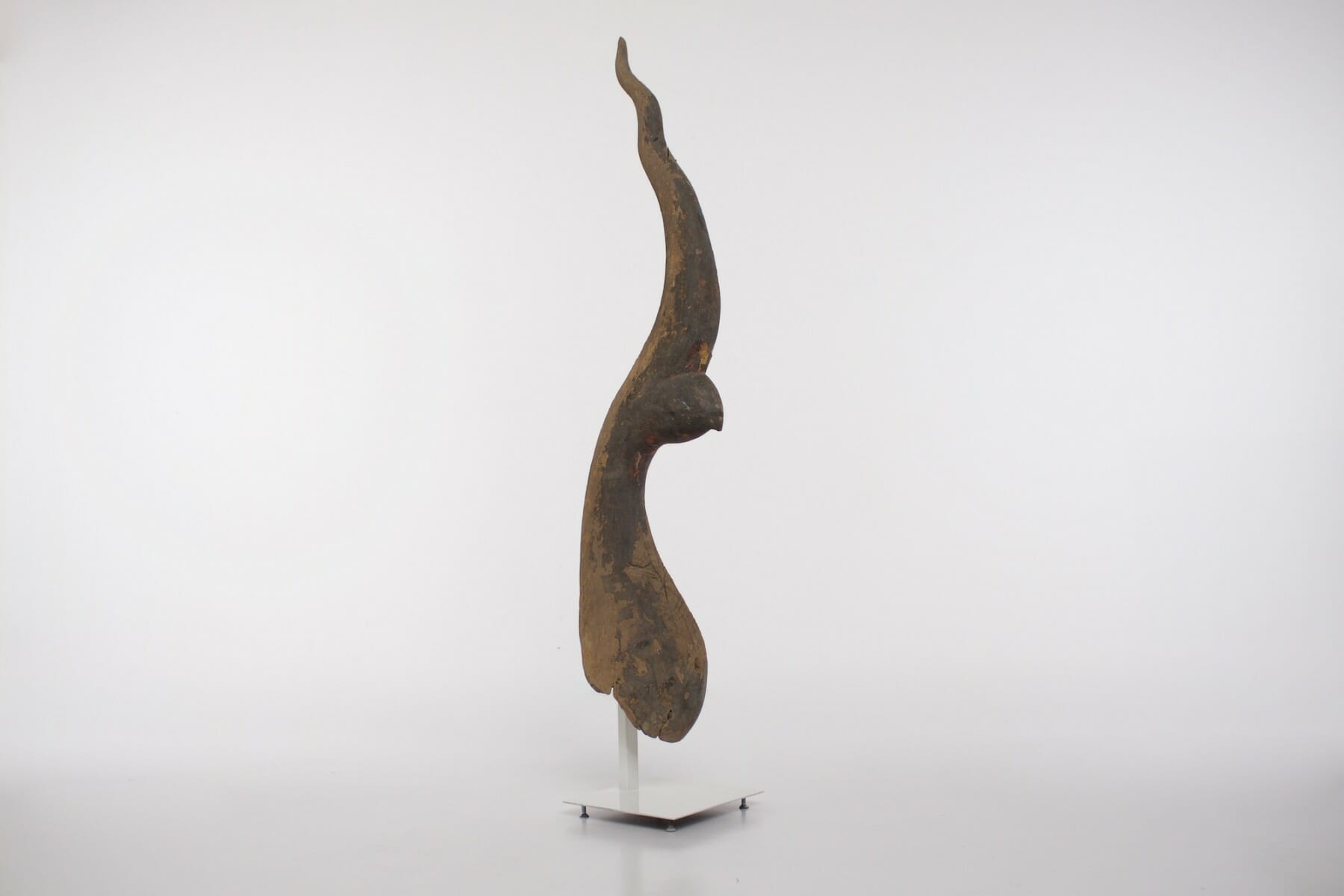
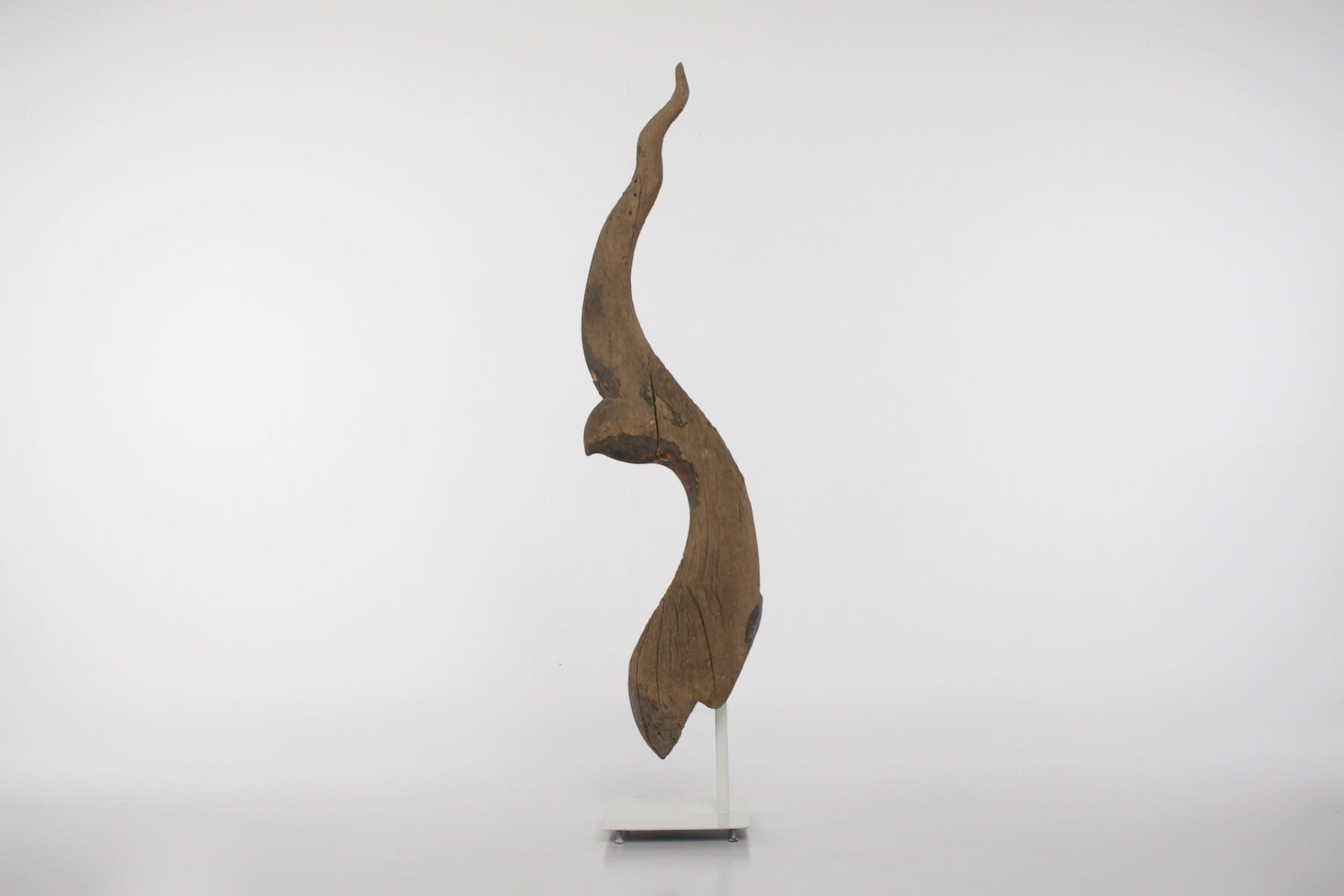




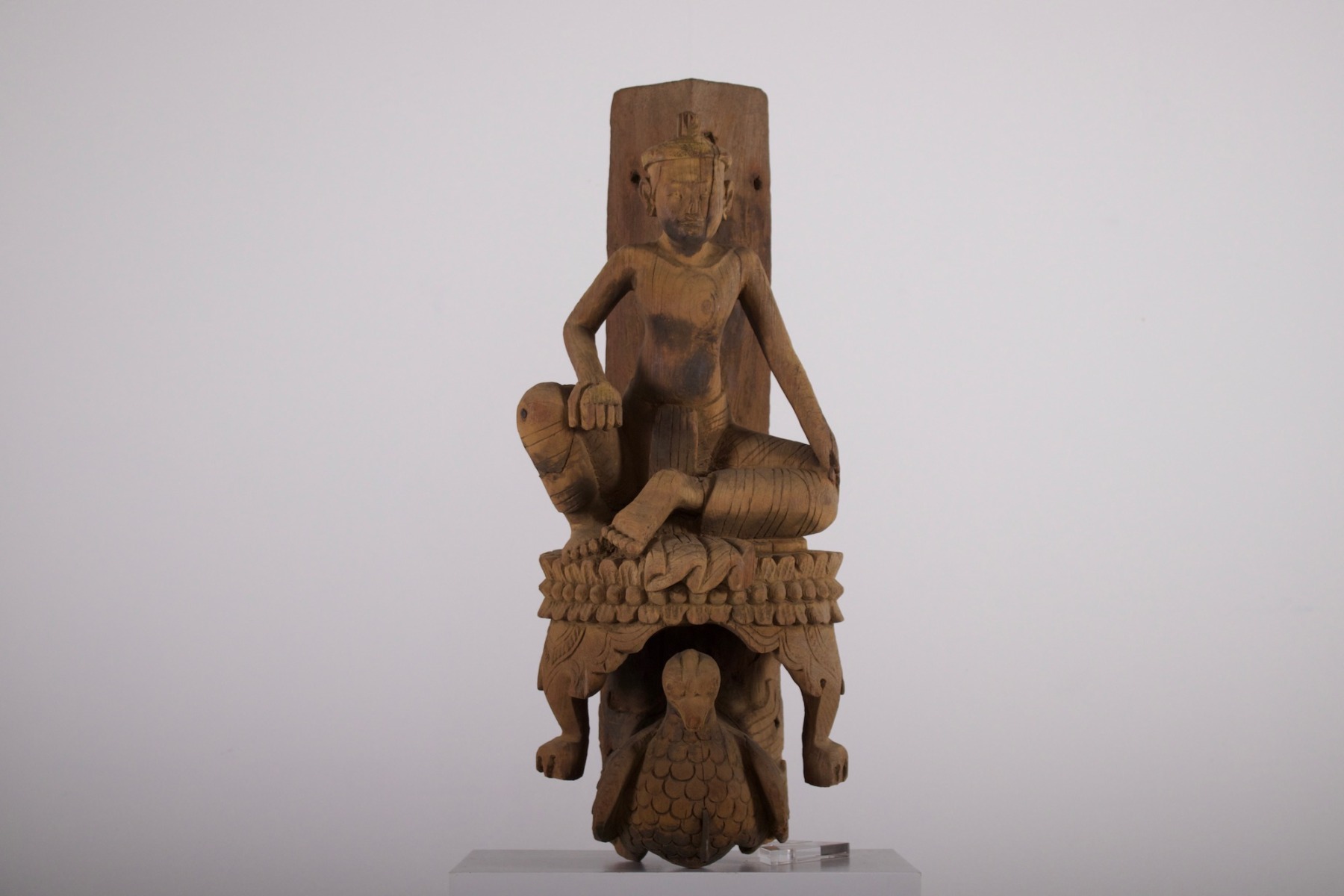
Chofa, Thai Wat temple ridge ornament.
€1200,00
Buddhist temple finial ornament, called chofa, depending on interpretations, “Garuda” (Sanskrit: Eagle), mount of the god Vishnu, or “Hong/Hamsa” (Thai: Hong /Sanskrit: Hamsa) depicting the mythical bird or swan/goose, animal vehicle (vâhana) of the god Brahma.
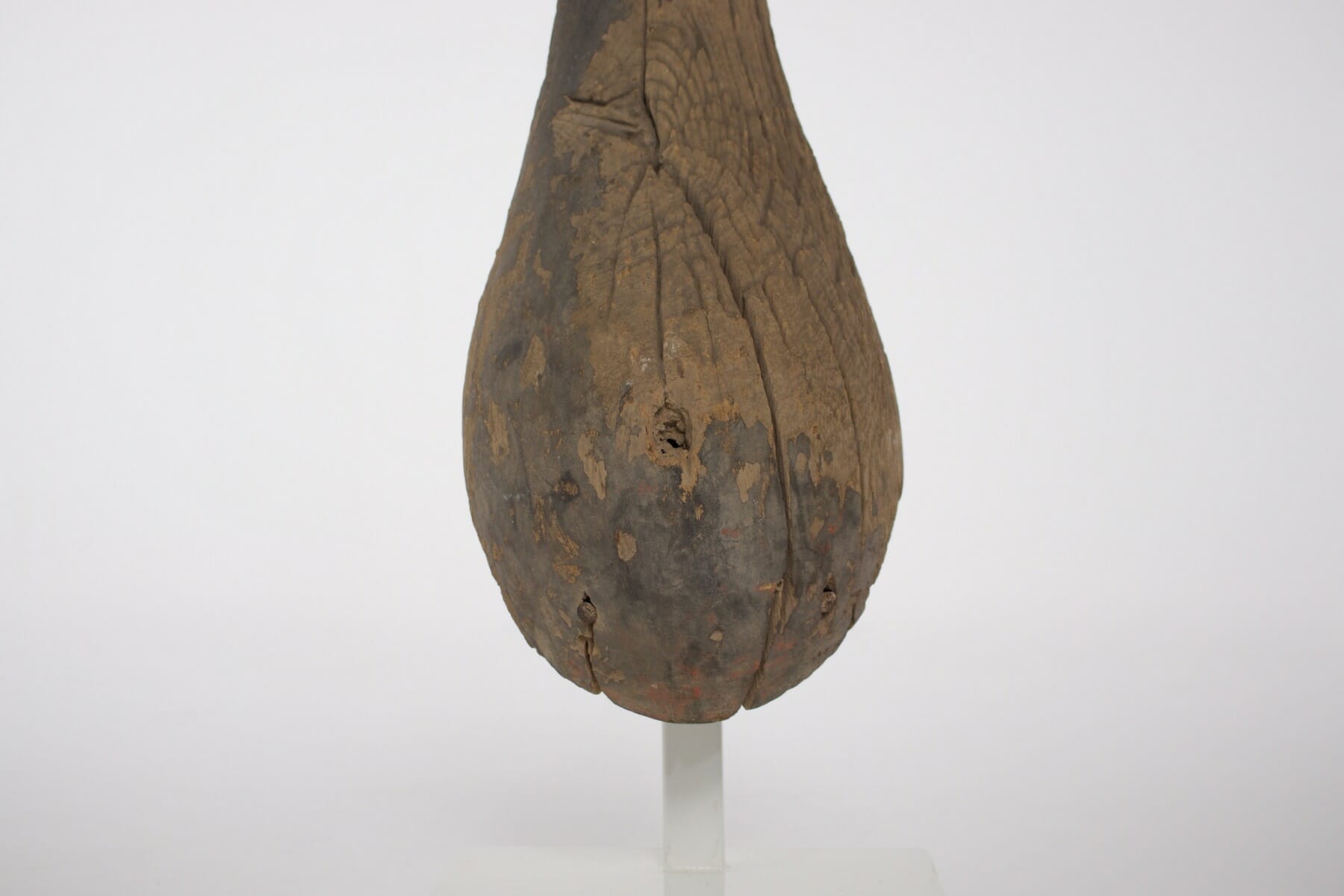
- Thailand, 19th century. Dominant wood and brown patina, with vestiges of red bole here and there.
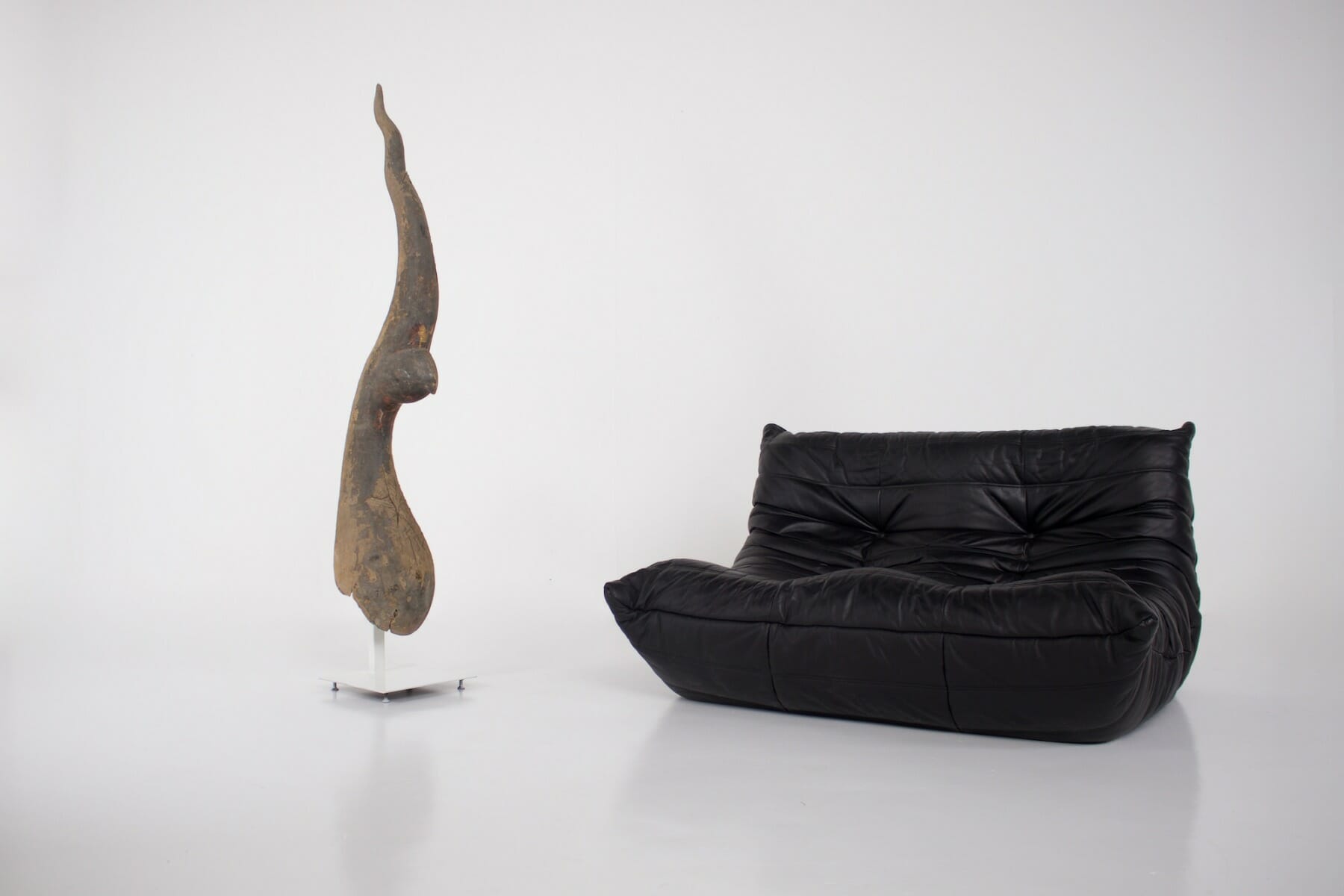
- Supplied with white or black steel base, adjustable chofa inclination.
- Provenance: Estate of collector and art dealer Claude de Marteau.
- Sold with certificate of origin.
- An overview of this talented collector’s incredible career can be found here: https://www.thecdmcollection.be/
- H max 167 CM (H Chofa alone 144 CM) X P 26 CM X W 27 CM.
- Stand L 28.5 CMX P 34 CM.
1 available in store

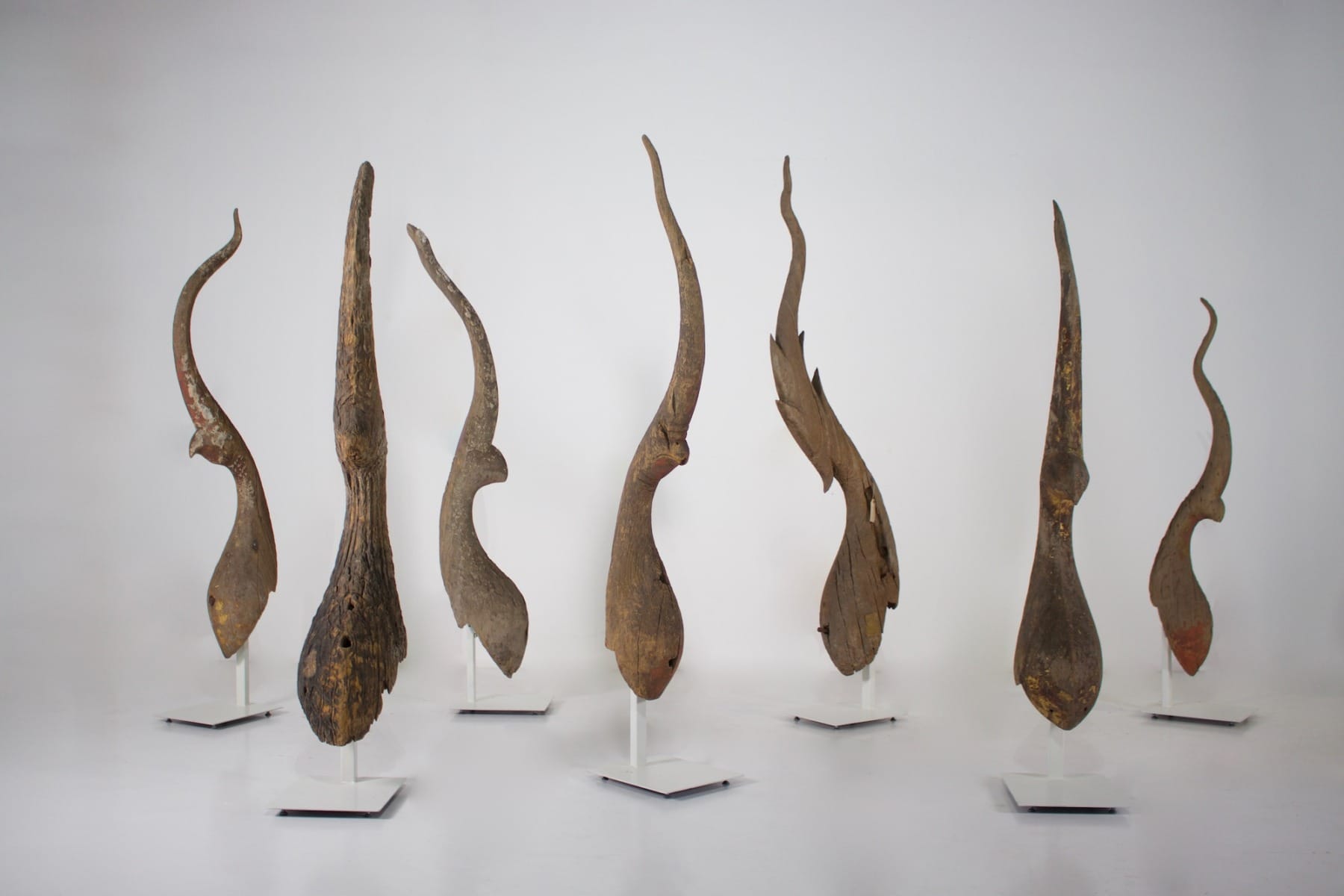
Garuda and Naga chofas, a sample from our exclusive selection from the Claude de Marteau collection.
A sacred temple ornament in the image of Garuda
Dominating the roofs of Buddhist temples in Thailand, the chofa is one of the most emblematic architectural elements of the Wat. Erected at the end of the gables, it symbolically marks the meeting point between the terrestrial and celestial worlds. Carved from wood, sometimes gilded or lacquered, it is both a decorative element and a powerful religious symbol. Up there, they coexist with the Hang Hong, protective dragons placed laterally on the roof frieze.

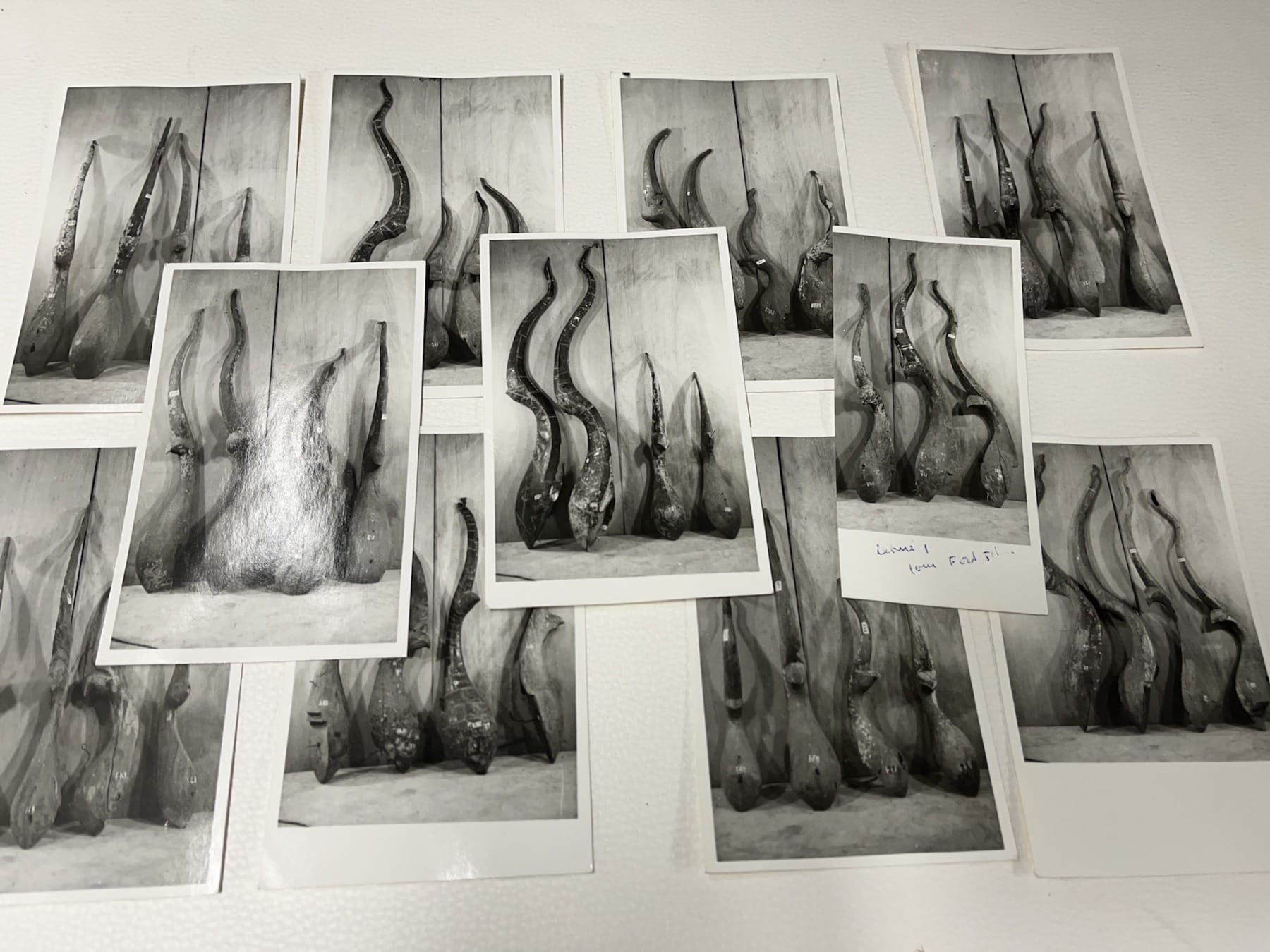
Part of Claude de Marteau’s Hang Hong collection.
Garuda, Hong, or Naga: what do chofa representations mean?
According to Thai tradition, the chofa most often represents Garuda, the mythical bird of Indian origin that became the mount of the god Vishnu. Protector of sacred places, Garuda is associated with power, vigilance, and the victory of good over evil forces.
Other interpretations see it as the Hong (or Hamsa in Sanskrit), a celestial bird assimilated to a swan or sacred goose, mount of the god Brahma and symbol of spiritual purity. Some chofas also take the form of a Naga, a guardian and protector akin to a serpent. It is considered a mediator between heaven and earth, as well as a link between the world of men and the afterlife. In Buddhist tradition, it is sometimes associated with the rainbow: during the Buddha’s descent from heaven, the celestial staircase is likened to a rainbow whose two ramps are formed by two Nagas.
An architectural element unique to each Wat
Each chofa is made specifically for the temple it is intended for. Its slender silhouette extends the roofline and contributes to the visual identity of the edifice. Older models often feature very expressive forms, with a curved beak, a stylized crest, and finely carved details revealing the craftsmanship of Thai artisans.
The chofa, a sought-after ancient sculpture
These ancient sculptures are particularly sought after by collectors of Buddhist art, Asian art, and religious architecture. Removed from temples during restorations or reconstructions, they are now rare testimonies to Thailand’s spiritual heritage. Their presence in an interior decoration imbued with spirituality creates a remarkable dialogue between art, history, and symbolism.
An ancient chofa from a temple thus retains all the symbolic power of its original use while becoming an exceptional sculpted work, ideal for a collector or as a centerpiece in a vast reception area.
You might also like…


Discover also...

Delivery to Belgium

Delivery to France

Delivery to Luxembourg
