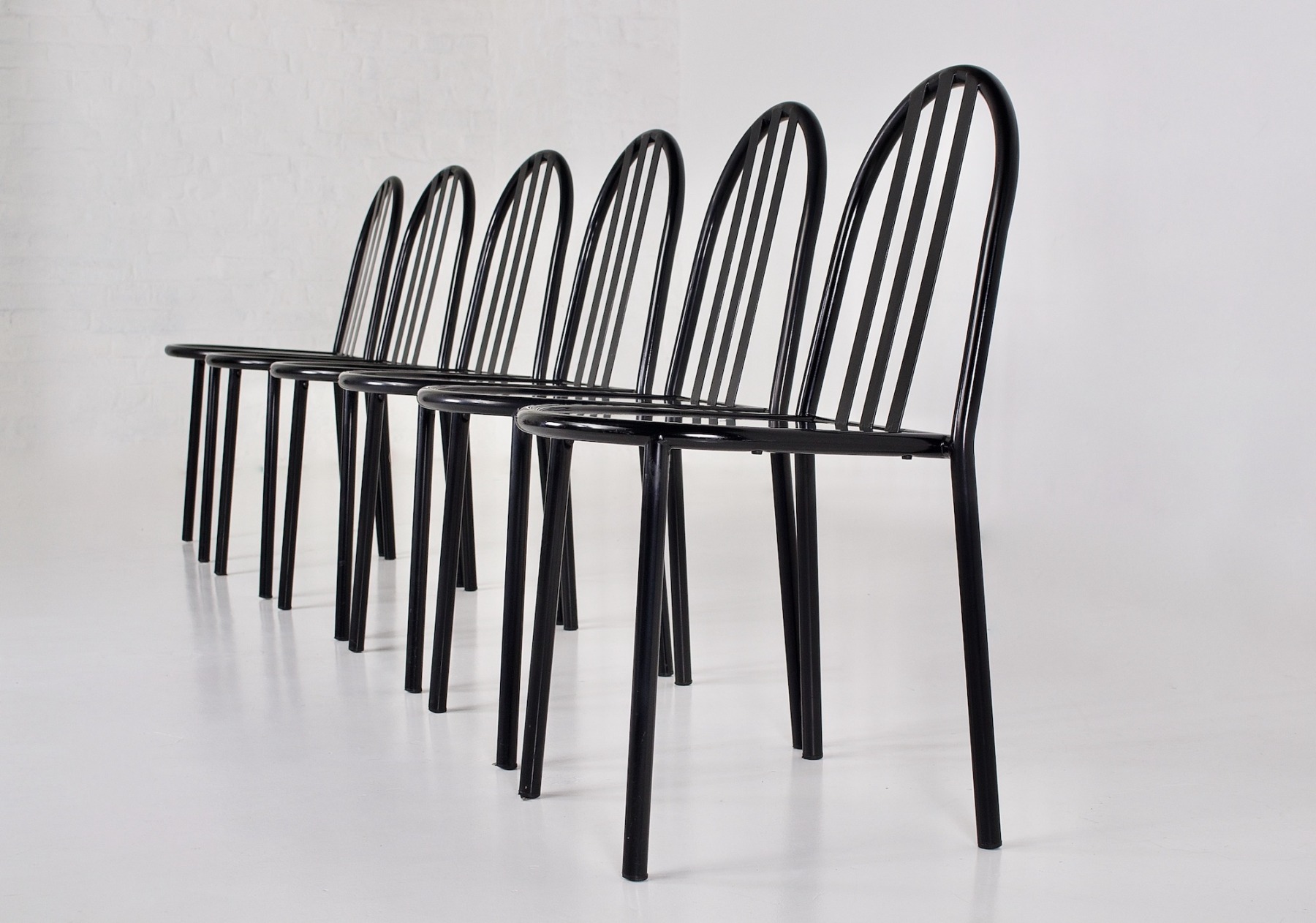
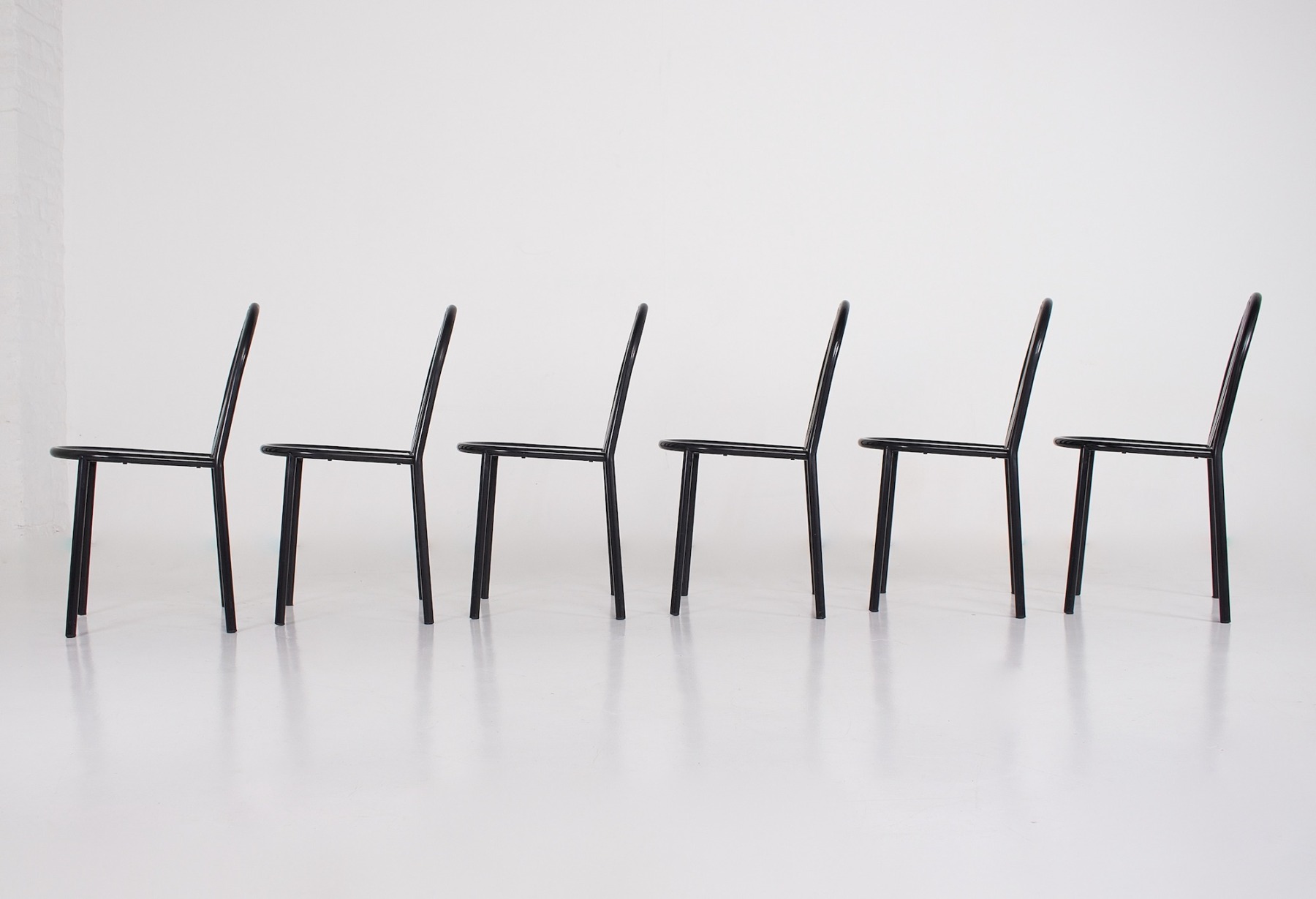


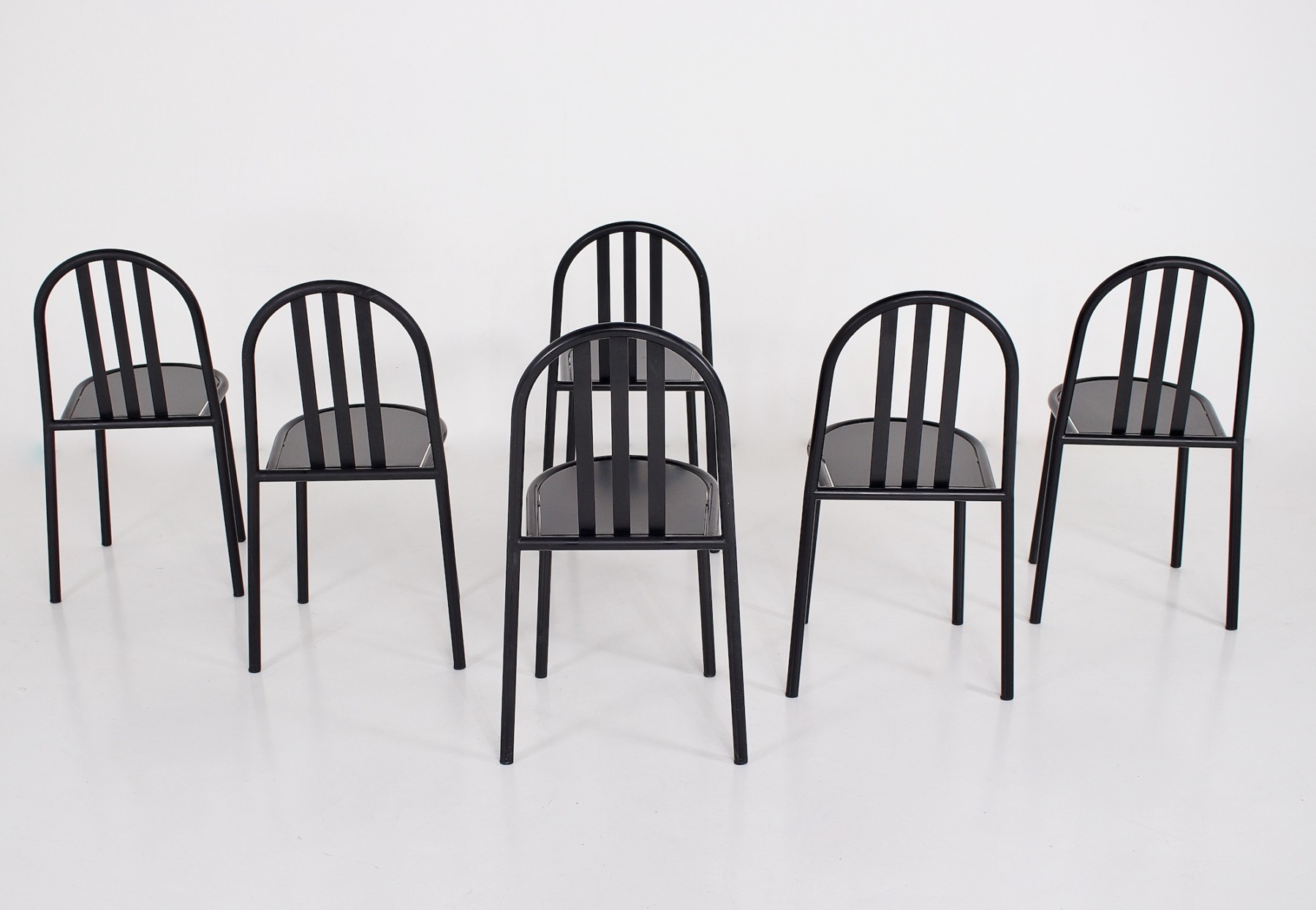
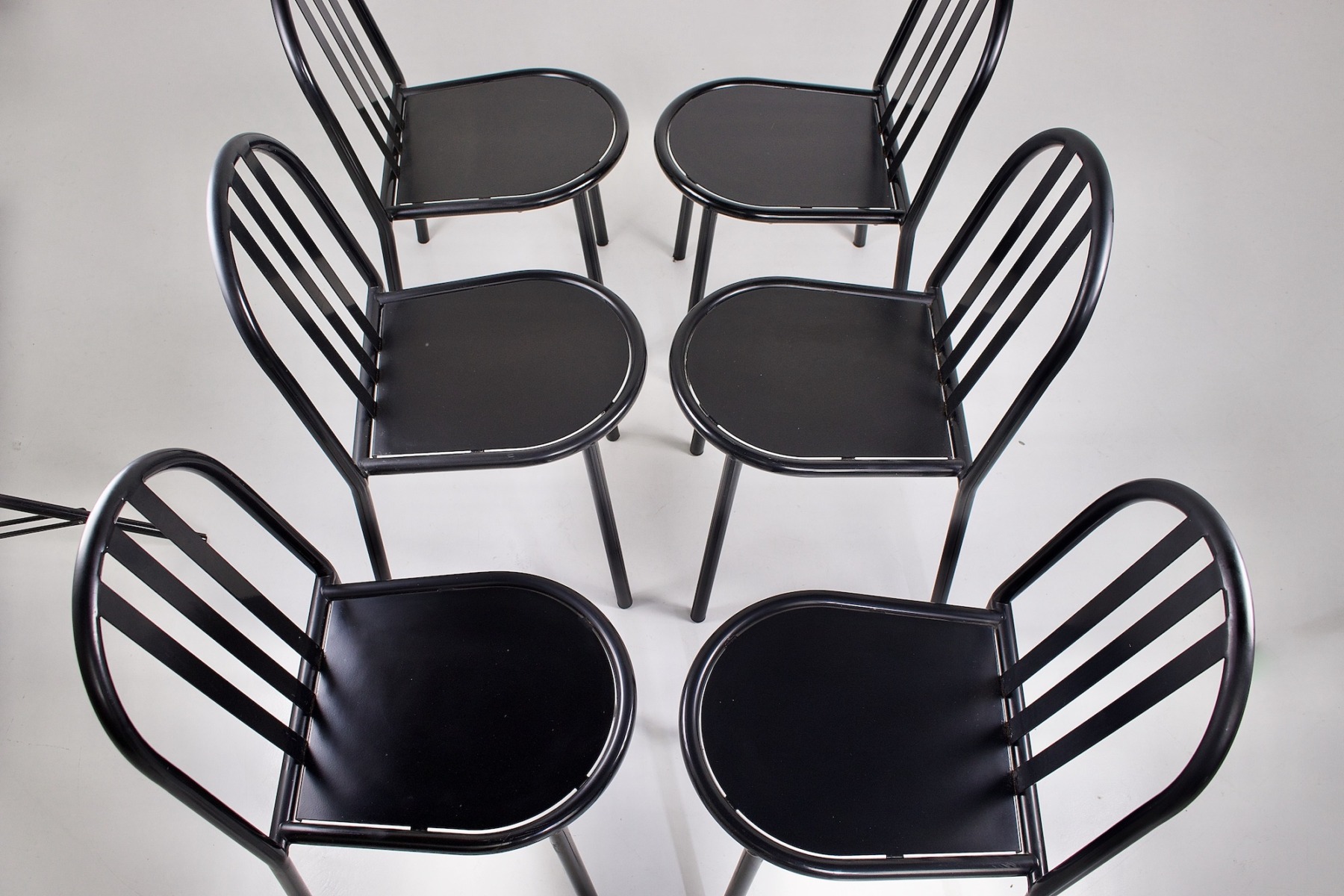
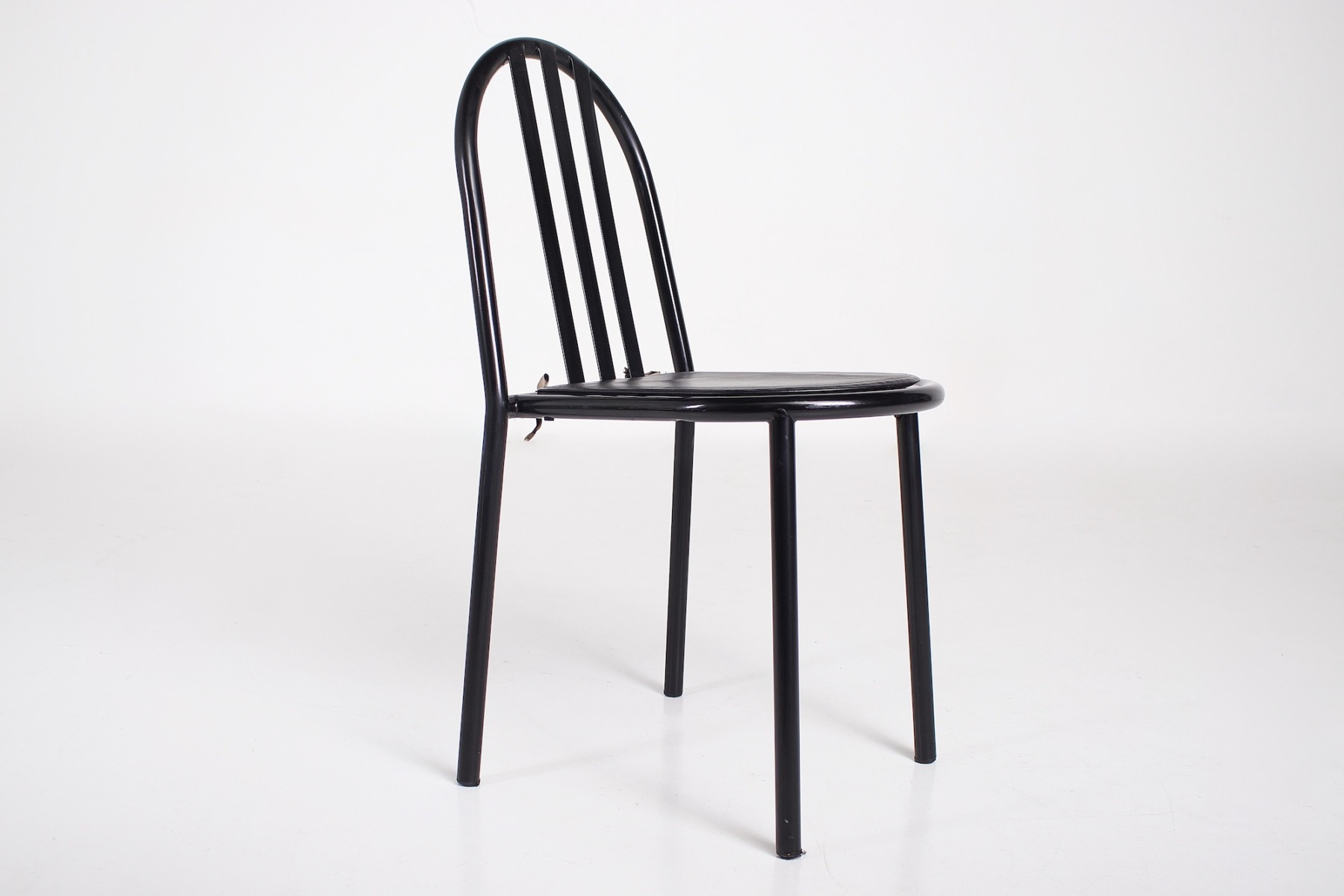

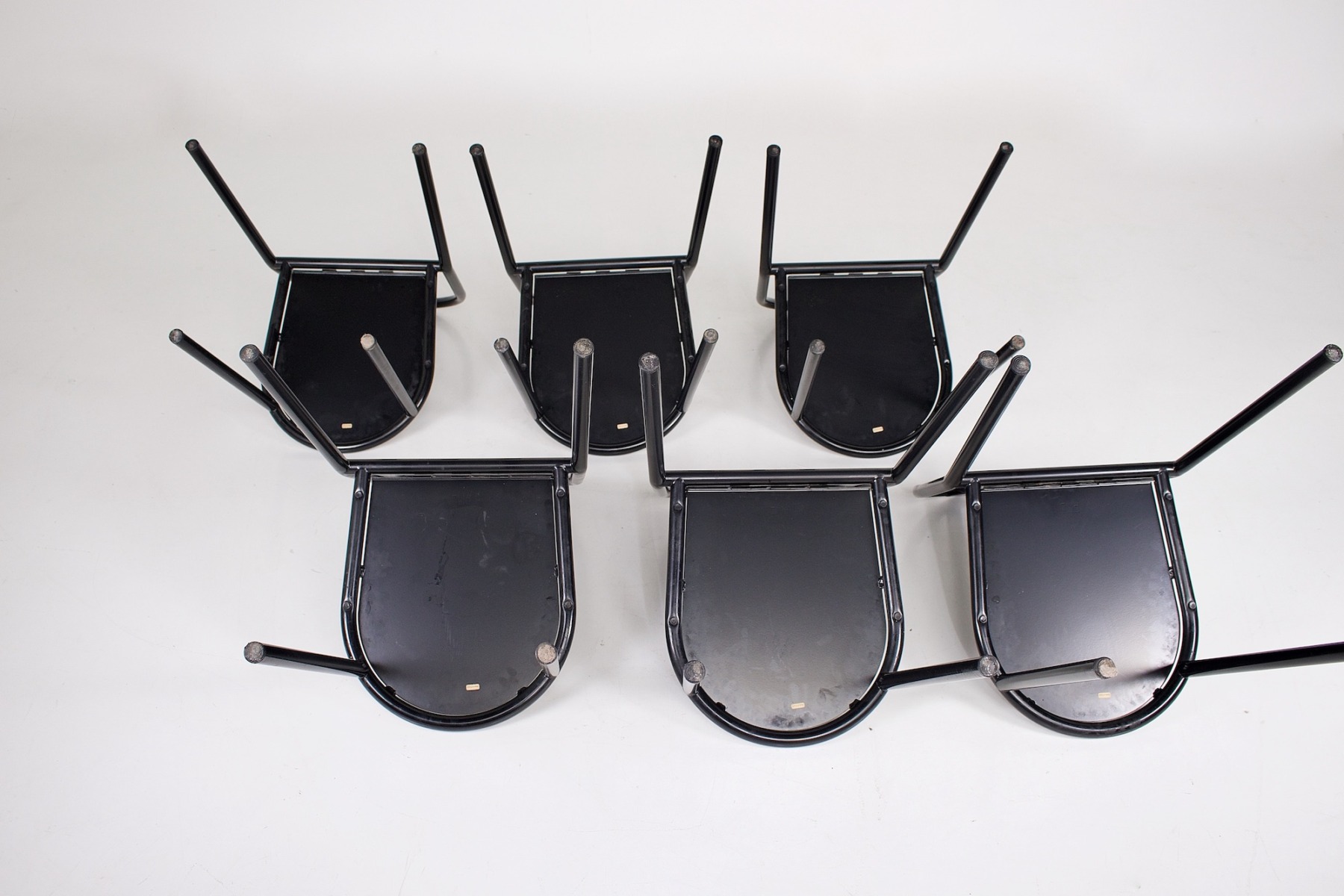


6 Mallet Stevens chairs
- 6 steel chairs stamped RMS under the seat, French work from the 1980s.
- H 83 CM X D 53 CM X W 39 CM X Seat height 45 CM.
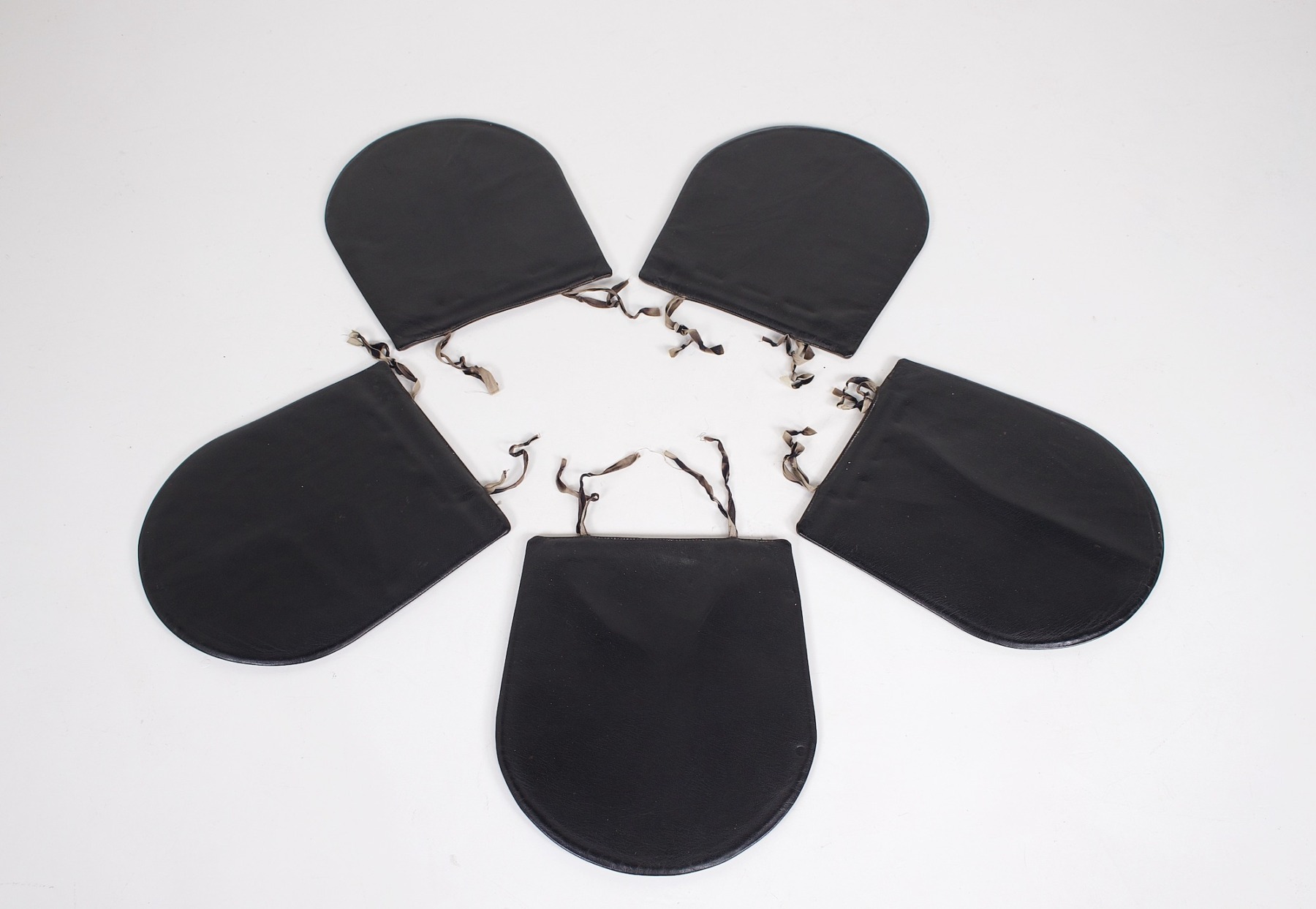
- 5 leather seat cushions available (on 6 chairs)
Sold

Delivery in Belgium

Delivery in France

Delivery in Luxembourg

Worldwide delivery
Chair 222 / MS05 by Robert Mallet-Stevens “RMS
The 222 chair, also known as the MS05, is one of Robert Mallet-Stevens’s iconic designs. Designed in the early 1930s, it illustrates Mallet-Stevens’s rational approach: a bent-tube metal structure, a lacquered sheet metal seat and a backrest formed by vertical iron bands. Reduced to the bare essentials, this stacking chair adopts a simple, functional construction designed for economical production, perfectly in line with the modernist principles of the time.
The original model was produced before the war by Tubor, the patent holder. Early versions featured two vertical bands on the backrest, before the adoption of a third band to enhance visual and structural stability. The chair appeared in several variants at the Salon des arts ménagers in Paris in 1935, notably in the kitchen of the Villa Cavrois, where Mallet-Stevens experimented with strict, practical furniture that was clearly in line with the aesthetics of functionalism.
Examples from the 1930s can be recognized by their colored lacquer, sometimes contrasting the frame and seat. Some variants, made for special orders, are distinguished by the arrangement of the backrest bars or by the use of a painted plywood seat, features that make them rare and sought-after pieces today.
The chair’s popularity was revived in 1978, when Andrée Putman, founder of Ecart International, relaunched its production by reissuing several of Mallet-Stevens’s historic models. Since 1979, this edition has made a major contribution to the rediscovery of French modernist furniture.
These 6 chairs are very well made, stable and solid. They are marked “RMS” under the seat, and are undoubtedly unrelated to Ecart production.
Sleek, stackable and perfectly identifiable, the 222 / MS05 chair remains a staple of French modernist design, appreciated for the clarity of its design and the coherence of its construction.